Table of Contents
- Understanding Fire Safety Legislation in Queensland
- What is a Fire Safety Audit?
- AS 1851 Compliance Requirements for Fire Safety Equipment
- Fire Safety Inspection Checklist for Queensland Buildings
- Creating a Fire Safety Management Plan Template
- Legal Responsibilities and Statutory Obligations
- DIY Audit vs. Professional Fire Safety Audit
- Consequences of Non-Compliance and Penalties
- Frequently Asked Questions
Last Updated: September 27, 2026
Understanding Fire Safety Legislation in Queensland
Understanding how to conduct a fire safety audit in Queensland begins with Queensland’s fire safety framework, which sits within the Fire Services Act 1990 and the Queensland Development Code. These establish the legal foundation for how buildings must be managed, inspected, and maintained to protect occupants.
What is a Fire Safety Audit?
A fire safety audit is a systematic inspection of a building’s fire safety systems, equipment, and procedures to verify compliance with Australian standards and Queensland legislation. It assesses whether your property meets the legal requirements for fire prevention, detection, and emergency response.
AS 1851 Compliance Requirements for Fire Safety Equipment
AS 1851 is the Australian Standard that governs the inspection, testing, and maintenance of fire safety equipment. It’s the benchmark for how often equipment must be serviced and what that service must include.
Fire Safety Inspection Checklist for Queensland Buildings
A comprehensive fire safety inspection covers multiple categories. Use this checklist to understand what a professional audit examines.
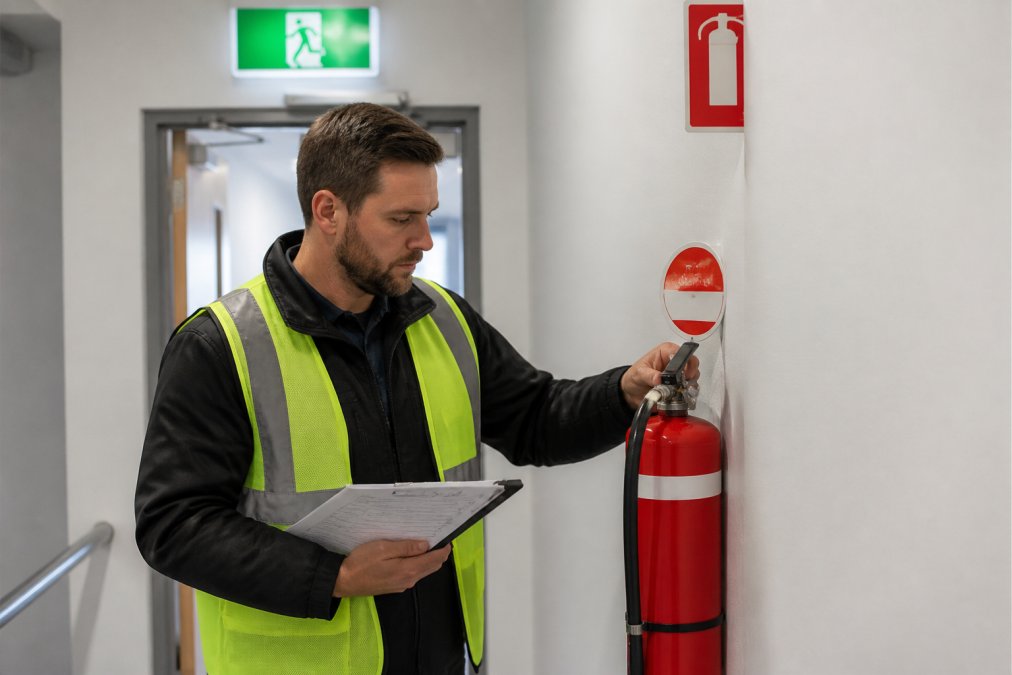
Essential Equipment to Inspect
Your audit must verify that all fire safety equipment is present, functional, and properly maintained:
- Fire extinguishers: correct type and accessibility
- Emergency lighting: operational and positioned at exits and hazard points
- Fire alarm systems: tested and responding to triggers
- Smoke alarms: installed and batteries functional
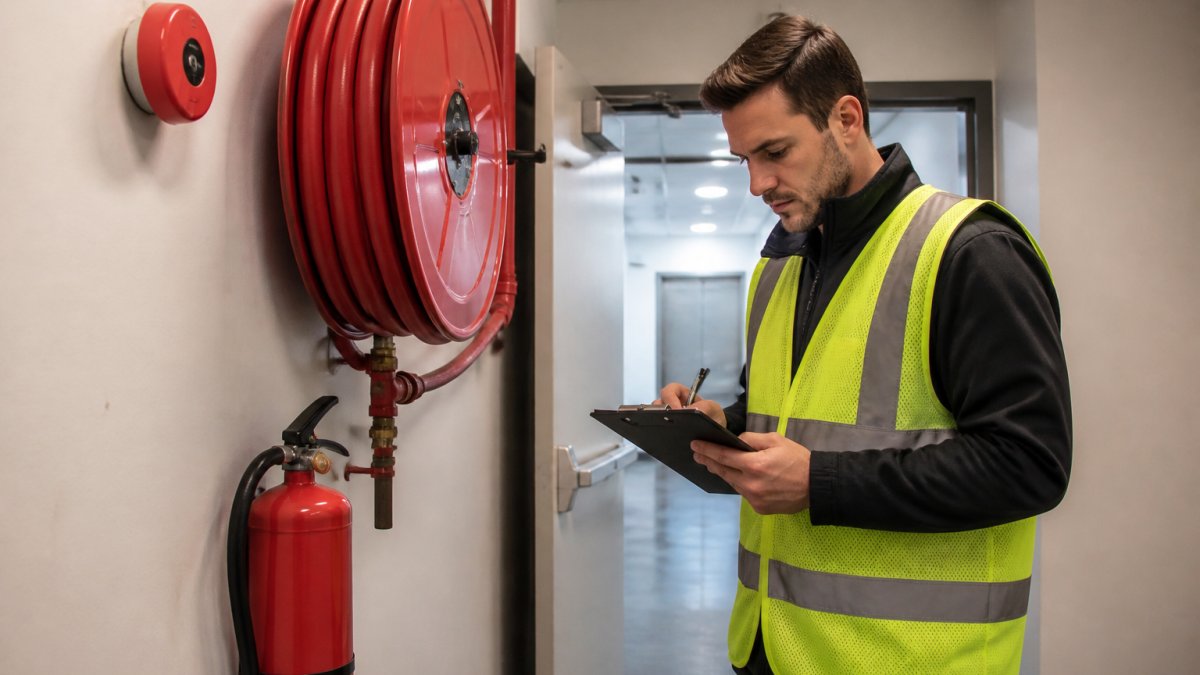
- Fire suppression systems: hydrants, hoses, and sprinklers operational
- Emergency exit signage: visible, illuminated, and compliant with standards
- First aid kits: accessible and stocked
Building Features and Exit Pathways
Your inspection must verify exit routes are clear, emergency doors open freely, corridors are properly lit, fire-rated doors seal correctly, assembly points are marked, and evacuation signage is visible. A blocked exit corridor is as dangerous as non-functional equipment.
Creating a Fire Safety Management Plan Template
A Fire Safety Management Plan outlines your building’s fire safety systems, procedures, and responsibilities. It must be reviewed and updated annually and whenever building use, occupancy, or systems change.
Core Components of a Fire Safety Management Plan
Your plan should include the following sections:
1. Building Information and Risk Assessment
- Building address, owner, and occupier details
- Building classification and total occupancy
- Description of building use and high-risk areas (e.g., kitchens, storage, plant rooms)
2. Fire Safety Systems and Equipment Inventory
- List of all fire safety equipment with locations and installation/service dates
- Maintenance schedule and responsible contractor
- AS 1851 compliance intervals for each item
3. Building Layout and Evacuation Routes
- Floor plans showing exit routes, assembly points, and emergency equipment locations
- Assembly point location outside the building with capacity for all occupants
- Accessibility considerations for people with disabilities
4. Roles and Responsibilities
- Fire Safety Coordinator: name, contact details, and responsibilities
- Fire Wardens: names, locations assigned, and duties during evacuation
- Evacuation Coordinators: responsible for each floor or zone
- Building Owner/Manager: responsibilities for equipment maintenance and compliance
- Occupier/Tenant: responsibilities for keeping exits clear and reporting hazards
5. Evacuation Procedures and Drills
- Step-by-step evacuation procedure and special procedures for people with disabilities
- Frequency of evacuation drills (minimum annually)
- Records of all drills conducted with dates and issues identified
6. Emergency Contact Information
- Local fire and emergency services contact details
- Building owner, manager, and fire safety contractor contact numbers
- Utility company contacts for emergency shutoff
7. Inspection, Testing, and Maintenance Records
- Schedule of required inspections and testing
- Records of completed inspections with dates, findings, and corrective actions
- Service tags and certificates from qualified contractors
8. Staff Training and Competency
- Record of fire safety training conducted with dates and attendees
- Induction training for new staff
- Fire Warden training and certification records
Industry-Specific Variations
Your Fire Safety Management Plan must reflect the specific risks and regulatory requirements of your building type. Here are key variations:
Retail and Commercial Offices:
- Procedures for managing customer evacuation
- Emergency lighting in customer areas
- Staff induction and fire safety briefing records
Budget Accommodation (Hostels, Hotels, Serviced Apartments):
- Procedures for alerting transient occupants unfamiliar with the building
- Emergency lighting in all sleeping areas and corridors
- Procedures for assisting guests with mobility issues
- Staff training records on guest evacuation
Industrial Warehouses and Manufacturing:
- Hazard-specific procedures (e.g., chemical storage, flammable materials)
- Fixed suppression systems and their maintenance
- Procedures for shutting down equipment during evacuation
Aged Care and Healthcare Facilities:
- Procedures for evacuating residents with mobility or cognitive impairments
- Medical equipment that must be disconnected or relocated
- Procedures for managing residents who refuse evacuation
Digital Record-Keeping Systems
Paper-based records are increasingly replaced by cloud-based compliance management systems. Digital record-keeping offers significant advantages:
Benefits of Digital Systems:
- Automated reminders for upcoming inspections and maintenance
- Centralised storage of all inspection reports and service certificates
- Real-time visibility of compliance status across multiple properties
- Audit trails showing who accessed or updated records and when
- Easy retrieval of records during regulatory audits or insurance claims
- Reduced storage space and paper waste
What to Look For in a Compliance System:
- Integration with your maintenance contractor’s scheduling system
- Mobile app for on-site inspections and photo documentation
- Automated compliance reporting and non-compliance alerts
- User access controls (e.g., restricting who can edit records)
- Data backup and security (essential for sensitive building information)
- Compatibility with your existing property management software
Budgeting for Fire Safety Compliance
Understanding the cost of compliance helps you allocate resources effectively and avoid unexpected expenses.
Typical Annual Compliance Costs (per building):
- Fire extinguisher servicing (6-monthly): $200-$400
- Fire alarm testing and certification (annual): $300-$600
- Hydrant and hose testing (annual): $400-$800
- Emergency lighting testing (annual): $150-$300
- Smoke alarm testing and battery replacement: $100-$200
- Staff training and evacuation drills: $200-$500
- Professional fire safety audit (annual): $400-$1,000
Total estimated annual budget: $1,750-$3,400 per building
Cost-Saving Strategies:
- Bundle services with a single contractor to negotiate volume discounts
- Combine multiple inspections into a single visit
- Conduct quarterly visual checks to catch issues early
- Negotiate fixed-price annual maintenance contracts
Reviewing and Updating Your Plan
Your Fire Safety Management Plan must be reviewed and updated:
- Annually: Confirm all compliance items are current and no changes have occurred
- When building use changes: If you convert office space to retail, add a new tenant, or increase occupancy
- When systems are upgraded: If you install new fire alarms, sprinklers, or emergency lighting
- After an incident: If a fire occurs, a near-miss, or a failed inspection, update procedures to prevent recurrence
- After an evacuation drill: If the drill reveals issues (e.g., blocked exits, staff confusion), update procedures immediately
Document each review with a date and signature from the Fire Safety Coordinator. This demonstrates ongoing compliance and due diligence if your building is ever audited by authorities.
Legal Responsibilities and Statutory Obligations
Queensland law places clear responsibilities on building owners and occupiers. Understanding who is responsible for what prevents costly compliance failures.
DIY Audit vs. Professional Fire Safety Audit
Can you conduct how to conduct a fire safety audit in Queensland yourself, or must you hire a professional? The answer depends on your building type, complexity, and risk tolerance.
What You Can Self-Assess: The Owner’s Checklist
You don’t need a qualification to perform basic visual inspections and record-keeping. A building owner or manager can conduct a preliminary self-assessment using this checklist:
Visual and Physical Checks (No Special Equipment Required):
- Are all fire extinguishers visible, accessible, and unobstructed?
- Do emergency exit signs illuminate and remain visible?
- Are emergency exit doors unlocked, unblocked, and opening freely?
- Are evacuation routes clear of clutter?
- Are fire-rated doors closing properly and sealing without gaps?
- Is emergency lighting present at exits and stairwells?
- Are assembly points marked and accessible outside the building?
- Are staff trained on evacuation procedures with records?
Record-Keeping Checks:
- Do you have service tags on all fire extinguishers showing last inspection date?
- Are fire alarm and smoke alarm test records documented?
- Do maintenance logs exist for hydrants, hoses, or sprinkler systems?
- Have staff training sessions been recorded with dates and attendee names?
- Is there a register of all fire safety equipment with installation dates?
What Requires Professional Certification: The Non-Negotiables
Pressure and Functional Testing:
Hydrant systems, hoses, and fixed suppression equipment require hands-on testing with specialised equipment.
A Practical Hybrid Approach
Most Queensland businesses benefit from a hybrid model:
- Conduct your own quarterly visual checks using the owner’s checklist above. This takes 30-60 minutes and catches obvious problems early.
- Maintain detailed records of all equipment, maintenance dates, and staff training. Use a cloud-based system or spreadsheet to track compliance over time.
- Hire a professional auditor every 6 months to conduct pressure testing, system verification, and formal certification. This typically costs $400-$800 for a small commercial building, depending on complexity.
- Address any gaps identified in your self-assessment before the professional audit. This reduces the scope of corrective work and demonstrates proactive compliance.
When DIY Is Not Enough
Do not attempt a DIY audit if:
- Your building has more than 20 occupants or multiple tenancies
- Your building includes aged care, childcare, or high-risk uses
- You have not conducted a professional audit in the past 12 months
- Your last audit identified non-compliance items
- You are uncertain whether your building meets current Queensland fire safety standards
- Your insurance policy requires professional certification
In these cases, the cost of professional audit is negligible compared to the liability of non-compliance. A single enforcement notice or insurance denial will exceed the cost of annual professional audits many times over.
Consequences of Non-Compliance and Penalties
Queensland takes fire safety seriously. Non-compliance carries legal and financial consequences.
Frequently Asked Questions
How often must a fire safety audit be conducted in Queensland?
Fire safety audits must be conducted at least every 6 months for most commercial buildings. Some high-risk facilities or those with specific tenancy agreements may require more frequent audits. Your building occupancy type and statutory obligations will determine the exact frequency. Keeping detailed records of each audit date ensures you maintain regulatory compliance and can demonstrate this to authorities if audited.
What is the difference between a fire safety audit and a routine inspection?
A fire safety audit is a comprehensive assessment of your entire fire safety management system, including equipment, procedures, staff training, and building features. A routine inspection typically covers only fire safety equipment like extinguishers and alarms. A full audit examines your Fire Safety Management Plan, evacuation training, hazard identification, and compliance with AS 1851 standards. Audits produce detailed audit reports; inspections provide maintenance records. Both are important, but audits give a complete picture of your fire safety readiness.
Is AS 1851 mandatory for fire safety maintenance in Queensland?
Yes, AS 1851 compliance is mandatory for all fire safety equipment maintenance in Queensland. This Australian standard covers the inspection, testing, and maintenance of fire protection systems, including extinguishers, hydrants, and suppression systems. Failure to maintain AS 1851 compliance can result in non-compliance penalties and leave your building at risk. Professional service providers must follow these standards, and your audit report should confirm that all equipment has been maintained to AS 1851 requirements.
What should be included in a fire safety audit checklist?
A comprehensive fire safety inspection checklist should cover fire safety installations (extinguishers, alarms, emergency lighting), exit pathways and doors, fire safety signage, emergency lighting functionality, building occupancy records, staff evacuation training records, hazard identification documentation, and your Fire Safety Management Plan. The checklist should also verify maintenance code compliance for all equipment and confirm that your annual fire safety statement is current. Using a detailed checklist ensures you don’t miss critical components and helps create a thorough audit report.