Table of Contents
- Step 1: Verify Licensing and Insurance Coverage
- Step 2: How to Verify Fire Protection Technician Licenses
- Step 3: Confirm Compliance With AS 1851-2012 Requirements
- Step 4: Review Fire Safety Service Range and Specialisation
- Step 5: Assess Reporting Quality and Annual Fire Safety Statement Requirements
- Step 6: Evaluate Customer Service, Response Times and References
- Step 7: Check Contractual Terms and Red Flags
- Frequently Asked Questions
Last Updated: September 17, 2026
When your building’s safety depends on fire protection equipment, choosing the right fire protection company isn’t just a purchasing decision, it’s a risk management choice. The wrong provider leaves you exposed to compliance gaps, equipment failures, and potential liability. At Fyrepower, we understand what separates a genuinely competent fire protection company from one that’s simply ticking boxes. Here’s how to evaluate any fire protection company properly.
Step 1: Verify Licensing and Insurance Coverage
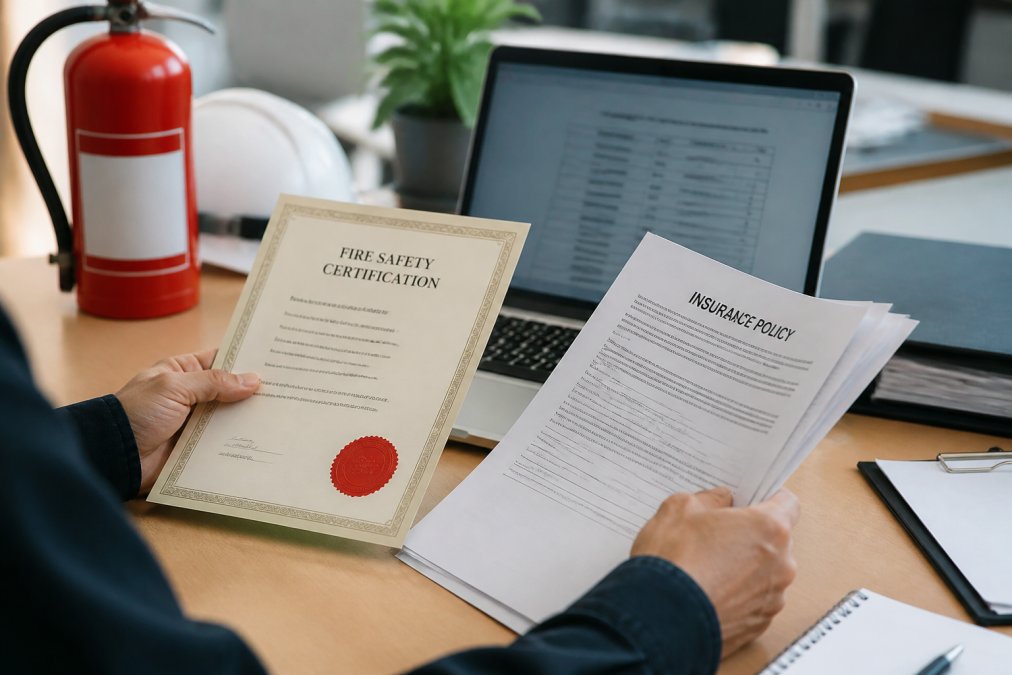
Start with the fundamentals. A legitimate fire protection company must hold current licensing and comprehensive insurance coverage. This isn’t optional, it’s your legal protection.
In Australia, fire protection service providers should be licensed through relevant state-based building and construction authorities. For Queensland-based operations, this typically means QBSA (Queensland Building and Construction Commission) licensing. Verify this directly on the regulator’s website rather than accepting the company’s word. Request proof of current public liability insurance and professional indemnity coverage. A reputable provider will provide this documentation without hesitation.
Insurance matters because if something goes wrong during testing or installation, equipment damage, injury, or incomplete work, you need to know the company can cover the cost. Ask specifically what their coverage limits are and whether those limits match the scale of work you’re having done.
Step 2: How to Verify Fire Protection Technician Licenses
Beyond the company’s overall licensing, the individual technicians performing the work must be appropriately qualified. This is where many property managers fall short in their due diligence.
Ask for the names and credentials of the technicians who will be conducting your testing or installation. Request evidence of their qualifications, certificates of competency, training records, or relevant trade qualifications. In Australia, technicians working on fire safety equipment often hold qualifications in fire protection systems or related disciplines. Don’t accept vague assurances like “our team is trained.” Specific, verifiable credentials matter.
A solid fire protection company maintains a roster of qualified technicians and can produce documentation on demand. If they seem evasive about technician qualifications, that’s a red flag. The technician’s competence directly affects the quality of your compliance and the reliability of your safety systems.
Step 3: Confirm Compliance With AS 1851-2012 Requirements
AS 1851-2012 is the Australian Standard that governs the maintenance of fire protection systems and equipment. Any fire protection company working in Australia must understand and comply with this standard.
Ask the provider directly how they ensure compliance with AS 1851-2012. A competent company will explain their maintenance schedules, testing procedures, and documentation practices in relation to this standard. They should be able to tell you the required service intervals for your specific equipment, whether that’s fire extinguishers, hydrants, hose reels, or suppression systems.
Many property managers discover mid-audit that their service provider wasn’t actually following AS 1851-2012 standards. The company might have been servicing equipment, but not at the intervals the standard requires, or not documenting the work properly. Ask specifically: “Do you follow AS 1851-2012 maintenance schedules?” and request a written service plan that references the standard by name. This becomes your compliance proof if you’re ever audited.
Step 4: Review Fire Safety Service Range and Specialisation
Not all fire protection companies offer the same range of services. Some specialise in specific equipment types, others handle broader portfolios. Understanding what they actually do well matters.
Ask what services they provide: fire extinguisher testing and refilling, hydrant inspections, hose reel maintenance, smoke alarm testing, emergency lighting checks, sprinkler system servicing, or fire safety training. Some companies handle all of these; others specialise in just one or two areas. If your property needs multiple services, clarify whether they can handle everything or whether you’ll need to coordinate with multiple providers.
Specialisation can be a strength. A company that focuses deeply on one area, say, hydrant testing, may be more thorough than a generalist. But a company that claims to handle everything equally well should raise questions about depth. Ask for examples of buildings similar to yours that they’ve serviced. A hospitality venue has different fire safety needs than an office building or industrial facility. Fyrepower, for instance, brings expertise across residential, commercial, and industrial properties, with specific knowledge of the equipment and compliance demands each requires.
Step 5: Assess Reporting Quality and Annual Fire Safety Statement Requirements
Documentation is where many fire protection companies fail their clients. You receive a service invoice, but the actual report, the evidence that work was done, is vague, incomplete, or missing altogether.
Request a sample service report before signing a contract. A quality report should detail exactly what was tested, what was found, what was corrected, and what the technician recommends for future maintenance. It should reference the relevant Australian Standard and include the technician’s name, date, and signature. This report becomes your compliance evidence.
Many property managers face audit problems because their service reports don’t prove the work was actually done. “Serviced” or “tested” on a form isn’t enough. You need specifics: “Fire extinguisher serial number XYZ tested on [date], pressure gauge reading 2.8 bar, nozzle clear, pin intact, tag applied.”
For body corporate and strata properties, the Annual Fire Safety Statement (required in many jurisdictions) depends on documented evidence of completed maintenance. If your service provider’s reports are weak, you’ll struggle to complete this statement. Ask the company how they support the Annual Fire Safety Statement process and whether they provide the detailed documentation needed.
Step 6: Evaluate Customer Service, Response Times and References
A fire protection company’s technical competence matters little if they’re unreliable or difficult to work with. You need a provider who respects your compliance deadlines and communicates clearly.
Ask about their typical response times for service requests and emergency calls. For properties with mandatory 6-monthly testing cycles, can they accommodate your preferred schedule? What’s their backup plan if a technician is unavailable? A company managing multiple properties needs to prove they can juggle competing demands without leaving you waiting.
Request references from similar properties they service. Contact those references directly. Ask whether the company met deadlines, whether the work was thorough, whether communication was clear, and whether any surprises arose (like unexpected costs or missed appointments). A company that’s reliable with one client is usually reliable with others.
Customer service also includes how they handle problems. If an issue is discovered during testing, does the company explain it clearly and provide options for remediation? Do they follow up to confirm work was completed? Poor communication here creates confusion and delays compliance.
Step 7: Check Contractual Terms and Red Flags
Before signing anything, review the contract carefully. This is where hidden costs and problematic terms often hide.
Watch for vague service descriptions. A contract that says “annual maintenance” without specifying what that includes invites disputes. Insist on detailed scope: exactly which equipment, which tests, which intervals, which standards apply. Pricing should be transparent and itemised. If the quote is a single round number with no breakdown, ask for detail. Hidden charges often emerge after work is completed.
Check the contract’s termination clause. Can you exit if service quality drops? What notice period is required? Some providers lock clients into long-term agreements with heavy exit penalties. Understand your obligations before committing.
Ask about warranty or performance guarantees. If the company misses a compliance deadline and you incur penalties, what’s their liability? If equipment fails shortly after they’ve serviced it, do they stand behind their work? A strong provider will offer some assurance here.
Red flags include reluctance to provide written quotes, vague references to “industry standard” pricing without specifics, pressure to sign quickly, or dismissiveness about your compliance concerns. A legitimate fire protection company will welcome detailed questions and provide thorough answers.
Choosing a fire protection company requires digging deeper than price and availability. Verify licensing and insurance, confirm technician qualifications, ensure compliance with AS 1851-2012 standards, assess their service range, review their reporting quality, evaluate their reliability, and scrutinise contract terms carefully. These steps protect your property, your compliance record, and your liability exposure.
Fyrepower brings QBSA licensing, full insurance coverage, detailed compliance reporting, and expertise across residential, commercial, and industrial fire safety needs. Our team understands what Australian properties actually require for genuine compliance and safety. Get in touch with us now to discuss your fire safety requirements and see how we can support your compliance obligations.
Frequently Asked Questions
What qualifications should a fire protection technician hold in Australia?
A fire protection technician should hold current QBSA or QBCC licensing (depending on state). Verify their credentials through the relevant state regulator’s online register.
How often should fire safety equipment be inspected under Australian Standards?
Most fire safety equipment requires regular inspection and servicing under AS 1851-2012. Your fire protection company should provide a maintenance schedule with documented logbooks for compliance audits.
What documentation should a fire protection company provide after a service?
A reputable fire protection company must provide detailed service reports including date of inspection, technician name and license number, specific work completed, any defects identified, remedial actions taken, and next service due date. Reports should reference relevant Australian Standards (AS 1851, AS 2444) and clearly show compliance status for annual fire safety statement requirements. Vague or incomplete reports are a major red flag, they won’t protect you if questioned by authorities or insurers.
What should I look for in a fire protection company’s service level agreement?
A clear service level agreement should specify response times for emergency call-outs and outline what happens if a scheduled appointment is missed and how that affects your compliance timeline. The agreement must detail pricing transparency, what’s included, what triggers additional charges, and how quotes are calculated.