Table of Contents
- Common Reasons Fire Safety Audits Fail
- How to Verify QBSA Fire License Credentials
- Fire Safety Compliance Checklist for Audit Readiness
- Common Fire Protection System Defects That Trigger Failures
- Documenting Deficiencies and Remediation Workflows
- The Role of Staff Training in Audit Success
- Digital Record-Keeping vs. Paper: Impact on Audit Outcomes
- Preparing for Your Next Fire Safety Inspection
- Frequently Asked Questions
Last Updated: August 18, 2026
Common Reasons Fire Safety Audits Fail
Fire safety audits exist for one reason: to verify that your building’s fire protection systems are installed correctly, maintained properly, and ready to work when lives depend on them. Yet organisations across the country fail these audits every year, often for reasons that are entirely preventable.
The difference between passing and failing typically comes down to documentation, maintenance discipline, and understanding what auditors are actually looking for. When fire safety audits fail, it’s rarely because the equipment itself is broken. It’s because the evidence that the equipment was maintained doesn’t exist, or the maintenance was done incorrectly, or staff don’t understand the systems they’re supposed to protect.
Incomplete or Missing Maintenance Records
This is the single biggest reason fire safety audits fail. An auditor walks in, checks your fire extinguishers, fire doors, and suppression systems, then asks for the maintenance records. If those records don’t exist or are incomplete, the audit fails, regardless of whether the equipment actually works.
Maintenance records serve as proof that your organisation takes fire safety seriously. They show that inspections happened on schedule, that deficiencies were identified and fixed, and that the equipment is fit for purpose. Without them, an auditor has no choice but to assume the work wasn’t done.
Common documentation failures include missing dates on service tags, no evidence of 6-monthly testing for fire extinguishers, absent records of fire door inspections, or incomplete details about what was actually tested and why. Many organisations keep records, but they’re scattered across multiple systems, some on paper, some in email, some in different spreadsheets. When an auditor asks for a consolidated picture of compliance, the organisation can’t produce one quickly.
The fix is straightforward: centralise your records. Whether you use digital platforms or a well-organised filing system, every piece of maintenance work needs to be logged with the date, what was tested, the result, and who performed the work. Fyrepower generates detailed service reports for every inspection and maintenance visit, creating an audit trail that auditors can actually verify.
Non-Compliant Fire Safety Equipment
Equipment that doesn’t meet Australian standards will fail an audit immediately. This includes fire extinguishers that are past their service date, suppression systems that haven’t been tested to current specifications, or emergency lighting that doesn’t activate properly.
Many organisations inherit equipment from previous owners or installers and never verify that it actually complies with current standards. Fire extinguishers need to be serviced every 12 months minimum. Hydrant systems need hydrostatic pressure testing. Fire doors need to meet fire-rating specifications and close properly. If any of this is wrong, the audit fails.
Non-compliance also happens when organisations try to cut costs by using cheaper equipment or skipping recommended maintenance cycles. An auditor will identify this immediately, and it’s a hard failure, not something you can talk your way around.
Inadequate Fire Door Installation and Maintenance
Fire doors are one of the most commonly failed audit items because they’re easy to overlook. A fire door that’s propped open, damaged, or not properly fitted defeats its entire purpose. Auditors test fire doors by checking that they close properly, that seals are intact, and that they’re rated for the building’s fire safety requirements.
Many organisations don’t realise that fire doors need regular inspection and maintenance. Hinges wear out. Seals degrade. Damage accumulates. If a fire door fails its audit check, it’s a documented non-conformance that must be rectified before the next audit.
How to Verify QBSA Fire License Credentials
Before hiring any fire safety service provider, verify that they’re actually licensed to do the work. The Queensland Building and Construction Commission (QBSA) maintains a public register of licensed contractors. A genuine QBSA license means the provider has met competency requirements, carries appropriate insurance, and is accountable to a regulatory body.
To verify credentials, visit the QBSA website and search the licensed contractor register by company name or license number. A legitimate provider will have no problem providing their license number upfront. If they’re vague about it or can’t provide one, that’s a red flag.

Fyrepower holds full QBSA licensing and comprehensive insurance coverage. This means every service we provide is backed by regulatory accountability and professional indemnity protection. When you work with a licensed provider, you’re not just getting a service, you’re getting assurance that the work meets legal standards and that there’s recourse if something goes wrong.
Check the license status directly rather than taking a provider’s word for it. Licensing can lapse, and some operators work without proper credentials. Verification takes five minutes and protects your organisation from compliance risk.
Fire Safety Compliance Checklist for Audit Readiness
Use this checklist to assess your current compliance status before an audit. Each item represents something an auditor will verify:
| Compliance Item | Status | Action Required |
|---|---|---|
| Fire extinguishers serviced within 12 months | [ ] Pass [ ] Fail | Schedule immediate servicing if overdue |
| Maintenance records centralised and accessible | [ ] Pass [ ] Fail | Consolidate all records into one system |
| Fire doors inspected and functional | [ ] Pass [ ] Fail | Test all fire doors; repair or replace damaged ones |
| Emergency lighting tested and operational | [ ] Pass [ ] Fail | Verify all emergency lights activate and illuminate exits |
| Fire suppression systems tested to spec | [ ] Pass [ ] Fail | Schedule hydrostatic or pressure testing |
| Fire safety signage visible and correct | [ ] Pass [ ] Fail | Ensure all exit signs, equipment labels, and warnings are in place |
| Staff trained on fire safety procedures | [ ] Pass [ ] Fail | Conduct or update fire safety training for all staff |
| Audit trail documentation complete | [ ] Pass [ ] Fail | Ensure every service has a dated, signed record |
Walk through your building using this checklist. If you find gaps, address them before the audit. Most audit failures are discovered during the inspection itself, catching issues beforehand gives you time to fix them properly.
Common Fire Protection System Defects That Trigger Failures
Certain defects appear repeatedly in failed audits. Knowing what auditors look for helps you prevent these issues.
Pressure gauge failures are common in fire extinguishers. A gauge that reads outside the green zone means the extinguisher won’t function properly. Auditors check every gauge, and a single failed gauge can trigger a non-conformance.
Blocked or obstructed fire equipment is another frequent issue. If a fire extinguisher is hidden behind stock, a hydrant is inaccessible, or emergency exits are blocked, the audit fails. Equipment must be visible, accessible, and clearly marked.
Corroded or damaged pipes in suppression systems can compromise the entire system. Auditors look for visible corrosion, leaks, or mechanical damage. If found, the system requires testing or replacement before it passes.
Missing or illegible identification tags on equipment make it impossible for auditors to verify service history. Every piece of fire safety equipment needs a readable tag showing the last service date and the next due date.
Faulty activation mechanisms on emergency equipment render it useless. Auditors test that doors close, that lights activate, and that switches function. If any mechanism fails, it’s a documented deficiency.
Documenting Deficiencies and Remediation Workflows
When an audit identifies deficiencies, your response process matters as much as the fix itself. A well-documented remediation workflow shows auditors that your organisation takes non-conformances seriously and has a system for addressing them.
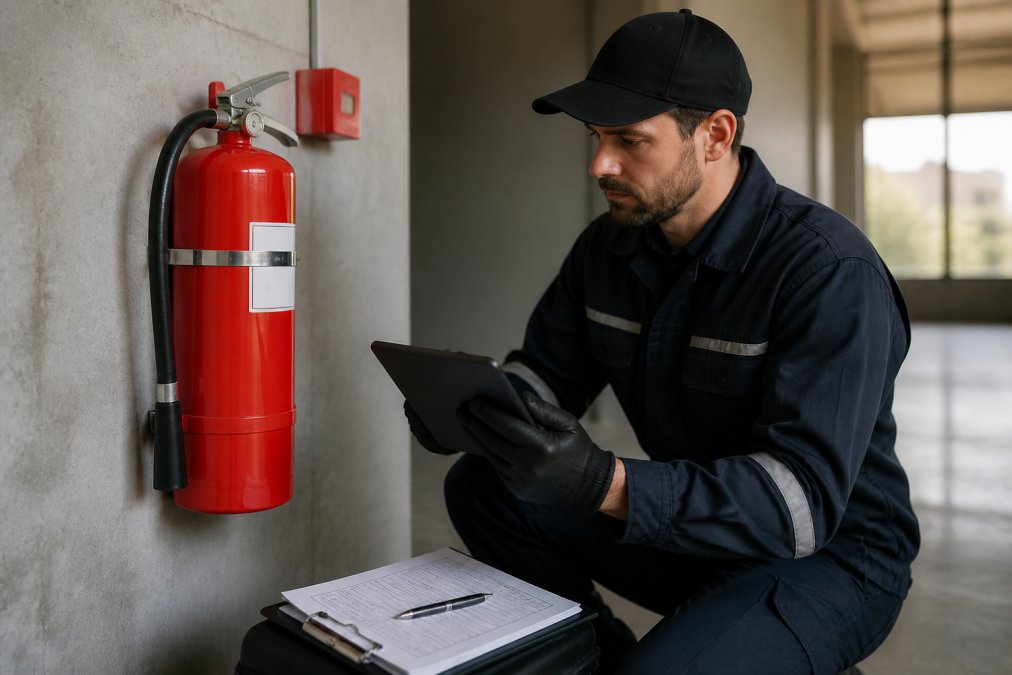
Here’s how to handle deficiencies properly:
-
Document the deficiency in writing. The audit report should clearly describe what failed, where it’s located, and why it failed. Don’t rely on verbal explanations.
-
Assign responsibility. Designate a specific person or team to fix the issue. Give them a deadline that’s realistic but urgent, typically within 30 days for critical deficiencies.
-
Track the remediation. Keep a log of what was done, who did it, when it was completed, and evidence (photos, service reports, certifications). This creates an audit trail.
-
Verify the fix. Have someone independent confirm that the deficiency has actually been resolved. Don’t just assume it’s done.
-
File the evidence. Store the remediation documentation alongside the original audit report. This proves to future auditors that you identified and fixed the problem.
Many organisations fail follow-up audits because they fixed the immediate deficiency but didn’t document the fix properly. An auditor reviewing your records should be able to see the original problem, the action taken, and proof that it was resolved.
The Role of Staff Training in Audit Success
Auditors often interview staff about fire safety procedures. If your team doesn’t know where the fire extinguishers are, how to use them, or what to do in an emergency, that’s a compliance gap, even if the equipment itself is fine.
Staff training demonstrates that your organisation has a safety culture. It’s not just about passing the audit; it’s about ensuring that if a fire actually occurs, your people know what to do.
Common training failures include staff not knowing the location of emergency exits, inability to operate fire extinguishers correctly, lack of awareness about evacuation procedures, and no understanding of their role in a fire emergency. These gaps are identified during audits and documented as non-conformances.
Fyrepower provides on-site and off-site fire training programs tailored to your building and staff. Training should be refreshed annually and documented. Keep records of who attended, when the training occurred, and what was covered. This documentation supports your audit compliance.
Digital Record-Keeping vs. Paper: Impact on Audit Outcomes
How you store your fire safety records affects how quickly you can respond to an audit and whether you can actually prove compliance.
Paper-based systems are vulnerable to loss, damage, and disorganisation. If records are scattered across filing cabinets, desk drawers, and different people’s computers, you’ll struggle to produce a complete picture during an audit. Paper also makes it harder to track what’s due next and what’s overdue.
Digital systems centralise all records in one place, making them searchable and easy to share with auditors. A good digital system also sends automatic reminders when services are due, reducing the risk of missed maintenance cycles. Digital records are also backed up, so they can’t be lost to fire, water damage, or accidental deletion.
The best approach combines both: digital records as your primary system, with paper copies for critical documents. This ensures you have both accessibility and a physical backup.
Platforms designed for fire safety compliance automate much of this burden. Service reports are generated automatically, maintenance schedules are tracked in real time, and you can pull a complete compliance report for an auditor in minutes rather than hours.
Preparing for Your Next Fire Safety Inspection
Preparation is the difference between a smooth audit and a stressful one. Start preparing at least two weeks before your scheduled inspection.
Gather all documentation. Collect every service report, maintenance record, training certificate, and equipment tag from the past year. Organise them chronologically and by equipment type. Have this ready before the auditor arrives.
Walk through your building. Check that all fire safety equipment is accessible, clearly marked, and in good condition. Test fire doors to ensure they close properly. Verify that emergency exits are unobstructed and clearly marked. Fix any obvious issues before the audit.
Brief your staff. Make sure key staff members know where fire safety equipment is located and understand basic procedures. If the auditor interviews staff, they should be able to answer basic questions about evacuation routes and emergency procedures.
Review your last audit report. If you’ve had a previous audit, check what was flagged and confirm that all deficiencies have been addressed. An auditor will often follow up on previous non-conformances, so ensure you have documentation showing they’ve been fixed.
Prepare a compliance timeline. Create a simple document showing when each piece of equipment was last serviced and when it’s due next. This helps auditors verify that you’re staying on schedule.
Have contact details ready. If the auditor has questions about specific work, be prepared to provide contact details for the service providers who performed the work. This allows auditors to verify information if needed.
An audit is not an adversarial process, auditors want to see your building comply with safety standards. Preparation shows that you take this seriously and makes the auditor’s job easier.
The reality is that most audit failures are preventable. They happen because organisations lack clear systems for tracking maintenance, don’t understand what auditors are looking for, or underestimate the importance of documentation. Build a compliance system now, before an audit failure forces you to scramble.
Get in touch with Fyrepower to discuss your fire safety compliance needs. We provide comprehensive testing, detailed audit-ready reporting, staff training, and ongoing maintenance support to ensure your building passes every inspection. Our QBSA-licensed team understands Australian fire safety standards and can help you avoid the common pitfalls that cause audits to fail.
Frequently Asked Questions
What are the most common reasons fire safety reports fail audits?
Fire safety audits typically fail due to incomplete maintenance records, expired or non-compliant fire protection equipment, faulty fire doors, missing fire safety signage, and inadequate documentation of compliance activities. Many failures stem from administrative oversights rather than equipment failure. Properties that lack detailed audit trails or cannot demonstrate preventative maintenance schedules are at high risk. Digital record-keeping systems help prevent these gaps by automatically tracking service dates and generating compliance documentation.
How do I verify a fire service provider’s QBSA fire license?
Check the Queensland Building and Construction Commission (QBSA) online register at qbcc.qld.gov.au to verify your provider’s licence number, class of licence, and current status. Confirm the licence covers fire protection work. Request proof of current insurance and ask for references from recent clients. A fully insured and QBSA-licensed provider demonstrates accountability and compliance with regulatory standards, reducing your risk if audits are challenged.
What happens if we fail a fire safety audit?
A failed audit generates a non-conformance report detailing specific deficiencies and required rectifications. You must address all identified issues within a set timeframe, typically 30 days for critical safety failures. Failure to remediate exposes your property to regulatory action, fines, and liability in the event of fire. The audit findings report becomes part of your compliance file and may be reviewed by insurance companies and building authorities. Swift remediation and documented evidence of corrections are essential to pass a follow-up inspection.
How often should fire safety equipment be tested to ensure audit compliance?
Most fire safety equipment requires testing every 6 months under AS1851 standards, including fire extinguishers, hydrants, and suppression systems. Some equipment may require annual or quarterly checks depending on the system type and building classification. Emergency lighting and exit signage need regular verification. Maintaining a documented maintenance schedule with dated records from each service visit is critical for audit readiness. Digital scheduling systems help ensure no testing cycles are missed, preventing compliance gaps that trigger audit failures.
This article was written using GrandRanker