Table of Contents
- Why Preventative Fire Safety Measures Matter for Retail
- Identifying Fire Hazards and Assessing Risk in Retail Environments
- Fire Safety Equipment and Detection Systems
- Fire Extinguisher Inspection and Maintenance Schedule
- Retail Fire Safety Checklist for Compliance
- Developing a Retail Fire Evacuation Plan
- Fire Safety Training for Retail Staff
- Meeting Compliance and Regulatory Requirements
- Frequently Asked Questions
Last Updated: October 4, 2026
Why Preventative Fire Safety Measures Matter for Retail
Retail spaces face unique fire risks: high foot traffic, combustible stock, and complex electrical systems. A fire threatens your building, customers, staff, and business.
Preventative fire safety measures stop fires before they start, slow those that do, and give people time to escape safely.
These are preventable.
Preventative fire safety is systematic: identify hazards, remove or control them, test equipment regularly, train your team, and document everything for compliance.
This guide walks you through each step. By the end, you’ll have a practical plan to protect your retail space and meet Australian fire safety standards.
Identifying Fire Hazards and Assessing Risk in Retail Environments
Fire starts when three things meet: fuel, oxygen, and heat. Your retail space contains all three. The job is to find where they meet and break the chain.
Retail environments present unique risks: high foot traffic, dense inventory, temporary displays, and mixed-use electrical systems. A walk-through audit must account for these retail-specific hazards.
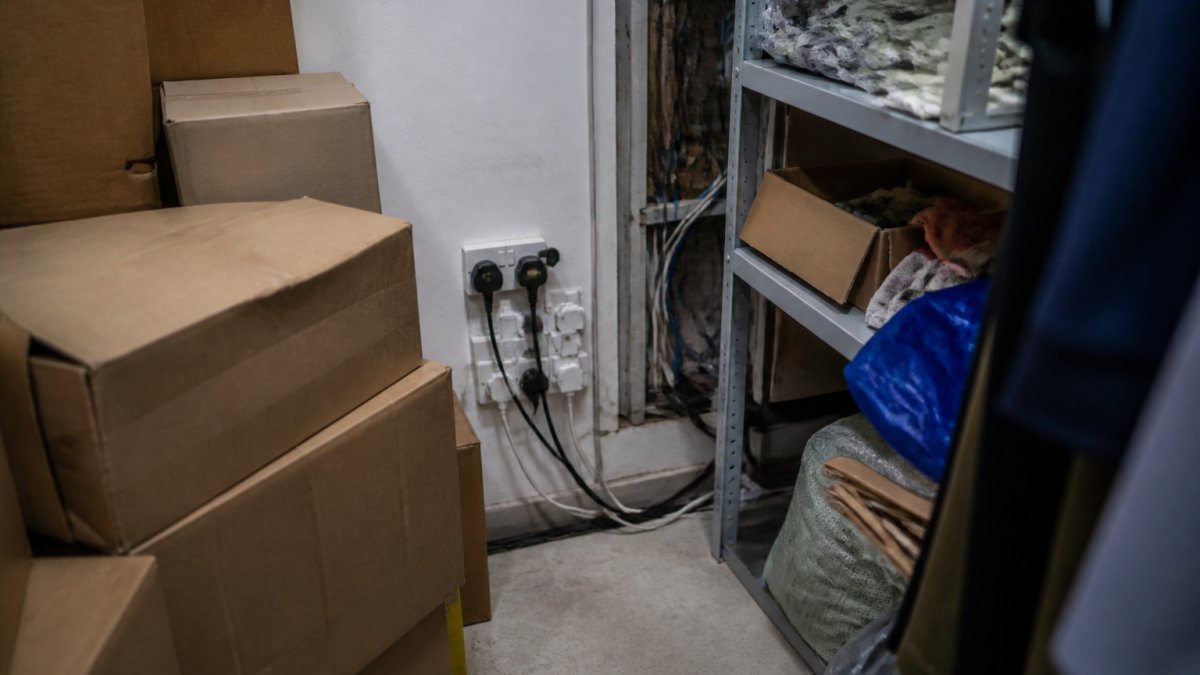
Common ignition sources in retail spaces
Electrical faults are the most common cause of retail fires. Look for: loose connections in power outlets, overloaded power boards, exposed wiring, equipment that feels warm or smells unusual, lights or heaters too close to combustible materials, display lighting too close to fabric or cardboard, and refrigeration units with blocked vents or dust accumulation.
Open flames are less common but still a risk: candles or diffusers near stock, cooking equipment in break areas, smoking in storage areas, and temporary heating in stockrooms.
Friction and overheating cause fires: machinery without proper maintenance, blocked ventilation on fridges or freezers, compressors in confined spaces, and damaged power cords.
Retail-specific fuel load and combustible materials management
Fuel load means how much burnable material you have. Retail shops naturally hold high fuel load, that’s your inventory, but the type and location of stock matter significantly.
Stockroom organisation: Stack boxes no higher than 1.8 metres, keep clear pathways to exits, store flammable liquids in designated areas away from heat, rotate stock regularly, and use metal shelving where possible.
Electrical and device charging: Designate a single charging station away from high-traffic areas with surge protection, don’t allow charging in stockrooms, and inspect cables regularly for damage.
Documenting your risk assessment
A risk assessment is a legal requirement under Queensland’s Fire Safety Act and the Building Code of Australia. Document: location, type, likelihood, consequence, control measure, responsible person, and target date for each hazard. This becomes your action plan and compliance record. Review and update annually or when layout, stock, or equipment changes.
Fire Safety Equipment and Detection Systems
Every retail space needs three layers of fire response: detection, suppression, and escape. These are not optional, they are legal requirements under the Building Code of Australia (BCA) and Queensland’s Fire Safety Act.
Detection: Smoke alarms and fire alarm systems
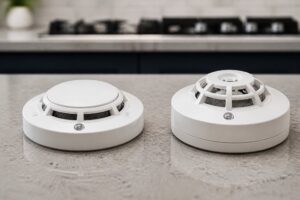
Smoke alarms alert occupants early. Install photoelectric alarms in stockrooms, near kitchens, in office spaces, and any enclosed space where fire could start unnoticed. Install on ceilings or high on walls, test monthly, use battery backup, and replace every 10 years.
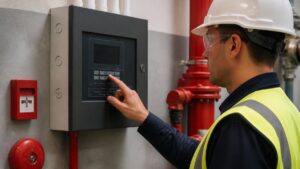
If your retail space is part of a larger building, a fire alarm system may be mandatory. It detects smoke or heat, sounds an audible alarm, alerts a monitoring service, and triggers emergency lighting. Systems must comply with Australian Standard AS1851 and be serviced annually by a licensed technician.
Suppression: Fire extinguishers
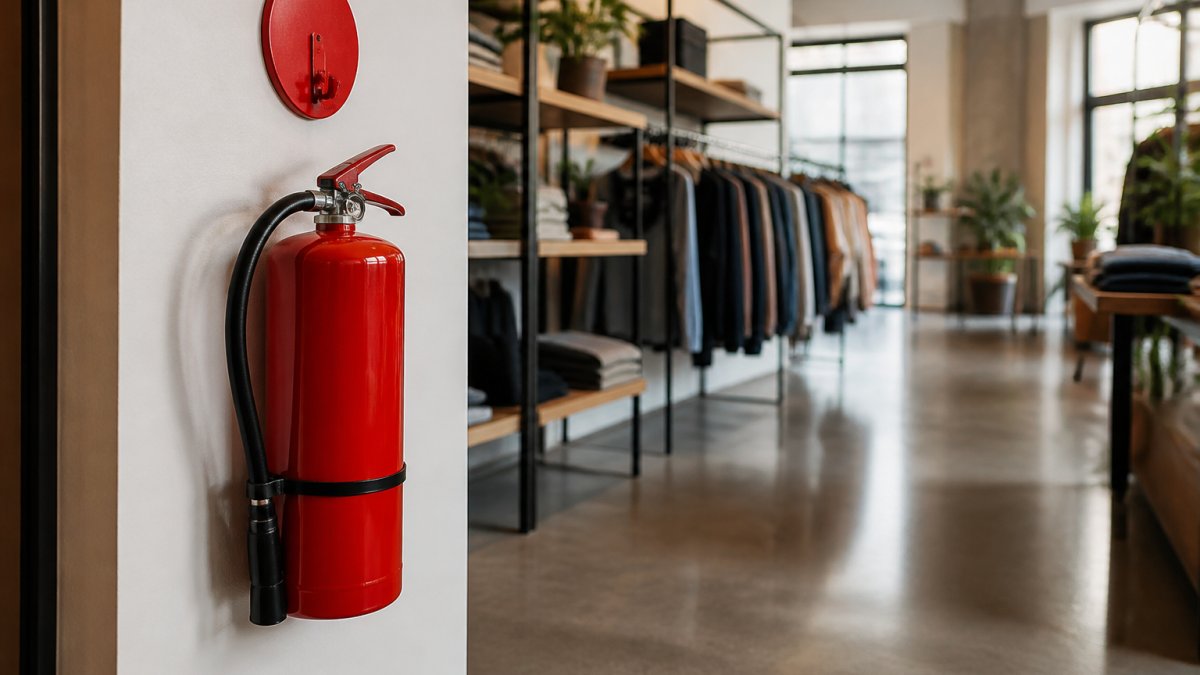
Fire extinguishers are your first line of defence. You need at least one on the shop floor, one in the stockroom, one near cooking equipment (if applicable), and one near electrical panels or high-risk equipment.
Most retail spaces use multipurpose (ABE) extinguishers for Class A (paper, cardboard, wood, fabric), Class B (flammable liquids), and Class E (electrical) fires. Add Class F extinguishers for cooking oils if you have a kitchen. Consult your risk assessment to confirm the right type.
Extinguisher placement and access: Mount at eye level (1.0-1.5 metres), keep visible and unobstructed, place near ignition sources but not so close a fire blocks access, and ensure staff know their location and use.
Escape: Emergency lighting and exit signage
If power fails during a fire, people must still find their way out. This requires exit signs illuminated by battery backup, emergency lighting along evacuation routes (at least 50 lux at floor level), and clear pathways to all exits. Test monthly and replace batteries annually.
Compliance checklist for fire safety equipment
Use this checklist monthly. Assign it to one staff member. They sign it off and file it.
Smoke Alarms:
- Test all alarms by pressing the test button (should sound loudly)
- Check that alarms are free of dust or cobwebs
- Confirm batteries are present and functioning (if battery-powered)
- Note any alarms that do not sound; mark for replacement
- Record test date on the checklist
Fire Extinguishers:
- Confirm each extinguisher is in its designated location
- Check the pressure gauge is in the green zone (not red or yellow)
- Inspect the seal and pin are intact (not tampered with)
- Look for visible damage, rust, or leaks
- Ensure the access path to each extinguisher is clear
- Record visual inspection date on the extinguisher label
Emergency Lighting and Exit Signs:
- Test emergency lighting by switching off main power (lights should stay on)
- Confirm exit signs are illuminated and visible
- Check that evacuation route pathways are clear of obstacles
- Note any lights that do not illuminate; mark for repair
Fire Alarm System (if installed):
- Confirm the system is armed and functioning
- Check that the control panel shows no faults or warnings
- Verify that the monitoring service contact details are current
- Record any system tests or alerts
Documentation:
- File this checklist in a folder or binder
- Keep records for at least 12 months
- Schedule annual professional servicing of extinguishers and alarms
- Obtain and file service certificates from licensed technicians
Print this checklist. Laminate it. Post it in the staff room. Make it routine. A fire won’t wait for you to remember, your equipment must be ready.
Fire Extinguisher Inspection and Maintenance Schedule
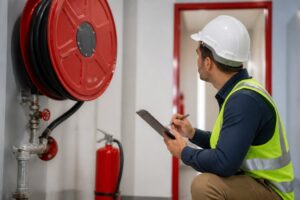
Fire extinguishers only work if they’re ready. Set up a maintenance routine: monthly visual check (extinguisher in place, pressure gauge in green, seal intact), annual professional service by a qualified technician, and professional recharge after any use. Keep records and write the service date on a label. Fyrepower provides professional fire extinguisher inspection and maintenance, testing to Australian Standard AS1851 and providing detailed reports for audits.
Retail Fire Safety Checklist for Compliance
Use this checklist monthly. Assign it to one staff member. They sign it off and file it.
Electrical Safety:
- Check all power outlets for loose connections
- Unplug equipment not in use
- No power boards daisy-chained (only one board per outlet)
- No exposed wiring visible
- Heaters and lights away from stock Maintaining these rigorous standards for daily equipment management provides the necessary foundation for safe electrical installations that protect both the premises and the people working within them.
Combustible Materials:
- Stockroom is tidy; no dead inventory
- Boxes not stacked above safe height
- Clear pathways to all exits
- Flammable liquids in designated storage
- No clutter blocking ventilation on fridges or equipment
Fire Safety Equipment:
- Smoke alarms tested (press test button)
- Fire extinguishers in place and pressure gauge in green
- Fire alarm system functioning (if installed)
- Emergency lighting working
- Exit signs lit and visible
Documentation:
- Last professional extinguisher service recorded
- Hazard assessment up to date
- Staff training records on file
- Evacuation plan posted and visible
Print this checklist. Laminate it. Put it on the staff room wall. Make it routine.
Developing a Retail Fire Evacuation Plan
An evacuation plan tells people where to go if a fire starts. Your plan must cover: primary exits (marked, unlocked, unblocked), secondary exits, assembly point (at least 100 metres away), head count procedure, and special needs (mobility aids, hearing loss).
Evacuation routes and assembly points
Draw a map marking every exit, safest routes to exits, and assembly point (at least 100 metres away, away from traffic, easily found, visible from shop). Post in staff room and near front counter; show new staff on their first day.
Accounting for customers and people with access needs
Your plan must account for customers: train staff to direct them calmly to exits without stopping for belongings, move injured people to safe areas away from smoke and heat, use visual alarms for deaf or hard of hearing occupants, and ensure exits are wide enough for mobility aids. Run practice evacuations at least once a year.
Fire Safety Training for Retail Staff
Staff are your first responders. Training should cover: extinguisher location and use (PASS: Pull, Aim, Squeeze, Sweep), evacuation procedures, calling emergency services, what not to do (don’t hide, use lifts, or go back inside), and helping customers with access needs. Train at induction, annually, and after incidents. Fyrepower provides tailored on-site and off-site training. Keep records of attendees, dates, and content.
Meeting Compliance and Regulatory Requirements
In Australia, fire safety is governed by the National Construction Code and state-based legislation.
Key requirements:
- Fire detection: Smoke alarms in certain areas (mandatory in most retail)
- Fire extinguishers: Required in commercial spaces; must be AS1851-certified
- Emergency lighting: Exit signs and pathways must be lit if power fails
- Evacuation plan: Must be documented and staff trained
- Maintenance records: All equipment must be serviced and documented
A compliance audit checks all of this. An auditor will ask for:
- Maintenance records for fire extinguishers and alarms
- Evidence of staff training
- Your evacuation plan and risk assessment
- Photos or inspection reports showing equipment location
If records are missing or incomplete, you fail. Even if your equipment works perfectly, poor documentation puts you at risk.
Fyrepower maintains detailed compliance records for every service we perform. Our reports include test results, and certification dates.
Don’t wait for an audit to get your house in order. A fire won’t wait either.
Preventative fire safety measures protect your retail space, your team, and your customers. Start with a hazard assessment. Install and maintain equipment.
Fyrepower helps Gold Coast retail owners meet all of these requirements.
Frequently Asked Questions
What are the most important preventative fire safety measures for a retail shop?
The most critical measures include regular hazard identification and risk assessment, maintaining fire detection and alarm systems, inspecting and testing fire extinguishers every 6 months, keeping exits and evacuation routes clear, and ensuring staff receive fire safety training. Equally important is managing combustible materials, addressing electrical faults or exposed wiring, and maintaining a documented inspection and maintenance schedule. These steps reduce ignition sources, enable early detection, and ensure your team can respond effectively in an emergency.
How often should fire extinguishers be inspected in retail spaces?
Fire extinguishers must be inspected and tested every 6 months under Australian fire safety standards. A visual check should occur monthly to confirm the extinguisher is accessible, not damaged, and the pressure gauge is in the green zone. Professional testing ensures the unit is fully charged, seals are intact, and the discharge mechanism functions correctly. Detailed records of each inspection and test must be kept and made available during compliance audits.
What should a retail fire safety checklist include?
A comprehensive retail fire safety checklist should cover hazard identification (electrical faults, overheating components, combustible storage), fire detection and alarm system functionality, fire extinguisher location and condition, emergency lighting and exit signage, evacuation route clearance, staff training records, maintenance schedules, and compliance documentation. The checklist should be reviewed monthly, with formal inspections and testing conducted every 6 months. This ensures consistent risk reduction and provides evidence of compliance if audited.
What fire safety training should retail staff receive?
Retail staff should receive training on recognising fire hazards and ignition sources, using fire extinguishers correctly (the PASS technique), understanding evacuation procedures and assembly points, assisting customers with access needs during evacuation, and knowing how to report faults or hazards. Training should cover the specific layout and emergency procedures of your retail space and be refreshed annually or when staff change. Documentation of all training sessions must be maintained to demonstrate compliance with regulatory requirements.