Last Updated: November 16, 2026
Quick Summary
Yes, valve supervision is required for sprinkler control valves whose closure could stop water reaching sprinklers or disable the alarm. Supervision uses a tamper switch or manual checks to alert the fire alarm panel when a valve changes state, so a closed valve can be fixed quickly.
- Supervise any valve whose closure would leave part of the building without sprinkler protection.
- Main control, alarm, sectional isolation and pump valves are normally supervised in commercial systems.
- Electrical supervision with a tamper switch is the default for critical valves because it is faster than manual checks.
- Test each supervised valve by moving the handle slightly and confirming the panel signal and zone.
- Log every seal change, including the reason and the person who made it.
Table of Contents
- What Valve Supervision Means in a Commercial Sprinkler System
- Which Sprinkler Control Valves Require Supervision
- How Tamper Switches and Valve Position Monitoring Work
- Connecting Valve Signals to Alarm Monitoring
- Testing, Inspection and Documentation Requirements
- Managing Impairments and Troubleshooting Supervisory Signals
- Booking Your Valve Supervision Check With Fyrepower
- Frequently Asked Questions
What Valve Supervision Means in a Commercial Sprinkler System
Valve supervision is the monitoring that tells a building’s fire alarm panel whether a sprinkler control valve is open and ready to deliver water. Sprinkler control valves can be closed by mistake or on purpose, and a closed valve stops water reaching the sprinklers when a fire starts. Supervision catches that change early so someone can fix it.
Supervision is a form of protection, not a replacement for regular inspection. A valve can be supervised and still be sealed incorrectly, so both matter. Think of supervision as the alarm that tells you a problem exists, and inspection as the check that confirms the valve works.
- Supervisory signal: a signal sent to the alarm panel when a valve changes state.
- Control valve: the valve that feeds water to the sprinkler system.
- Isolation valve: a valve that can cut off part of the system for repairs.
Which Sprinkler Control Valves Require Supervision
The short answer is that every valve whose closure could stop water reaching sprinklers should be supervised, but the practical list is best built valve by valve rather than from a single sentence in a code.
A common pattern in commercial buildings is to supervise the following:
- Main control valve (riser valve): the valve between the town main or storage and the sprinkler system. Supervision is expected in virtually all commercial installations because closing it disables the whole system.
- Alarm valve or check valve: the valve that opens on water flow to trigger the alarm. It is normally supervised because a stuck or closed alarm valve prevents both water delivery and alarm activation.
- Sectional or zone isolation valves: valves that isolate part of a multi-storey or multi-zone system. These are typically supervised because a closed sectional valve leaves part of the building unprotected while the rest of the system still appears healthy.
- Pump suction and discharge valves: where fire pumps are installed, the valves that isolate the pump from the system are normally supervised so a closed valve does not leave the pump running against a dead head.
- Backflow prevention device isolation valves: the isolating valves either side of a backflow preventer are commonly supervised, because closing them removes water from the system just as effectively as closing the main valve.
- Test and drain valves: these are usually not supervised in the same way, because they are normally closed and are opened only for testing. They are controlled through locking, tagging and the inspection regime rather than through a tamper switch.
- Auxiliary valves serving special hazards or private hydrants: supervision depends on whether closing the valve affects sprinkler coverage; where it does, supervision is normally provided.
Watch out: small valves and rarely used valves are the ones most often left off the supervision schedule, and they are also the ones most likely to be found closed at the next inspection.
Electrical Supervision Versus Manual Supervision
Electrical supervision uses a tamper switch or valve-position switch wired to the fire alarm panel, so a change of valve position produces a supervisory signal at the panel within seconds. Manual supervision relies on a person physically checking the valve on a scheduled basis and recording the result. Because a valve left out of position can turn a small leak into a costly interruption, keeping supervision checks consistent is one practical part of preventing water damage in commercial buildings.
Many buildings use both: electrical supervision provides continuous monitoring, while routine inspection confirms the valve, the switch and the locking device are all in good order.
Locking, Sealing and Tagging Valves
A locked, sealed or tagged valve makes unauthorised operation harder and easier to spot. A padlock, a numbered seal or a clear tag on the handwheel all help, and the method should be recorded on the valve schedule so the next technician knows what ‘normal’ looks like. Keep a record of seal numbers so you can tell when a seal has been broken and by whom.
Watch out: a seal that is broken and not recorded can hide a closed valve for weeks, so always log any seal change, including the reason and the person who made it.
How Tamper Switches and Valve Position Monitoring Work
A tamper switch is a small device fitted to a valve. It detects when the valve handle moves from the open position and sends a signal to the fire alarm panel. Valve position monitoring is the wider practice of tracking whether each valve is open or closed.
The switch and its wiring are the parts that most often fail, so they need testing like any other part of the system. Test the signal by moving the valve slightly and confirming the panel reacts. Record the result each time.
Connecting Valve Signals to Alarm Monitoring
A supervisory signal only helps if someone receives and acts on it. Many systems send valve signals to a monitoring station, which can alert a responsible person or a service provider. Local alarm panels show the signal on screen and sound a buzzer, but nobody may be in the room to see it.
Make sure the signal routing is clear: who gets the alert, how fast they respond, and who fixes the valve. This coordination between the sprinkler system, the fire alarm system and the monitoring service is often where gaps appear.
Testing, Inspection and Documentation Requirements
Testing and inspection keep supervision reliable, and in Australia the maintenance regime is set by AS 1851 (routine service of fire protection systems and equipment).
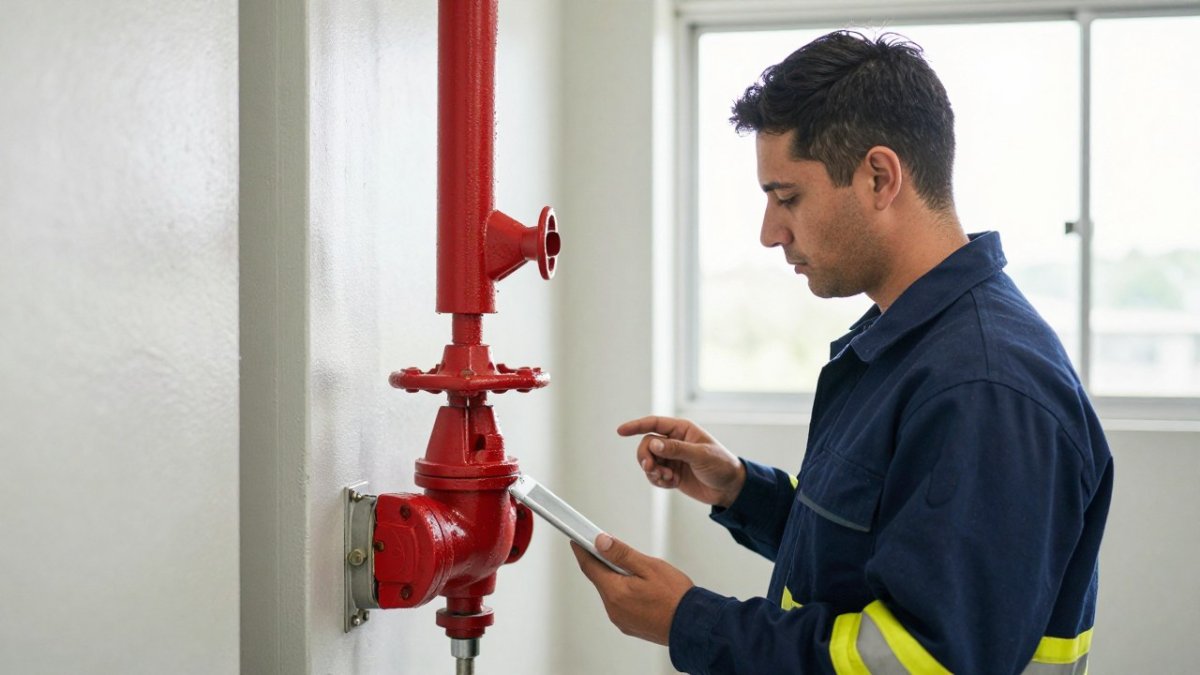
A practical end-to-end test of a supervised valve follows the same path the signal takes:
- Confirm the baseline. Check the valve is in its normal open position, the tamper switch is secure and the panel shows ‘normal’ for that zone. Record the starting state.
- Operate the device. Move the valve handle a small amount from the open position, enough to trip the switch but not enough to change the water flow, and confirm the panel receives the supervisory signal.
- Verify panel receipt. Confirm the correct zone, device description and time stamp appear at the fire alarm panel. A signal that arrives on the wrong zone is as much a fault as no signal at all.
- Verify monitoring-station receipt where applicable. If the panel is connected to a monitoring station, confirm the supervisory signal was received and logged there, not just at the on-site panel.
- Restore and reset. Return the valve to the fully open position, confirm the panel returns to normal, and reset any latching signals according to the panel manufacturer’s instructions.
- Record and correct. Log the date, the technician, the device tested, the result and any corrective action. If the signal failed, raise a defect and schedule repair before the next service interval.
Documentation matters as much as the checks themselves. Read how to record valve checks and tamper tests for audit readiness to see the logbook entries auditors look for.
Watch out: vague records such as ‘valves checked’ without device identifiers are a common reason audits fail, because they cannot show which valve was tested or what the result was.
- Test the valve tamper switch and confirm the panel signal, including zone and description.
- Check the valve handle, lock and seal, and compare the seal number with the record.
- Confirm the valve is in the normal open position after testing.
- Log the date, the technician, the device and any faults found.
- Confirm monitoring-station receipt where the panel is remotely monitored.
Check the current rules in your state or territory, since some local requirements add to the national standard, and confirm the edition adopted there before setting your service frequency. The broader compliance framework for commercial property managers sets out which inspections and documentation are legally required.
The steps below summarise how to test a supervised valve end to end, from baseline check to record.
| Step | What to do | Note |
|---|---|---|
| 1. Confirm the baseline | Check valve is open, tamper switch secure, panel shows normal | Record the starting state |
| 2. Operate the device | Move handle a small amount from open | Switch must trip, flow unchanged |
| 3. Verify panel receipt | Confirm zone, description and time stamp | Wrong zone counts as a fault |
| 4. Verify monitoring station | Confirm signal logged remotely where connected | Not just the on-site panel |
| 5. Restore and reset | Return valve to fully open, reset panel | Follow manufacturer instructions |
| 6. Record and correct | Log date, technician, device, result, action | Raise defect if signal failed |
Managing Impairments and Troubleshooting Supervisory Signals
An impairment is any condition that takes part of the fire protection system out of service, such as a closed valve or a disabled switch. When an impairment happens, follow your impairment procedure, notify the right people, and put temporary safeguards in place until the system is restored.
When a supervisory signal goes off, work out whether the valve is really closed or the switch has faulted. Check the valve first, then the wiring and the switch. Do not silence the signal and walk away. Read why suppression system maintenance is critical and how neglect creates risk before deciding how urgently the fault needs repair. Restore the valve, test the signal again and record the fault.
Booking Your Valve Supervision Check With Fyrepower
Valve supervision is easier to manage when a qualified team handles the testing, sealing and documentation. At Fyrepower, our team works across the Gold Coast, South Brisbane and Northern New South Wales.
If you want a valve supervision check for your commercial property, get in touch with Fyrepower today. Our team can talk through your system, your valves and your inspection schedule, and give you a clear next step. Learn about the installation practices a qualified contractor follows before you book.
Frequently Asked Questions
What does valve supervision mean in a commercial sprinkler system?
Valve supervision means the system detects when a sprinkler control or isolation valve is moved from its normal open position, and reports that change to a fire alarm panel or monitoring station. The goal is to alert building staff and the monitoring provider before a closed valve leaves sprinklers without water. Supervision is usually provided by a tamper switch or valve position switch fitted to the valve. The exact requirements depend on the applicable Australian standard, the building classification and the approving authority, so confirm them with your fire engineer or fire protection contractor before making changes.
Which sprinkler system valves need to be supervised?
In general, the valves that isolate the water supply to the sprinkler system, including main control valves and valves on the sprinkler riser, are the ones most often required to be supervised. Valves that could cut water to sprinklers without anyone noticing are the main concern. Whether a particular valve must be supervised depends on the system design and the requirements that apply to the building in Australia. Check the design documents and the requirements of your local fire authority for the specific valves in your building.
How often should commercial sprinkler valve supervision be tested?
Supervision devices should be tested as part of the regular inspection and testing program for the sprinkler system, and the frequency is set by the applicable Australian standard for sprinkler system maintenance. A common practice is to confirm that each supervisory signal reaches the alarm panel or monitoring station and that the panel displays it correctly. Record each test result, including the valve tested, the date, the signal received and any corrective action. Pricing for testing depends on the number of valves, the building size and the visit schedule, so request a quote from Fyrepower for current rates.
Who is responsible for maintaining sprinkler valve supervision?
Responsibility for maintaining valve supervision usually sits with the building owner or manager, who must keep the sprinkler system in working order. In practice, the owner or manager engages a licensed fire protection contractor to inspect, test and repair the supervision devices. Facility staff should know which valves are supervised and what the alarm signal means. Written records of inspections and tests help demonstrate compliance during an audit or insurance review.