Table of Contents
- What You’ll Need Before Booking Fire Testing
- How to Find Reliable Fire Testing Services in Northern NSW
- Fire Safety Practitioner Requirements NSW
- Commercial Fire Extinguisher Testing Frequency
- AS 1851 Compliance Checklist for Your Property
- Common Mistakes to Avoid During Fire Safety Testing
- Understanding Your Fire Testing Report and Documentation
- Frequently Asked Questions
Last Updated: August 22, 2026
What You’ll Need Before Booking Fire Testing
Before contacting a fire testing service, gather documentation about your property and existing fire safety systems. Most commercial properties in Northern NSW require specific information for an accurate assessment and quote.
Locate your current fire safety certificates and maintenance records, which show what equipment you have, when it was last serviced, and whether previous testing met compliance standards. Know your building type and occupancy classification, as a retail space, strata complex, and industrial warehouse have different fire safety requirements under Australian standards. Document the age of your fire extinguishers, emergency lighting systems, and any sprinkler or hydrant infrastructure, as older equipment may need replacement rather than servicing. Write down the specific locations of all fire safety equipment so the technician doesn’t waste time locating it.
Understand your current compliance status. If you’ve never had formal fire testing or your last testing was more than six months ago for commercial premises, you’re likely non-compliant. Have a list of staff members who might benefit from fire safety training, as many testing providers offer on-site training as part of a comprehensive safety program.
Request the testing provider’s QBSA licence number before booking. Verify it independently on the QBSA register, this takes 60 seconds and confirms they’re legally authorised to conduct fire safety work in New South Wales.
How to Find Reliable Fire Testing Services in Northern NSW
Finding a trustworthy fire testing provider starts with checking credentials, not just price. The cheapest quote often reflects cutting corners on documentation or thoroughness, which leaves your property exposed to compliance violations and genuine safety risks.
Verifying credentials and QBSA licensing
A fire testing service operating in Northern NSW must hold current QBSA licensing (qbcc.qld.gov.au). The Queensland Building and Construction Commission maintains a public register where you can verify any provider’s licence status, scope of work, and disciplinary history.
When contacting a potential provider, ask for their QBSA licence number immediately. If they hesitate or can’t provide it, move on. Legitimate operators have this information ready. Check the QBSA register yourself to verify. Look for providers who hold specific accreditation in fire safety testing standards, such as AS 1851 (the Australian standard for maintenance of fire protection systems and equipment). Ask whether the provider carries professional indemnity insurance, which protects you if their testing is negligent or incomplete.
Checking insurance and compliance history
Request proof of public liability insurance before any technician visits your property. This covers damage to your building or equipment during testing. A reputable provider won’t hesitate to share this documentation.
Ask the provider how many years they’ve been operating and whether they’ve had complaints or disputes with clients. Long-standing providers with clean records are statistically more reliable than new entrants. You can also check online reviews, but look for patterns rather than individual complaints. Request references from similar properties they’ve tested. When contacting these references, ask specifically about reporting quality, appointment reliability, and whether the provider identified issues previous technicians missed.
Find out what happens if the provider misses an appointment or fails to complete testing on schedule. Compliance deadlines don’t move, if your 6-monthly fire safety testing is due and the provider cancels, you’re suddenly non-compliant.
Avoid providers who quote over the phone without site inspection. Accurate fire testing pricing depends on the number and type of systems, building size, and accessibility. A quote given blind is either unrealistically low or will blow out dramatically once the technician arrives.
Fire Safety Practitioner Requirements NSW
Anyone conducting fire safety testing in New South Wales must meet specific competency and licensing requirements. Understanding these standards helps you verify that the person testing your equipment actually knows what they’re doing.
Fire safety practitioners in NSW typically hold qualifications in fire protection systems, building services, or related disciplines. They must demonstrate competency in the specific type of testing they’re conducting. The QBSA licensing framework requires that fire safety work be performed by individuals with documented training and experience.
Most professional fire testing providers employ staff who hold certifications from recognised training bodies. Ask your provider what qualifications their technicians hold and whether they complete ongoing professional development. Fyrepower maintains fully QBSA-licensed staff across Northern NSW, ensuring every technician conducting fire safety testing has verified credentials and current knowledge of Australian safety standards.
Commercial Fire Extinguisher Testing Frequency
Commercial fire extinguishers in Australia must be serviced at specific intervals determined by their type and the building’s risk classification. Most portable fire extinguishers require annual servicing as a minimum legal requirement, including pressure checks, seal inspections, and component verification.
Hydrant systems and fixed suppression equipment follow different testing schedules. Hydrants typically require annual hydrostatic pressure testing to confirm they’ll function in an emergency (standards.org.au). Sprinkler systems need annual inspection and five-yearly hydrostatic testing of the main pipe.
The specific frequency for your property depends on your building’s occupancy classification and risk assessment. A small retail venue might need annual testing across all systems, while a multi-unit strata complex with higher occupancy might require more frequent checks on certain equipment.
Mark your testing schedule in your property management calendar right now. Set reminders for 30 days before each deadline, giving you time to book a provider and complete testing before the deadline passes.
Fyrepower schedules testing on a 6-monthly cycle for most commercial clients, aligning with standard compliance requirements and building code expectations across the Gold Coast and Northern NSW.
AS 1851 Compliance Checklist for Your Property
AS 1851 is the Australian standard that governs maintenance of fire protection systems and equipment. Compliance with this standard is legally required for most commercial properties. Understanding what AS 1851 demands helps you verify whether your testing provider is thorough.
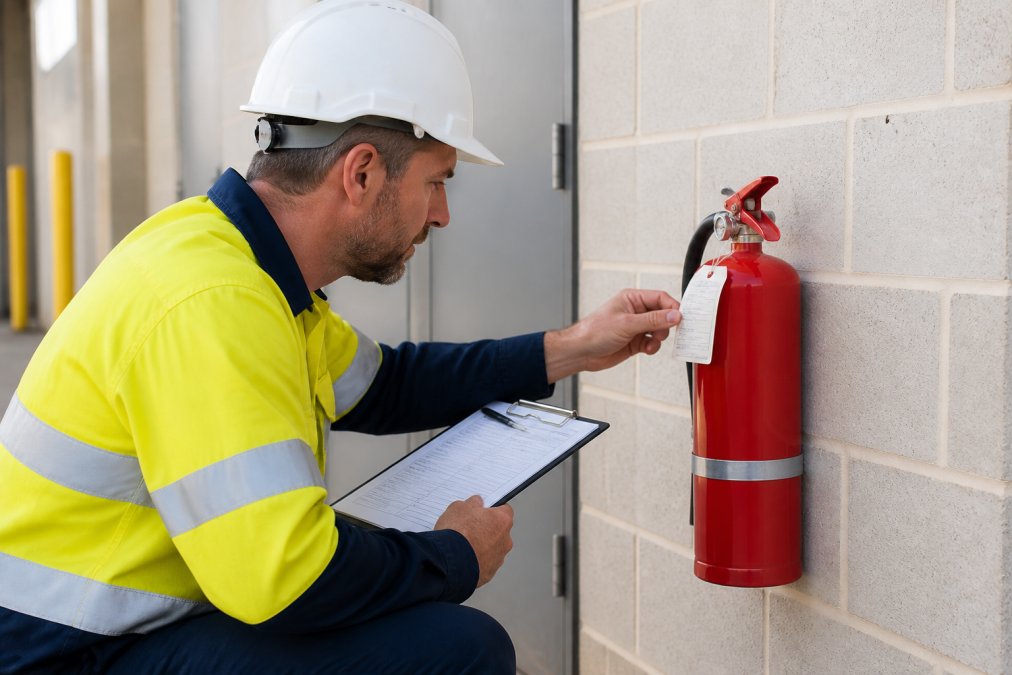
The standard requires documented inspection and testing of all fire safety equipment, including fire extinguishers, emergency lighting, exit signage, fire alarm systems, hydrants, and sprinkler infrastructure. Fire extinguishers must be physically inspected for damage, corrosion, or leaks, with the pressure gauge showing the needle in the green zone, the pin and safety seal intact, and the hose and nozzle clear and undamaged.
Emergency lighting systems must be tested monthly for at least 30 seconds to confirm they activate and provide adequate illumination (standards.org.au). Annual full-duration testing (typically 90 minutes) confirms the battery can sustain the system for the required duration. Fire alarm systems require annual testing of all sensors, manual call points, and alert mechanisms. Exit signage and emergency lighting must be positioned correctly and function reliably, with exit doors unobstructed and properly labelled.
| Component | Testing Frequency | Compliance Check |
|---|---|---|
| Fire extinguishers | Annual | Pressure gauge green, seal intact, no damage |
| Emergency lighting | Monthly visual, annual full test | Activates on power loss, adequate brightness |
| Fire alarm system | Annual | All sensors respond, alert sounds correct |
| Exit signage | Annual | Clearly visible, illuminated, unobstructed |
| Hydrants | Annual | Hydrostatic pressure test completed |
| Sprinkler systems | Annual inspection, 5-yearly hydrostatic | Pressure maintained, no leaks |
Common Mistakes to Avoid During Fire Safety Testing
Property managers often make preventable errors that either waste testing time or leave compliance gaps unaddressed. The most common mistake is treating fire safety testing as a box-ticking exercise rather than a genuine safety assessment. When you view testing as mandatory compliance, you miss opportunities to identify equipment issues before they become emergencies.
Don’t assume your previous testing was thorough. Many providers conduct minimal testing to keep costs low. When you switch providers, explicitly ask them to perform comprehensive testing, not just a quick visual inspection. Avoid leaving equipment inaccessible, if fire extinguishers are blocked by storage boxes or hydrants are surrounded by parked vehicles, the technician can’t test them properly.
Don’t ignore testing recommendations. If the provider identifies a faulty unit, leaking hose, or malfunctioning sensor, address it immediately. Deferring repairs extends your exposure to non-compliance and genuine safety risk.
Never hire a provider who won’t give you detailed written reports. Vague documentation doesn’t prove anything. Detailed reports show exactly what was tested, what passed, what failed, and what remedial action is required. These reports protect you during audits and insurance claims.
Avoid scheduling testing during peak business hours if possible. Testing requires access to all areas and sometimes involves brief system shutdowns. Don’t assume the same provider will remember your property’s specifics year after year. At each testing appointment, confirm they have your building’s current layout, occupancy classification, and equipment inventory.
Understanding Your Fire Testing Report and Documentation
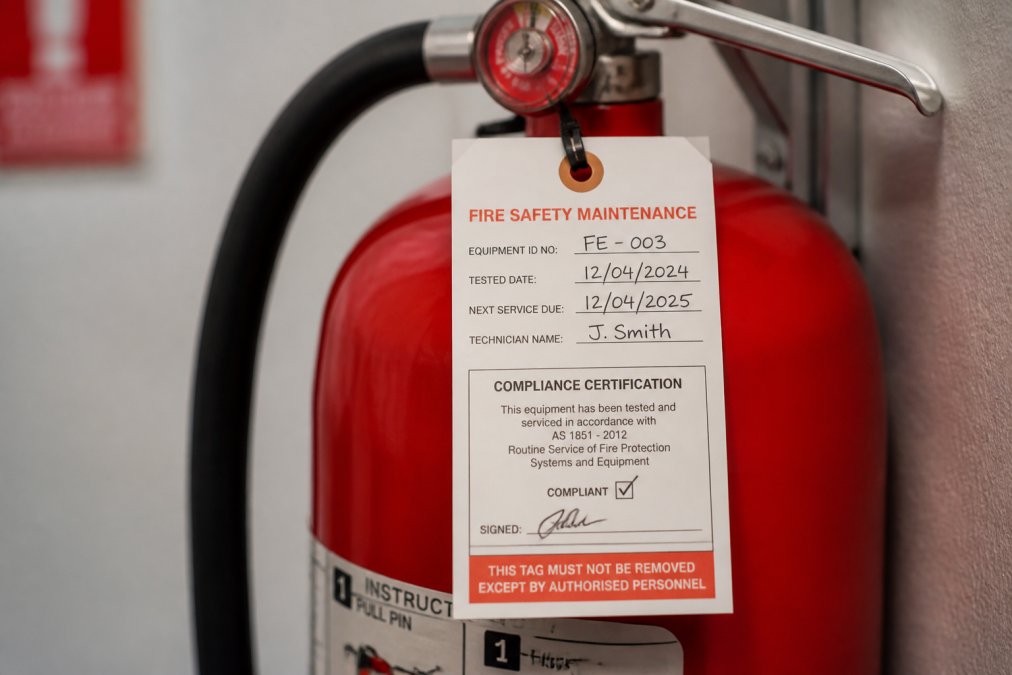
Your fire testing report is more than a compliance document. It’s a detailed record of your property’s safety status and a roadmap for maintaining compliance. A comprehensive fire testing report should include the testing date, the technician’s name and credentials, your property’s address and occupancy classification, and a complete inventory of equipment tested.
The report must document pass/fail status for each component and explain what specific tests were performed. Any failed or defective items must be clearly identified with recommended remedial action. The report must include the next scheduled testing date, typically 12 months from the testing date for annual components.
Look for evidence that the technician actually visited your property and tested your specific equipment. Detailed reports with specific observations about your property’s condition and equipment status indicate thorough work. Keep your testing reports in a central file for at least five years. During regulatory audits or insurance claims, these reports prove you maintained compliance and conducted testing as required.
Fyrepower provides detailed testing documentation that clearly identifies compliance status, remedial actions required, and next testing dates. This documentation holds up under regulatory audit and provides the evidence you need if a fire safety incident occurs.
Finding reliable fire testing in Northern NSW requires checking credentials, verifying insurance, and understanding what comprehensive testing actually involves. The cheapest provider isn’t the best investment, a thorough testing service identifies safety gaps before they become emergencies, keeps your property compliant with Australian standards, and protects your liability exposure. Fyrepower’s fully insured and QBSA-licensed team across Northern NSW conducts AS 1851-compliant fire safety testing with detailed documentation that meets regulatory requirements and provides genuine peace of mind. Get in touch with us now to schedule your comprehensive fire safety assessment and ensure your property meets all compliance obligations.
Frequently Asked Questions
What are the fire safety practitioner requirements in NSW?
Fire safety practitioners in NSW must hold relevant qualifications and training in fire protection systems. They should be accredited by recognised bodies and understand AS 1851 standards for fire equipment maintenance. QBSA licensing is essential for service providers operating in Queensland, and equivalent credentials are required across NSW. Always verify your technician’s credentials through official registers before booking fire testing services.
How often must fire extinguishers be tested in commercial properties?
Commercial fire extinguisher testing frequency depends on the type of extinguisher and its location. Most extinguishers require annual inspection and servicing under AS 1851. High-risk environments or certain extinguisher types may need more frequent testing. Your fire safety consultant can determine the exact schedule for your property based on occupancy type, hazard assessment, and regulatory requirements.
What should I look for in a reliable fire testing service provider?
Choose a provider with full insurance, current QBSA licensing or equivalent NSW credentials, and a track record of detailed reporting. Verify their experience with your property type and ask about their response times for booking appointments. Request references from similar businesses and confirm they provide comprehensive documentation after each test. Transparent pricing and clear communication about compliance deadlines are essential indicators of reliability.
What documentation do I need to keep after fire safety testing?
Retain all inspection reports, maintenance certificates, and testing tags for your records. Documentation should include the date tested, technician credentials, equipment condition, any repairs made, and the next scheduled test date. This documentation proves compliance during audits and is essential for insurance claims. Store reports securely and ensure your team knows where to find them if regulators request evidence of compliance.
This article was written using GrandRanker