Table of Contents
- Emergency Fire Alarm Repair Services in Brisbane: What to Expect
- Faulty Fire Alarm? What to Do in the First Five Minutes
- Fire Alarm Fault Repair: How Technicians Diagnose and Fix the Problem
- Emergency Call-Outs, Response Times and What a Repair Visit Involves
- Fire Alarm System Maintenance: Stopping Faults Before They Start
- Fire Alarm Testing Services and Compliance Records That Hold Up
- What Affects the Cost of a Repair and How to Avoid Quote Blowouts
- Conclusion
- Frequently Asked Questions
Last Updated: October 17, 2026
Emergency Fire Alarm Repair Services in Brisbane: What to Expect
A fire alarm chirping at 2am, or a panel showing a fault you don’t recognise, needs attention fast. At Fyrepower, we handle emergency fire alarm repair services for strata managers, venue owners and commercial sites, and we know the difference between a nuisance fault and a genuine failure.
The most important thing to understand: a fault is not the same as a fire. Most faults are electrical, battery-related or environmental. But until a technician confirms that, you treat the system as compromised and act accordingly.
Faulty Fire Alarm? What to Do in the First Five Minutes
Stay calm, check the panel, and don’t silence anything until you know what the signal means. A faulty fire alarm usually shows as a trouble indicator, a beeping panel, or a zone light that won’t clear. The key distinction: a fault is a system problem, an alarm is a fire problem, and the two demand different phone calls. Here is the order we recommend:
- Read the panel display. Note the exact fault code or zone number before touching anything. Photograph the display on your phone, it captures indicator lights and text that change once you start pressing buttons.
- Check whether it’s a genuine alarm or a fault. Alarms sound continuously with strobes; faults usually beep intermittently and show a trouble or fault indicator rather than an alarm indicator.
- Silence the sounder only if you’ve confirmed it’s a fault, not an alarm. Never silence an alarm without investigating.
- Check the obvious causes. A tripped circuit breaker, a recently replaced detector head, or building works near a detector can all trigger a fault.
- Call your fire protection provider and describe the panel display exactly. That detail speeds up diagnosis.
Never reset the panel repeatedly to “make the beeping stop.” A reset clears the fault log, which is the technician’s best diagnostic tool, and it can mask a genuine detector failure. If the fault returns after a reset, stop and call a technician.
When to Evacuate and When to Investigate
Evacuate if the alarm sounds continuously, if there is smoke or a burning smell, or if you cannot tell whether the signal is an alarm or a fault. Investigate only when the panel clearly shows a fault, there is no smoke, and you can check the affected zone safely from the floor area without opening detector housings or panel enclosures.
If in doubt, evacuate. A false evacuation costs an hour. The alternative costs lives.
Emergency Services or a Repair Technician? The Decision Line
Use this simple decision framework:
- Call 000 (Triple Zero) immediately if there is any sign of fire, visible flames, smoke, heat, a burning smell, or an alarm sounding continuously with no fault indication on the panel. Do not wait to confirm. Evacuate first, then call.
- Call your fire protection provider if the panel shows a fault, trouble, or supervisory condition; if the system is beeping intermittently; if a zone has dropped out; or if the system has failed a test but there is no sign of fire.
- Call both if you are unsure. Emergency services would rather attend a false alarm than arrive late to a real one, and your repair provider can stand down once the situation is confirmed as a fault.
A common pattern: a site manager silences a beeping panel, assumes a nuisance fault, and discovers days later that a detector in a storage area had failed. Treat every unexplained signal as real until a qualified technician proves otherwise.
Reading the Panel Without Touching It
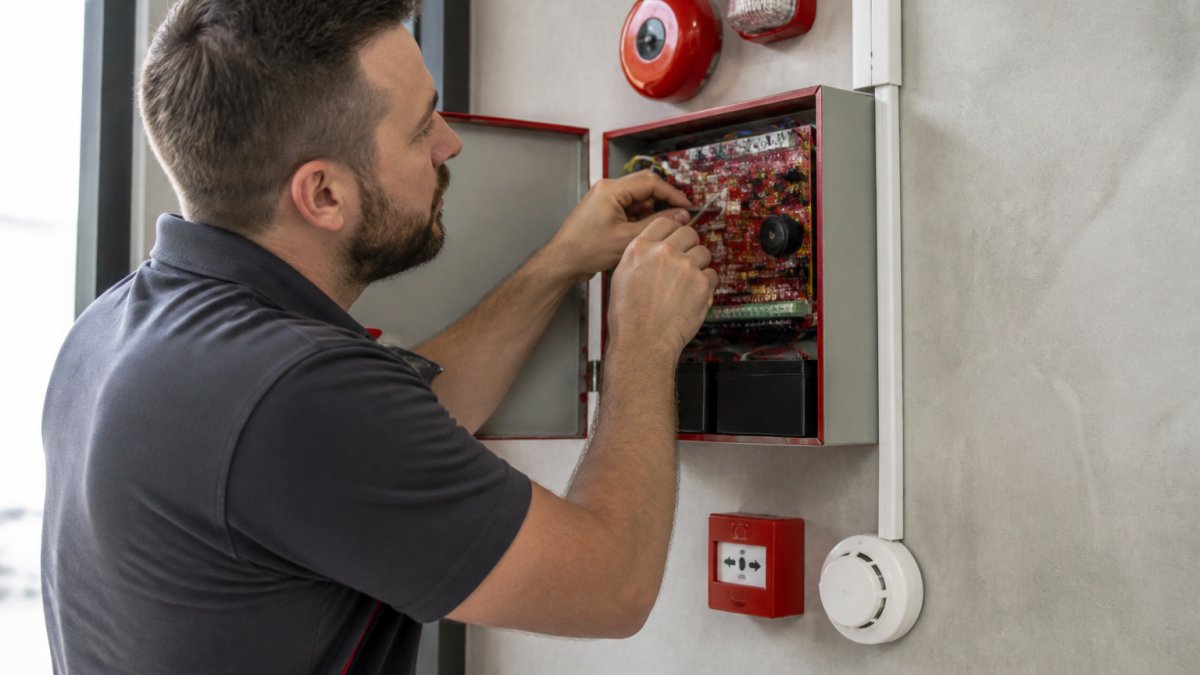
You don’t need to be a technician to extract useful information from the panel. Look for:
- Zone or device number, tells the technician where to start.
- Fault type, common labels include open circuit, short circuit, earth fault, battery fault, and device missing. Each points to a different repair path.
- Whether the fault is latching or non-latching, a latching fault stays on the panel until reset; a non-latching fault may clear on its own, which can indicate an intermittent wiring issue.
Write this down or photograph it before you call. A technician who arrives knowing the fault type and zone can often bring the right part on the first visit.
Fire Alarm Fault Repair: How Technicians Diagnose and Fix the Problem
Fire alarm fault repair starts with the panel, not the detector. A trained technician reads the fault log, identifies the affected zone or device, then works through the circuit methodically. Common culprits include:
- Flat or failing backup batteries in the panel or field devices
- Electrical faults in the detection loop, often from moisture, rodent damage or loose terminations
- Contaminated detectors triggering sensitivity faults
A qualified electrician or fire technician will test the device, isolate the fault, and confirm the fix with a live test before signing off. The fix is rarely the device itself, it’s usually the wiring or power supply feeding it, which is why swapping a detector without testing the circuit just moves the fault downstream.
Emergency Call-Outs, Response Times and What a Repair Visit Involves
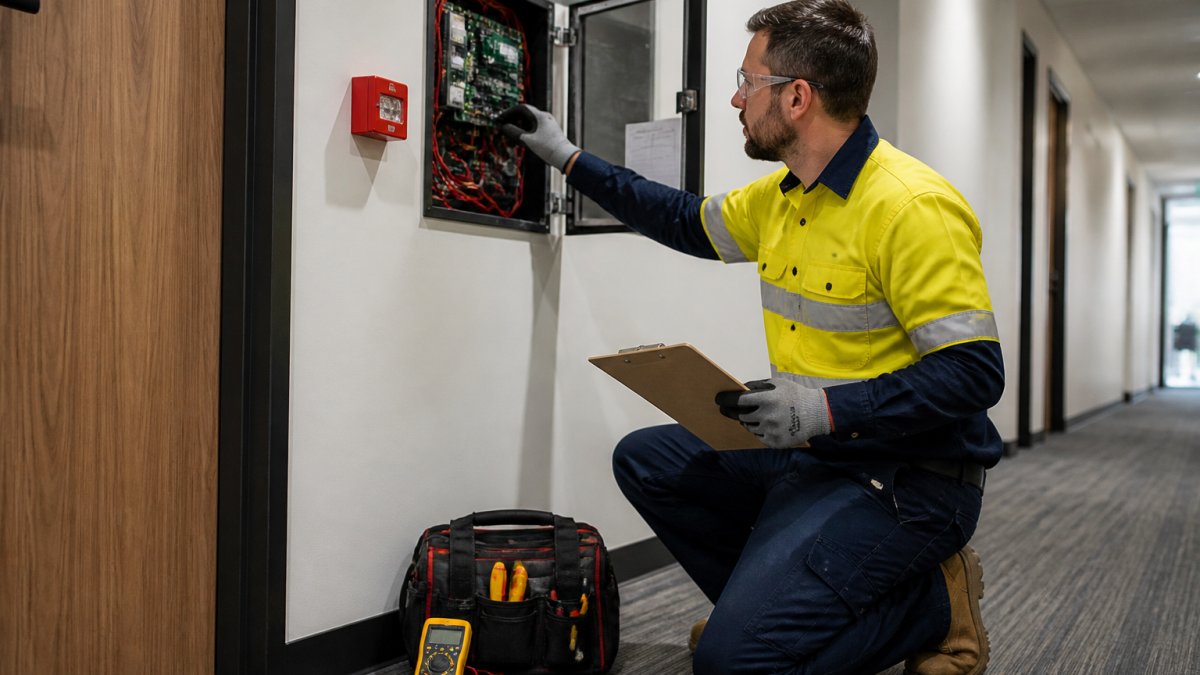
An urgent call-out should get a qualified technician on site the same day where possible, prioritised by the risk level of the affected system. A repair visit typically involves:
| Stage | What Happens | Why It Matters |
|---|---|---|
| Phone triage | Panel details and fault code captured | Sets the right parts and technician |
| Site arrival | Technician isolates the fault zone | Prevents further false alarms |
| Diagnosis | Circuit and device testing | Confirms root cause, not symptom |
| Repair | Part replacement or wiring fix | Restores full system coverage |
| Verification | Live test of affected devices | Proves the fix works |
| Documentation | Service report and fault log | Supports compliance records |
Response times depend on location and time of day. Ask upfront whether after-hours call-outs carry a different rate, and get it in writing before signing a maintenance agreement.
Fire Alarm System Maintenance: Stopping Faults Before They Start
Fire alarm system maintenance is the cheapest repair you’ll ever do. Most emergency call-outs trace back to a missed service, a battery that should have been replaced, or a detector that was never cleaned. A structured program covers:
- Scheduled inspection and testing of every device on the system
- Backup battery replacement on a set cycle, not when it fails
- Detector cleaning and sensitivity checks
Keep a simple fault log at the panel. Every time the system beeps or shows a trouble light, write the date, time and exact display. Technicians can spot a pattern in three or four entries that would take hours to find on site, and it shortens the repair visit.
Under AS1851, fire alarm systems require routine inspection and testing at set intervals, with records kept for audit. Skipping those intervals doesn’t just risk a fault; it puts your compliance evidence at risk too.
Fire Alarm Testing Services and Compliance Records That Hold Up
Fire alarm testing services should produce documentation detailed enough to prove what was done, when, and by whom. If your last audit left you unable to show the work, the problem was the report, not the test. A compliant report should include:
- Device-by-device test results, not a single “system tested” line
- Faults found and actions taken
- Reference to the applicable standard, such as AS1851 routine service of fire protection systems
The Queensland Fire Department’s guidance on fire safety in buildings sets out the obligations building owners carry, and your records are how you demonstrate you’ve met them. Fyrepower’s QBSA-licensed team issues detailed reports for every test and repair, so your audit trail holds up when it’s examined.
What Affects the Cost of a Repair and How to Avoid Quote Blowouts
Repair costs vary with the fault, system type and access required, so we quote after diagnosis rather than guessing over the phone. Understanding how a quote is built helps you spot a fair one from a padded one. Factors that move the number:
- System type and age. Older conventional panels can be harder to source parts for than addressable systems. A discontinued panel may mean a replacement board rather than a single component, which changes the scale of the job.
- Fault location. A device in a ceiling void, plant room or riser takes longer than one at floor level. Working at height, restricted access and after-hours access to tenanted areas all add labour time.
- Parts required. Detectors, sounders, batteries and panel components vary widely in cost. A single smoke detector head is a modest part; a panel power supply or loop card is a different order of expense.
How Diagnosis Fees Work
Most providers charge a diagnosis or attendance fee covering the technician’s time to identify the fault, separate from the repair itself. Ask three questions before you book:
- Is the diagnosis fee credited against the repair if you proceed? Many providers do this; some do not.
- What happens if the fault cannot be found on the first visit? A complex intermittent fault may need a return visit. Confirm whether the second attendance is charged.
- Is the fee fixed or hourly? A fixed attendance fee gives you certainty; an hourly rate can balloon if the fault is hard to trace.
Repair or Replace? The Threshold Question
A repair is usually right when the fault is isolated, a single failed detector, a flat battery, a loose termination. Replacement starts to make sense when:
- The panel is obsolete and parts are no longer manufactured.
- Faults are recurring across multiple zones, suggesting the wiring or panel itself is failing.
- The system no longer meets the standard your building’s use requires, so repairing it simply restores a non-compliant system.
A transparent provider will tell you when a repair is throwing good money after bad. If every quote is for a replacement and none explains why a repair isn’t viable, get a second opinion.
Avoiding Quote Blowouts
To avoid surprise charges, ask for a written quote separating labour, parts and any after-hours loading, and confirm what happens if the fault is bigger than diagnosed. Ask specifically:
- What is the call-out fee, and does it include the first hour?
- Are parts quoted at cost plus a margin, or at a fixed price?
- Is there a cap on labour, or is it open-ended?
A provider who cannot answer these questions in writing before attending is a provider who will surprise you on the invoice.
Keep every service report and invoice. If a fault recurs within a short period, a documented history is your strongest argument that the first repair was incomplete, and your best lever for having the return visit covered.
Strata managers and multi-site property managers who need predictable maintenance costs and documentation across several buildings, rather than one-off reactive repairs.
Conclusion
A fire alarm fault is both a compliance risk and a safety risk, and the response in the first hour sets the tone for everything after. Fyrepower provides emergency fire alarm repair, scheduled testing and maintenance across the region, backed by QBSA licensing, full insurance and audit-ready reporting. If your panel is showing a fault or your next service is overdue, get in touch now!
Frequently Asked Questions
Who do I call for a faulty fire alarm?
Call a licensed fire protection provider that handles emergency fire alarm repair, not a general handyman. Have your address, the alarm panel model, what the panel display shows and when the fault started ready. If the alarm is sounding and there is no sign of fire, follow your evacuation plan first and call from a safe location. A qualified technician can then attend, diagnose the fault and tell you whether the system needs a repair or a full replacement.
How can I tell whether a fire alarm fault needs an emergency repair?
Treat it as urgent if the panel shows a fault or isolate condition that leaves part of the building without detection, if the alarm sounds continuously with no fire present, or if the system will not reset. A single beeping smoke alarm with a fresh battery is usually a maintenance item, not an emergency. When in doubt, phone a fire alarm fault repair provider and describe the panel display. They can advise whether an urgent call-out is warranted or whether it can wait for a scheduled visit.
Can I reset a fire alarm system myself?
You can usually silence an alarm and attempt a reset at the panel if you have been trained on it, but a fault that returns after resetting is not fixed. Repeated resets can mask a genuine problem and leave the building unprotected. Do not open panels, remove detectors or disconnect wiring unless you are qualified. Log what you did, note the time, and hand that record to the technician so they can trace the fault faster.
How quickly should a faulty fire alarm be repaired?
Repair it as soon as practicable, and treat any fault that reduces detection coverage as urgent. Under AS 1851 routine servicing and defect reporting, faults are logged and actioned so the system stays compliant, and your insurer and building surveyor may ask for evidence of how quickly defects were closed out. For occupied commercial sites, same-day attendance is the practical benchmark. Ask any provider what their after-hours response looks like before you sign a maintenance agreement.