Table of Contents
- What a Professional Fire Safety Maintenance Contract Covers
- AS 1851 Compliance Requirements for Your Contract
- Building Your Fire Safety Maintenance Schedule Template
- Annual Fire Safety Statement Requirements and Documentation
- Commercial Fire Alarm Maintenance Costs and Budget Planning
- Evaluating a Fire Safety Service Provider: Key Checklist
- Hidden Costs and Contract Exit Clauses to Watch For
- Conclusion
- Frequently Asked Questions
Last Updated: August 23, 2026
What a Professional Fire Safety Maintenance Contract Covers
A professional fire safety maintenance contract is a formal agreement between a property owner or manager and a fire protection service provider that outlines the scope, frequency, and cost of ongoing fire safety equipment maintenance and testing. It ensures your fire protection systems remain operational and compliant with Australian safety standards throughout the year.
The contract covers regular inspection and testing of fire extinguishers, fire alarm systems, emergency lighting, sprinkler systems, and fire hydrants, specifying how often each component must be serviced and documenting work performed during each visit. It defines the service provider’s responsibilities for identifying faulty equipment, replacing worn components, and addressing defects discovered during inspections, while clarifying who bears the cost of replacement parts, repair labour, and emergency call-outs.
Documentation is critical. Your contract should specify that the service provider will maintain detailed inspection records, issue compliance certificates where required, and provide copies of all test reports. These records become essential proof of compliance during regulatory audits or insurance claims. The contract should also clarify record retention periods and ownership.
The best contracts specify exactly which Australian standards govern the work (such as AS 1851 for fire equipment maintenance) rather than leaving this vague. This removes ambiguity about what “proper maintenance” actually means and protects both parties.
AS 1851 Compliance Requirements for Your Contract
AS 1851 is the Australian standard that governs the inspection, testing, and maintenance of portable fire extinguishers and fire safety equipment. Any professional fire safety maintenance contract you sign should explicitly reference compliance with AS 1851, as this is the regulatory baseline across most Australian jurisdictions.
Under AS 1851, fire extinguishers must be inspected at least annually, with more frequent checks required for high-risk environments (standards.org.au). The standard sets out specific procedures for visual inspection, functional testing, and hydrostatic pressure testing of cylinders. Your contract should confirm that the service provider will follow AS 1851 procedures and issue certificates of compliance upon completion.
The standard also applies to fire alarm systems, emergency lighting, and suppression systems, each with maintenance requirements defined by AS 1851 or related Australian standards. A strong contract will reference the specific standard applicable to each piece of equipment and confirm that testing will be conducted by a competent person with formal training and industry certification.
A common oversight is failing to specify testing frequencies for different equipment types. Your contract should itemise these intervals clearly so there’s no confusion about when the next service is due. This prevents missed deadlines during compliance audits.
Fyrepower ensures all maintenance work meets AS 1851 requirements through rigorous testing protocols and detailed compliance documentation.
If your contract doesn’t name AS 1851 or reference the applicable Australian standards by name, you cannot be certain the work being performed meets regulatory requirements. Vague language like “industry standard maintenance” leaves you exposed during an audit.
Building Your Fire Safety Maintenance Schedule Template
A fire safety maintenance schedule template is your operational roadmap, translating contract requirements into a practical calendar that tracks what needs to be done, when, and by whom.
Start by listing every piece of fire safety equipment on your property: portable fire extinguishers (by location and type), fire alarm panels, smoke detectors, emergency lighting units, sprinkler systems, fire hydrants, and any specialised suppression systems. For each item, note the manufacturer, installation date, and specific maintenance requirements from the equipment manual.
Next, map the testing frequencies required by AS 1851 and local fire codes. Fire extinguishers typically require annual inspection and six-monthly functional checks in high-risk areas. Fire alarm systems often need quarterly or six-monthly testing. Emergency lighting requires annual testing. Sprinkler systems need annual inspections and five-yearly hydrostatic pressure testing (standards.org.au). Your schedule template should show all these intervals on a single view so nothing falls through the cracks.
A practical template uses a monthly or quarterly grid with rows representing equipment and columns representing time periods. Mark the expected service date and leave space to record actual completion dates and the service provider’s name, creating an audit trail that proves compliance over time.
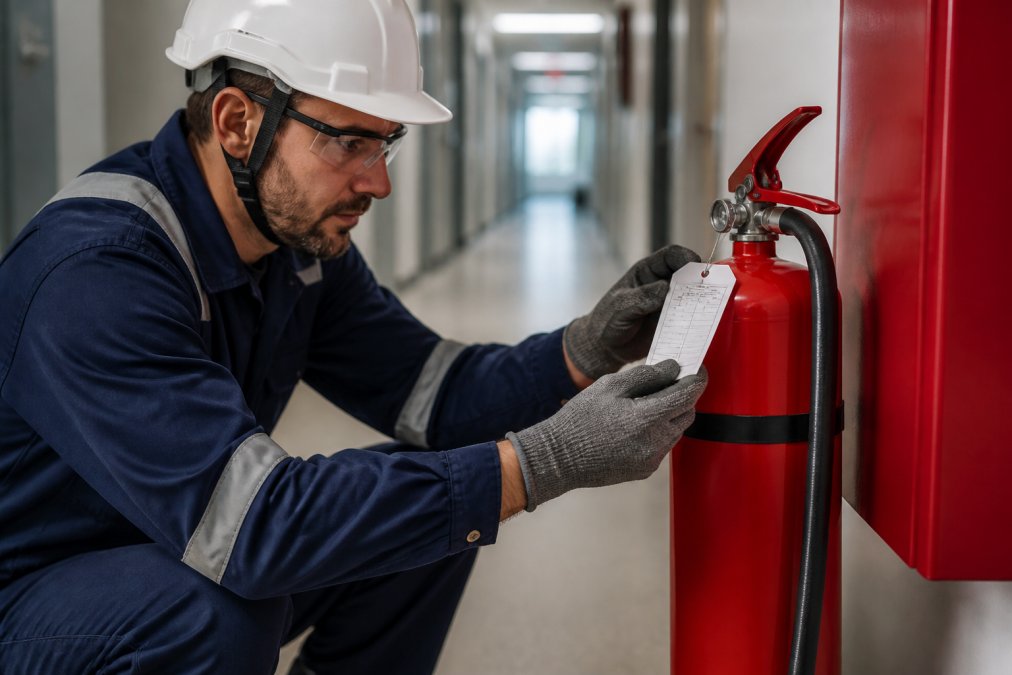
Digital tools can automate this process. Many property managers use compliance dashboards that send automated reminders before each service is due and log completion automatically when the service provider uploads their report, reducing manual tracking burden and missed deadlines.
Your schedule template should include a column for notes, recording any issues found, parts replaced, or follow-up actions needed, turning your schedule into a living maintenance logbook that demonstrates due diligence.
Annual Fire Safety Statement Requirements and Documentation
An annual fire safety statement is a formal declaration that your property’s fire safety systems have been maintained and tested in accordance with applicable standards (afac.com.au). In many jurisdictions, this statement is a legal requirement for commercial properties and multi-tenancy buildings.
The annual fire safety statement confirms that all fire safety equipment has been inspected, tested, and maintained according to AS 1851 and relevant Australian standards, certifying that any defects found have been remedied and that the property is safe for occupancy. It is usually issued by the service provider or a qualified fire safety professional and must be retained for audit purposes.
Your professional fire safety maintenance contract should clearly specify who is responsible for issuing the annual statement, typically the service provider, and that it will be provided within a defined timeframe (often within 30 days of the final service visit of the year). You should receive both a copy for your records and, if required, a copy for submission to your local fire authority or building regulator.
Documentation requirements vary by state and local jurisdiction, but the general principle is the same: you must be able to prove that your fire safety systems were maintained to the required standard throughout the year. Keep copies of all inspection reports, test certificates, and maintenance records in a central location, either physical or digital.
The annual fire safety statement is your primary proof of compliance. Without it, you cannot demonstrate that you’ve met your legal obligations, even if maintenance was actually performed. Ensure your contract guarantees that the service provider will deliver this statement on schedule.
Commercial Fire Alarm Maintenance Costs and Budget Planning
Commercial fire alarm maintenance is one of the largest components of your fire safety budget. Unlike portable fire extinguishers, fire alarm systems require specialist technicians and regular testing to ensure they function correctly.
A typical commercial fire alarm system includes the control panel, detection devices (smoke detectors, heat detectors), manual call points, and audible and visual alarm devices. Each component has its own maintenance requirements: the control panel typically needs quarterly or six-monthly testing, detectors require annual cleaning and functional testing, and manual call points need annual inspection.
When evaluating quotes, ask for a detailed breakdown of what’s included in the maintenance fee. A transparent quote will itemise the cost of testing the control panel, inspecting detectors, testing manual call points, and any other components. Your contract should specify whether the quoted price covers parts and labour or just labour, and clarify whether minor parts (batteries, detector heads) are included in the service fee or charged separately.
Emergency call-out costs are often where budgets blow out. Your contract should define what constitutes an emergency, what the call-out fee is, and whether it’s included in your annual maintenance cost or charged separately.
Fyrepower provides transparent pricing and detailed quotes that break down all components of commercial fire alarm maintenance, helping you budget accurately and avoid surprise costs.
Evaluating a Fire Safety Service Provider: Key Checklist
Choosing the right service provider is as important as the contract itself. Here’s a checklist to evaluate potential providers before signing a professional fire safety maintenance contract.

Credentials and Licensing:
Verify that the provider holds current QBSA (Queensland Building Services Authority) licensing or equivalent in your state. Check their insurance coverage, they should be fully insured for public liability and professional indemnity. Ask to see proof of certifications and training. Technicians should be trained in AS 1851 and relevant Australian standards.
Track Record and References:
Ask for references from existing clients, particularly properties similar to yours. Contact at least two or three and ask about response times, documentation quality, and whether the provider has ever missed a scheduled service.
Documentation and Reporting:
Request a sample inspection report. It should be detailed, not a generic template with boxes ticked. Poor documentation suggests the provider may not be conducting thorough inspections.
Communication and Responsiveness:
Assess how responsive the provider is during initial conversations. A provider who communicates well during the sales process is more likely to communicate well during ongoing maintenance.
Scope of Services:
Confirm that the provider can handle all fire safety equipment at your property. You want a provider who can manage your entire maintenance contract, not one who will hand off portions to subcontractors.
Flexibility and Scalability:
If you manage multiple properties or expect growth, ask whether the provider can scale their services and adjust maintenance schedules if your needs change.
Hidden Costs and Contract Exit Clauses to Watch For
Many property managers discover unexpected costs after signing a professional fire safety maintenance contract. Understanding common hidden costs and negotiating clear exit clauses protects you from budget surprises and locked-in agreements.
Common Hidden Costs:
Travel charges are a frequent surprise. Some providers charge a call-out fee or travel cost in addition to the service fee, especially for regional properties. Ask explicitly whether travel charges are included in the quoted price.
Parts and labour are sometimes separated. A provider might quote a low service fee but then charge heavily for replacement parts. Your contract should specify whether common parts (detector heads, batteries, fuses) are included in the service cost or charged separately.
Emergency call-outs and after-hours service carry premium charges. Your contract should define emergency response costs upfront.
Compliance documentation fees can be hidden. Confirm that all required documentation is included in your service fee.
Exit Clauses and Contract Terms:
A professional fire safety maintenance contract should include a clear exit clause specifying how much notice you must give to terminate and whether there is a minimum contract term. You should be able to terminate with 30 days’ notice if service quality is poor.
Check whether the contract allows the provider to unilaterally change pricing. Negotiate a clause that limits price increases to a specific percentage or requires mutual agreement for any increase above that threshold.
Clarify what happens to your maintenance records if you terminate. You should retain ownership of all inspection reports, test certificates, and compliance documentation.
Contracts with automatic renewal and high early termination fees can trap you with a provider even if service quality declines. Always negotiate an exit clause that gives you reasonable flexibility to change providers if needed.
Conclusion
A professional fire safety maintenance contract is more than a service agreement, it’s your legal protection and operational framework for keeping your property safe and compliant. The contract must clearly define what work will be performed, how often, to which standards, and at what cost. It should include detailed documentation requirements, transparent pricing with no hidden costs, and reasonable exit clauses that protect your interests.
The key to a successful contract is specificity. Reference Australian standards like AS 1851 by name. List every piece of equipment that will be maintained. Specify testing frequencies, reporting requirements, and emergency response procedures. Evaluate potential service providers carefully, checking their credentials, track record, and communication quality.
Fyrepower delivers professional fire safety maintenance contracts backed by QBSA licensing, full insurance, and rigorous adherence to Australian safety standards. Our team provides transparent pricing, detailed compliance documentation, and reliable service across multiple properties. Get in touch with us now to discuss a maintenance contract that keeps your property safe and compliant year-round.
Frequently Asked Questions
What is included in a professional fire safety maintenance contract?
A comprehensive fire safety maintenance contract covers inspection and testing of all fire protection systems including extinguishers, sprinkler systems, fire alarm panels, and emergency lighting. It specifies the frequency of scheduled servicing, certification requirements, and detailed reporting standards. The contract should outline the scope of work, service level agreements, response times for repairs, and documentation protocols to ensure your property meets all regulatory requirements and maintains system reliability.
How often should fire safety equipment be tested under AS 1851 compliance requirements?
AS 1851 mandates different testing frequencies depending on the equipment type. Fire extinguishers require annual inspection and testing, sprinkler systems need annual servicing, and fire alarm systems must be tested at least annually with monthly functional checks. Your maintenance contract should align these testing schedules with AS 1851 standards and include a maintenance logbook documenting each service. A professional provider will ensure all statutory obligations are met on schedule.
What should I look for in a fire safety service provider’s qualifications?
Verify that your service provider holds current QBSA licensing and comprehensive insurance coverage. Ask for proof of their accreditation with Australian fire safety standards and their experience with your property type. Request references from similar-sized properties they service, and confirm they can meet your required testing deadlines consistently. Check that their technicians are trained and can deliver detailed audit-ready reports that hold up to regulatory scrutiny.
What are common hidden costs in fire safety maintenance agreements?
Watch for contracts that quote a base price but exclude emergency call-out fees, additional site assessments, or travel charges for properties across multiple locations. Some providers charge separately for compliance reporting or digital record-keeping. Clarify whether your fixed cost structure includes all scheduled servicing or if repairs and parts are billed separately. Request a transparent breakdown of what is included in your contract term and what triggers additional charges to avoid budget blow-outs.
A well-structured fire safety maintenance contract removes uncertainty and ensures your fire protection systems remain reliable when you need them most. Whether you manage a single commercial property or multiple strata complexes, the right contract with the right provider gives you peace of mind and proof of compliance.
This article was written using GrandRanker