Table of Contents
- What You’ll Need Before You Start
- Step 1: Set Up Your Fire Safety Logbook Structure
- Step 2: Record Fire Equipment Testing and AS 1851 Maintenance Standards
- Step 3: Document Fire Equipment Testing Frequency and Inspection Schedules
- Step 4: Maintain Statutory Compliance Records and Fire Alarm Testing Documentation
- Step 5: Prepare Your Logbook for Fire Safety Audit Preparation
- Common Mistakes to Avoid in Fire Safety Documentation
- Managing Multiple Sites and Delegating Responsibility
- Frequently Asked Questions
Last Updated: September 2, 2026
Fire Safety Logbook Documentation Tips: A How-To Guide
Maintaining accurate fire safety documentation isn’t just a compliance checkbox, it’s the difference between passing an audit and facing penalties. A poorly organised logbook can leave your property exposed during inspections, create liability questions, and waste hours searching for records when regulators ask for them.
At Fyrepower, we’ve worked with commercial property managers, body corporate teams, and business owners who’ve struggled with scattered records, missing dates, and vague service notes. The good news: a structured approach transforms this from a headache into a manageable process.
This guide walks you through exactly how to set up, maintain, and audit your fire safety logbook so you’re ready whenever compliance inspections arrive.
What You’ll Need Before You Start
Before you begin, gather the essentials: a logbook format (digital or paper), your building’s fire safety equipment inventory, testing schedules from manufacturers or your service provider, staff contact details for training records, and any previous compliance reports.
For multiple properties, establish a central filing system so records don’t scatter. Identify who’s responsible for maintaining the logbook, this person needs authority to chase down service records from contractors, document staff training, and update entries when equipment is tested or replaced.
| Essential Item | Purpose | Notes |
|---|---|---|
| Fire safety logbook (digital or paper) | Central record of all fire safety activities | Choose format that suits your team’s workflow |
| Equipment inventory list | Track what needs testing and when | Include serial numbers, location, installation date |
| Testing schedule | Know when inspections are due | Based on AS 1851 or manufacturer requirements |
| Staff contact list | Coordinate training and drills | Include fire wardens and key personnel |
| Previous audit reports | Understand what regulators flagged | Use to avoid repeating documentation gaps |
Step 1: Set Up Your Fire Safety Logbook Structure
Your logbook structure determines whether entries are easy to find or buried in chaos. Decide: digital or paper? Digital systems (spreadsheets, cloud platforms, or dedicated fire safety software) offer searchability and automatic reminders. Paper logbooks work for small teams with consistent entries, but they’re harder to audit and easier to lose.
Create separate sections for fire alarm system testing, fire extinguisher maintenance, emergency lighting inspections, fire drill records, staff training, and corrective actions. Each section should have consistent columns: date, equipment tested, person conducting the test, findings, and next action due.
Choosing Between Digital and Paper Records
Digital logbooks offer speed and searchability. You can filter by date, equipment type, or staff member in seconds. Automated reminders alert you when testing is due. Cloud-based systems let multiple team members update records simultaneously, which matters for multi-site operations.
Paper logbooks work offline and are tactile, but searching for a specific entry means flipping through pages. Paper also degrades over time, ink fades, pages tear, and water damage happens.
Most compliant operations use a hybrid: a digital master record (searchable, backed up) with paper copies kept on-site for immediate reference. This gives you the best of both.

Step 2: Record Fire Equipment Testing and AS 1851 Maintenance Standards
AS 1851 is the Australian standard that defines maintenance requirements for fire safety equipment (standards.org.au). Understanding it is the regulatory benchmark auditors use. The standard specifies testing frequencies, acceptable methods, and documentation requirements for extinguishers, hydrants, hoses, alarm systems, and emergency lighting.
When documenting fire equipment testing, reference the specific AS 1851 requirement. For example: “Fire extinguisher ABC-123 inspected per AS 1851-2012 Section 7.2, visual inspection completed, no defects found.” This shows regulators you’re following the statutory standard.
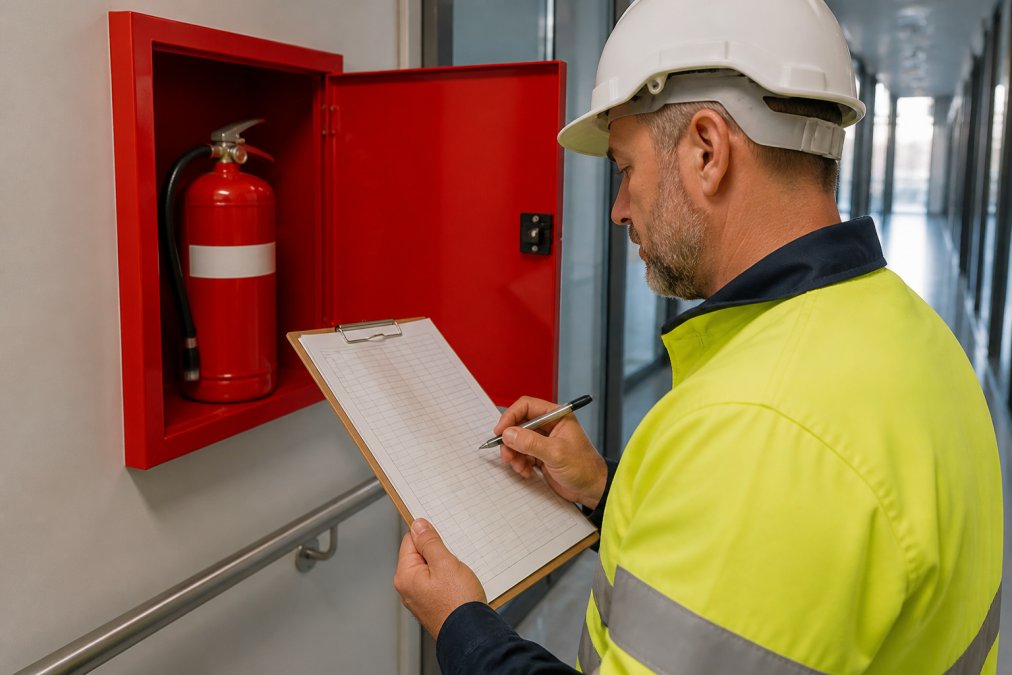
Record the equipment’s serial number, location, type, and date tested. Include the name and qualifications of the person who did the testing. If they’re from an external service provider, note their company name and licence number. Note any defects found and what was done about them. “Pressure gauge low, recharged and retested” is documentation. “Needs work” is not.
Step 3: Document Fire Equipment Testing Frequency and Inspection Schedules
Fire safety legislation sets testing frequencies: fire extinguishers need annual inspections and 5-yearly hydrostatic pressure testing. Fire alarm systems require weekly manual tests and annual service inspections. Emergency lighting needs monthly functional tests and annual full-duration tests. Hydrants need annual inspections and 5-yearly flow tests.
Your logbook needs a section showing when each test is due. Create a simple spreadsheet with equipment ID, last test date, next test due date, and frequency.
Document the actual test date, not the due date. If a test was due on 15 June but completed on 22 June, record 22 June. Auditors look for patterns: consistently testing after the due date is a compliance risk.
Include the testing method used. “Annual fire alarm service test per AS 1851” is specific. “Alarm checked” is vague. Create a reminder system so tests don’t slip, calendar alerts or spreadsheet formulas that flag upcoming due dates prevent missed inspections.
Step 4: Maintain Statutory Compliance Records and Fire Alarm Testing Documentation
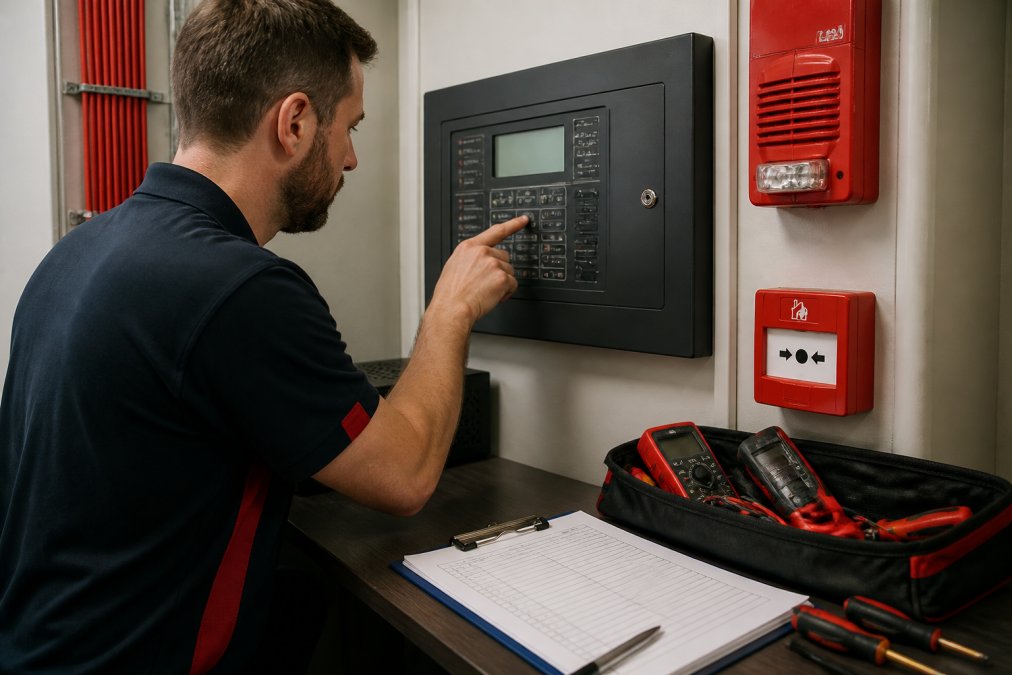
Fire alarm testing documentation is scrutinised heavily during audits. Your logbook must show weekly manual tests and annual professional service inspections.
Weekly tests should record: date, time, who tested it, whether the alarm sounded, and whether it reset properly. “Weekly alarm test, alarm activated, reset successful, no faults” takes 30 seconds and proves you’re testing regularly. Monthly summaries help: “4 of 4 weekly tests completed this month, all successful.”
Annual fire alarm system testing by a qualified technician should include the technician’s name, licence number, what was tested (control panel, detectors, sounders, manual call points), findings, and any remedial work done. If defects are found, document the corrective action immediately. “Detector in Zone 3 not responding, replaced 15 June, retested 15 June, now operational” shows regulators you fix problems promptly.
For multi-site operations, centralise alarm testing records so you can see at a glance which properties are up to date.
Step 5: Prepare Your Logbook for Fire Safety Audit Preparation
An audit-ready logbook is organised so auditors can verify compliance without asking follow-up questions. Start audit preparation three months before your scheduled inspection. Review your logbook for gaps: missing dates, incomplete entries, or overdue tests. Fix these now, not during the audit.
Create a summary document showing compliance status at a glance: each type of fire safety equipment, when it was last tested, when it’s due next, and whether it passed or failed. This saves auditors time and demonstrates you’re in control of your compliance.
Organise your logbook chronologically and by equipment type. A clear index helps: “Fire Extinguishers (pages 5-12), Fire Alarm Testing (pages 13-18), Emergency Lighting (pages 19-24).”
Ensure all entries are legible. Include evidence of corrective actions. “Pressure gauge faulty, replaced 8 May, retested 8 May, now within range” is evidence. A blank space where an action should be recorded is a red flag.
Common Mistakes to Avoid in Fire Safety Documentation
The most common mistake is vague entries. “Fire safety equipment checked” tells auditors nothing. Specific entries take 10 seconds longer to write and prevent audit complications.
Another frequent error is inconsistent dating. If entries jump from June to August with no explanation, auditors assume testing was missed. Consistency matters as much as accuracy.
Many teams skip corrective action documentation. A defect is found and fixed, but never recorded in the logbook. Always document what was wrong, when it was fixed, and that it was retested.
Delegating logbook responsibility without clear handover is another pitfall. Document your process so anyone can step in when staff leave.
Missing staff training records is surprisingly common. Create a training section with dates, attendees, topics covered, and trainer name. This is non-negotiable for compliance.
Don’t assume your service provider’s report is enough. Their report goes in your logbook, but you need to actively record that the test happened.
Managing Multiple Sites and Delegating Responsibility
For property managers overseeing multiple sites, a centralised system is essential. Create a master spreadsheet showing all properties, equipment at each site, last test dates, and next test due. This becomes your compliance dashboard.
Delegate logbook maintenance to a responsible person at each property, but set clear expectations. Provide a template showing exactly what information to record. Schedule monthly check-ins to review entries and catch gaps early.
Use a shared digital system if possible. Cloud-based platforms let you access logbooks from anywhere and receive automatic alerts when tests are due.
Document who’s responsible for what. Assign one person as the primary logbook keeper and a backup in case they’re absent. For multi-site operations, consider an annual internal audit of your own records before any external inspection.
Fyrepower works with multi-site property managers to ensure consistent documentation across all properties.
Fire safety logbook documentation isn’t complicated once you establish a system. The key is consistency: record everything, be specific, document corrective actions, and keep your logbook organised. An auditor should be able to open your logbook and verify compliance without asking a single question.
Your fire safety logbook is your proof of compliance. Get in touch with Fyrepower to discuss how we can support your fire safety documentation process and ensure your property stays audit-ready year-round.
Frequently Asked Questions
Q: What must be included in a fire safety logbook?
A: A fire safety logbook must record fire alarm system testing dates and results, fire extinguisher maintenance and service records, emergency lighting inspections, fire drill procedures and attendance, staff fire safety training completion, any defects identified and corrective actions taken, and contact details for your responsible person and emergency services. Records should include the date, time, person conducting the inspection, findings, and any follow-up actions required. This documentation demonstrates statutory compliance with fire safety legislation and supports your regulatory audit preparation.
Q: How often should fire equipment testing be recorded according to AS 1851 maintenance standards?
A: AS 1851 maintenance standards specify different testing frequencies depending on equipment type. Fire extinguishers typically require annual servicing, while fire alarm systems need weekly tests and monthly functional checks. Emergency lighting should be tested monthly, and fire detection systems require quarterly inspections. Your fire safety logbook must record each test with the date, inspector details, and results. Maintaining accurate records of fire equipment testing frequency ensures you meet statutory compliance requirements and can demonstrate due diligence during regulatory audits.
Q: How long should fire safety records be kept?
A: Fire safety records should be retained for a minimum of five years from the date of the inspection or test. However, some records such as fire drill reports and staff training documentation may need to be kept longer depending on your workplace health and safety obligations. Keep all records in a secure, accessible location, either physical files or a digital system, so you can quickly retrieve them during compliance audits or regulatory inspections. Retention periods help demonstrate your commitment to fire safety management and statutory compliance over time.
Q: What should I include in my fire safety audit preparation checklist?
A: Your fire safety audit preparation checklist should verify that all fire alarm testing records are complete and dated, fire extinguisher service certificates are current and properly filed, emergency lighting inspection reports are up to date, staff fire safety training documentation shows all personnel are trained, fire drill records include attendance and dates, defect reports show corrective actions were taken, and your responsible person is clearly identified. Ensure your fire safety logbook is legible, organised chronologically, and free of gaps. Having detailed, well-organised documentation demonstrates your commitment to fire safety measures and significantly improves audit outcomes.
This article was written using GrandRanker