Table of Contents
- How We Evaluated These Fire Protection Equipment Suppliers
- Quick Comparison: Fire Protection Equipment Suppliers
- Fyrepower: Full-Service Compliance for Commercial Properties
- Fire Factory Australia: ActivFire Certified Supply
- Redmen Fire Protection: Workplace Compliance Consulting
- FlameStop Australia: High-Reliability Product Testing
- Wormald Australia: Large-Scale System Design and Maintenance
- Chubb Fire & Security: Integrated Fire and Security Systems
- Choosing Between These Suppliers
- Frequently Asked Questions
Last Updated: September 12, 2026
How We Evaluated These Fire Protection Equipment Suppliers
Choosing fire protection equipment suppliers is a compliance decision before it is a purchasing one. This review from Fyrepower scores providers on Australian Standards coverage, documented servicing under AS 1851, product certification, and how clearly they quote. We weighted four criteria: compliance capability, equipment range, maintenance and reporting depth, and suitability for small to mid-sized commercial sites.
The reason compliance dominates our scoring comes down to liability. Under the model Work Health and Safety Act, a person conducting a business or undertaking (PCBU) must ensure fire safety equipment is maintained so it remains effective, and a property manager who cannot produce a current service record during an audit carries the risk, not the supplier who skipped the visit. That single fact reshapes how you should compare fire protection equipment suppliers.
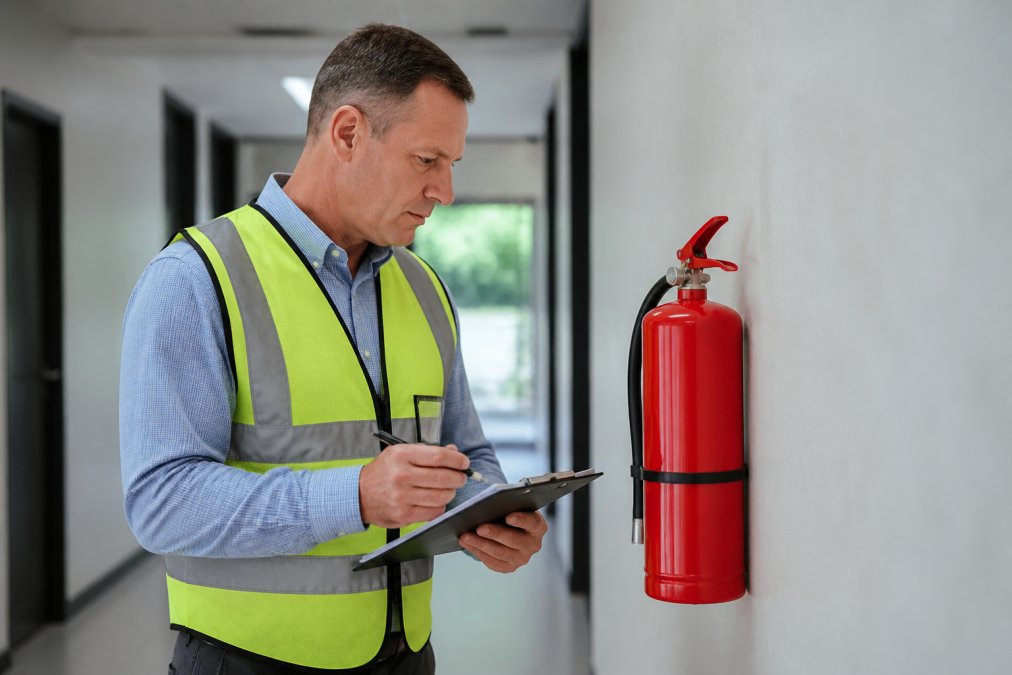
Here is the framework we applied to every provider, and why each criterion carries weight:
- Certification: ActivFire-listed or equivalent product certification, traceable to a listing number. ActivFire is the CSIRO-administered scheme that verifies equipment against the relevant Australian Standard; an unlisted extinguisher may still work, but it will not satisfy an auditor or an insurer.
- Standards coverage: Evidence of testing and maintenance aligned with Australian Standard AS 1851 maintenance of fire protection systems. AS 1851 sets the inspection intervals, commonly six-monthly for extinguishers and exit lighting, annual for hydrants and hose reels, and more frequent for some suppression systems, and a supplier who cannot map their schedule to it is guessing (store.standards.org.au).
- Reporting quality: Service reports detailed enough to survive a compliance audit. A useful report names the asset, the standard applied, the test result, the date, and the technician’s competency. Anything less is a receipt, not a record.
- Scope fit: Whether the provider serves small venues as readily as large industrial sites. A national contractor with a contract-based model may be overkill for a single strata block, while a supply-only business may leave you without a maintenance partner.
Two further checks separate a genuine compliance provider from a hardware reseller:
- Licensing and insurance: In most states, fire protection work is licensed or otherwise regulated, for example, Queensland’s QBCC licensing regime, NSW’s requirements under the Design and Building Practitioners framework, and equivalent arrangements in other jurisdictions (qld.gov.au). Ask for the licence number and confirm it covers the work being quoted.
- Technician competency: Testing and tagging is generally restricted to a competent person under the relevant standards. Ask who attends site, what their competency is, and whether the same person signs the report.
Ask any supplier for a sample service report before you sign. If the report cannot show what was tested, against which standard, and on what date, it will not protect you in an audit.
Quick Comparison: Fire Protection Equipment Suppliers
The table below summarises how each supplier positions itself. Pricing is quote-based across the sector, so we compare capability rather than cost.
| Supplier | Certification Focus | Best For | Pricing Model |
|---|---|---|---|
| Fyrepower | AS 2444 and AS 1851 expertise | Commercial and strata compliance | Quote-based |
| Fire Factory Australia | ActivFire certified range | Ready-to-install hardware | Quote-based |
| Redmen Fire Protection | Workplace compliance consulting | End-to-end safety management | Service-based |
| FlameStop Australia | Rigorous product testing | Contractors needing reliability | Quote-based |
| Wormald Australia | Large-scale system design | Industrial facilities | Contract-based |
| Chubb Fire & Security | Integrated fire and security | Multi-site monitoring | Service agreement |
Fyrepower: Full-Service Compliance for Commercial Properties
Fyrepower is a QBSA-licensed and fully insured fire protection specialist serving commercial, residential, and industrial properties. It combines equipment supply with installation, testing, and training, which means one accountable party for your compliance calendar rather than three.
Key Features and Specifications
The equipment range covers extinguishers, hydrants, and suppression systems, supported by on and offsite fire training. A 55-month warranty applies to supplied equipment, and the team works directly to Australian Standards including AS2444 and AS1851.
Pros and Limitations
The advantage is consolidation: supply, installation, testing, and staff training under one provider, with reporting built for audit conditions. The limitation is geographic. Fyrepower services commercial property managers, body corporates, and developers across the Gold Coast, South Brisbane, and Northern New South Wales, so sites outside that footprint need a different arrangement.
Ask any supplier for a sample service report before you sign. If the report cannot show what was tested, against which standard, and on what date, it will not protect you in an audit.
Fire Factory Australia: ActivFire Certified Supply
Fire Factory Australia is a national supplier and manufacturer of ActivFire certified fire protection equipment.
Key Features and Specifications
The range centres on extinguishers and safety hardware with ActivFire certification, distributed through a national network.
Pros and Limitations
Certification removes a common compliance headache. The trade-off is support depth: pricing is not publicly listed for small orders, and the business is supply-focused rather than a maintenance partner. Integrating these industrial components into a broader safety strategy often requires balancing professional-grade suppression systems with the localized detection capabilities of smart smoke alarms.
Redmen Fire Protection: Workplace Compliance Consulting
Redmen Fire Protection offers supply, installation, and maintenance with a consulting layer aimed at workplace safety obligations.
Key Features and Specifications
The service covers a broad equipment range, professional installation, and workplace fire safety compliance consulting.
Pros and Limitations
One contact for supply and maintenance simplifies vendor management.
FlameStop Australia: High-Reliability Product Testing
FlameStop Australia supplies fire protection equipment with an emphasis on in-house performance testing.
Key Features and Specifications
The catalogue spans extinguishers and suppression hardware, available through wholesale and retail channels.
Pros and Limitations
Product reliability is the clear draw, and national availability helps contractors standardise across sites.
Wormald Australia: Large-Scale System Design and Maintenance
Wormald Australia designs, installs, and maintains complex fire systems for large commercial and industrial facilities.
Key Features and Specifications
Capabilities include large-scale suppression system design and national maintenance contracts.
Pros and Limitations
For complex infrastructure, few providers match the engineering depth.
Chubb Fire & Security: Integrated Fire and Security Systems
Chubb Fire & Security combines fire protection with security monitoring.
Key Features and Specifications
The offering includes integrated fire and security management, routine inspection services, and advanced suppression technology.
Pros and Limitations
Integration and an established maintenance reputation are genuine strengths.
Choosing Between These Suppliers
Match the supplier to your obligation, not the other way around. A body corporate with six-monthly testing deadlines needs a provider with reliable scheduling and audit-ready reporting. A developer commissioning a new hydrant system needs hydrostatic pressure testing capability. A hospitality venue needs extinguisher installation, staff training, and a maintenance schedule it will actually keep.
Three questions separate a good fit from a frustrating one:
- Can the provider show you a sample compliance report before you commit?
- Who is accountable if a scheduled test is missed?
- Does the quote cover testing, tagging, and documentation, or just the hardware?
What you can legally maintain yourself, and what you cannot
A common pattern is for owners to assume all fire equipment servicing must be outsourced, or conversely that a staff member with a checklist can handle it. Neither is quite right.
- In-house checks: Visual inspections, extinguisher in place, gauge in the green, no obvious damage, exit signs illuminated, egress paths clear, can generally be performed by trained staff and logged. These are the routine checks that keep small issues from becoming audit findings.
- Certified servicing: Testing, tagging and any work that produces a compliance record for AS 1851 purposes generally requires a competent person, and in many jurisdictions the work itself is licensed. Recharging, pressure testing, and suppression system servicing fall firmly on this side of the line.
- The documentation trap: Even where an in-house check is permitted, it only counts if it is recorded with a date, an asset identifier, and a responsible person. A verbal ‘we checked it’ does not survive an audit.
State and territory differences matter
Fire safety obligations are not uniform across the country. The model WHS Act has been adopted in most jurisdictions, but the regulations, building codes and licensing regimes layered on top vary:
- Queensland: Fire safety management is tied to the Building Fire Safety Regulation, with obligations on occupiers to maintain prescribed fire safety installations and keep records, and QBCC licensing applies to much of the work.
- New South Wales: Annual fire safety statements are a familiar requirement for building owners, supported by the Environmental Planning and Assessment framework and specific maintenance standards.
- Victoria: The Building Regulations and the Building Maintenance Schedule set out maintenance obligations, with the relevant fire services regulator overseeing compliance.
- Other jurisdictions: Each has its own combination of WHS regulations, building maintenance rules and licensing requirements.
A supplier who works confidently in one jurisdiction may be less familiar with the paperwork expected in another. Ask specifically how they handle your state or territory’s reporting format before you sign.
Cost versus compliance: where the money actually goes
Pricing across the sector is quote-based, which makes comparison hard. A useful way to frame it is total cost of compliance rather than sticker price:
- Budget hardware, no maintenance contract: Lowest upfront cost, highest audit risk. An extinguisher that is installed but never inspected fails the same audit as one that is missing entirely.
- Certified hardware with a maintenance schedule: Higher upfront cost, but the service records do the work at audit time and typically reduce the risk of failed inspections and insurance disputes.
- Full-service provider: Highest per-visit cost, but consolidates supply, installation, testing and training under one accountable party, which is often cheaper than coordinating three vendors across a portfolio.
The most common mistake is buying equipment without a maintenance contract. An extinguisher that is installed but never inspected fails the same audit as one that is missing entirely.
Before you choose, confirm three things in writing: the licence or competency of the technician attending site, the state-specific reporting format your provider will use, and which tasks your own staff can legally perform between service visits.
Frequently Asked Questions
What standards must fire protection equipment meet in Australia?
Fire protection equipment in Australia must meet AS/NZS standards, with AS 1851 governing maintenance and AS 2444 covering fire extinguisher selection and location. Equipment should carry ActivFire certification to confirm it meets these benchmarks. When reviewing fire protection equipment suppliers, ask for proof of certification for every product they stock. This ensures your extinguishers, hose reels and detection systems will pass a fire safety audit and satisfy your insurer.
How do I verify if a fire safety supplier is licensed?
Check that the supplier holds a QBCC licence (formerly QBSA) for the work they perform, and ask for a current certificate of currency for public liability and professional indemnity insurance. You can verify a QBCC licence number directly through the QBCC online register. For fire protection equipment suppliers, also confirm their technicians hold relevant competencies. A legitimate provider will supply these details without hesitation and include them in their service agreement.
What is the difference between ActivFire certified and non-certified equipment?
ActivFire certification means the product has been independently tested and verified against the relevant Australian Standard by a recognised certification body. Non-certified equipment may look identical but carries no proof it will perform in a fire. Using non-certified gear risks failing a fire safety audit and can void insurance claims. Always confirm ActivFire registration when comparing fire protection equipment suppliers.
How often should fire protection equipment be tested and tagged?
AS 1851 sets testing intervals that vary by equipment type. Fire extinguishers typically need a visual inspection every six months and a more detailed service annually, while fire blankets, hose reels and detection systems have their own schedules. Commercial properties often require six-monthly compliance testing across all assets. A fire safety compliance checklist should map every item to its specific AS 1851 interval so no deadline is missed.
What should I look for when reviewing fire protection service providers?
Focus on five areas: valid licensing and insurance, ActivFire certified products, transparent pricing with no surprise charges, detailed service reports that stand up to audit, and a proven track record of meeting scheduled deadlines. Ask how they handle missed appointments and whether they provide a backup plan.