Last Updated: October 30, 2026
Quick Summary
A fire alarm upgrade is needed when your panel is roughly 10 to 15 years old, no longer manufactured, or no longer supported with spare parts and software updates. Frequent faults, false alarms and coverage gaps after renovations also signal that upgrading outdated fire alarm systems for compliance should be assessed.
- Most fire alarm panels have a practical service life of roughly 10 to 15 years.
- Confirm the adopted edition of each standard, the building class and your authority having jurisdiction before scoping.
- AS 1851 sets maintenance, testing and record-keeping; AS 1670 covers design, installation and commissioning.
- A phased upgrade lets you replace sections while the rest of the system stays live.
- Check panel and detector compatibility before committing, as new panels may not run existing detectors.
Table of Contents
- Signs a Fire Alarm System Needs Upgrading
- Fire Alarm Compliance Requirements in Australia
- Fire Alarm System Inspection and Testing: What to Expect
- Assessing Your Existing Equipment and System Condition
- The Fire Alarm Upgrade Process, Step by Step
- Phased Upgrades, Permits and Keeping Occupants Safe During Work
- Planning Your Fire Alarm Upgrade with Fyrepower
- Frequently Asked Questions
Signs a Fire Alarm System Needs Upgrading
A fire alarm system that has quietly passed its service life is the most common compliance risk we see in commercial buildings. The warning signs are rarely dramatic. They build up slowly until an audit exposes them.
If you are weighing up whether upgrading outdated fire alarm systems for compliance is necessary, start with age and fault history. Both tell you more than a visual inspection ever will.
Age and Obsolescence
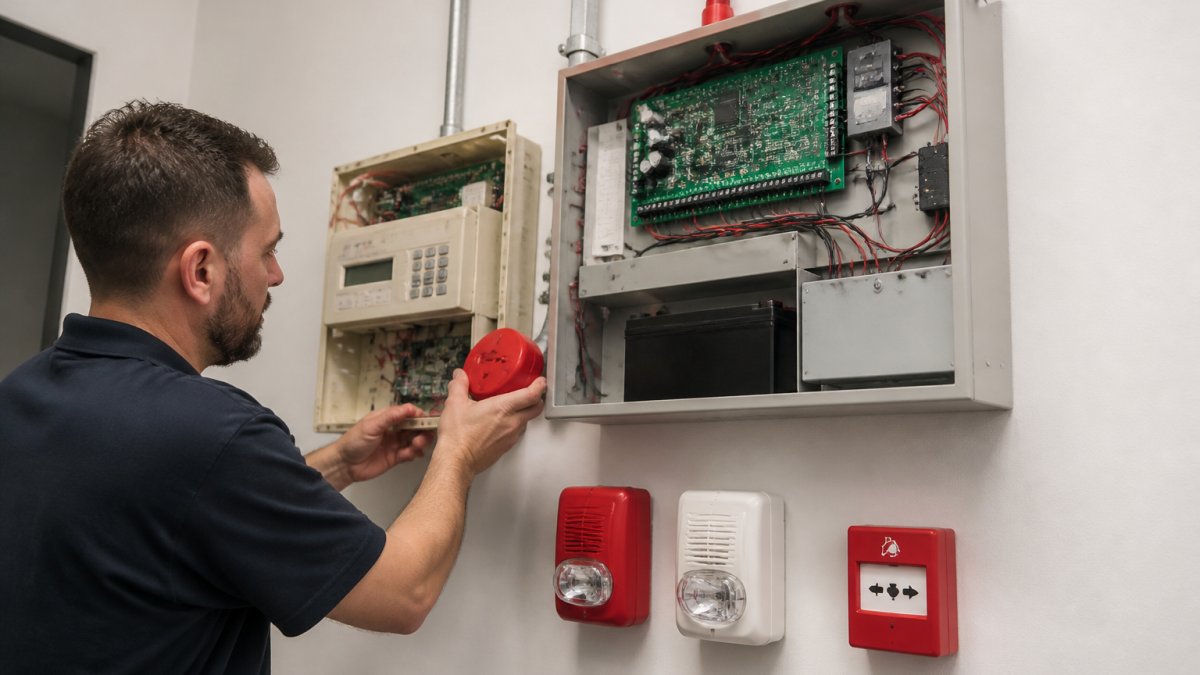
Most fire alarm panels have a practical service life of roughly 10 to 15 years. Detectors often need replacing sooner. Past that point, spare parts get scarce and manufacturers stop supporting the firmware.
An obsolete panel is not automatically non-compliant. But it becomes harder to maintain, and that is where compliance risk creeps in.
Watch for these signals:
- The panel model is no longer manufactured
- Spare detectors or interface units take weeks to source
- Your technician cannot program new devices into the system
- Software updates are no longer released
Faults, False Alarms and Coverage Gaps
Frequent faults and false alarms are the second clear signal. If you want to know whether the faults you are seeing are common alarm issues that signal an upgrade, read our article. A system that trips repeatedly is usually telling you something specific.
Common causes include:
- Smoke detectors past their service life
- Degraded wiring on primary loops
- Notification devices that no longer meet audibility requirements
- Coverage gaps after a renovation or building expansion
False alarms are more than an annoyance. They erode occupant trust, and in some buildings they trigger call-out charges from the fire service.
These are the warning signs and typical service lives the article says point to an outdated fire alarm system.
| Item | Value or sign | Note |
|---|---|---|
| Fire alarm panel practical service life | Roughly 10 to 15 years | Detectors often need replacing sooner |
| Panel model no longer manufactured | Obsolescence signal | Spare parts get scarce |
| Spare detectors or interface units | Weeks to source | Manufacturer support fades |
| Technician cannot program new devices | Obsolescence signal | Software updates no longer released |
| Frequent faults and false alarms | Second clear signal | Usually points to a specific cause |
| Smoke detectors past service life | Common fault cause | Contributes to false alarms |
| Degraded wiring on primary loops | Common fault cause | Affects system reliability |
| Coverage gaps after renovation | Common fault cause | Follows building expansion |
Fire Alarm Compliance Requirements in Australia
Fire alarm compliance in Australia is not a single national checklist. For a practical walkthrough of compliance testing requirements and audit checklists, see our guide. It is a layered obligation built from standards, building legislation, and the requirements of the authority having jurisdiction (AHJ) for the property. Two standards do most of the technical work:
- AS 1851 sets the maintenance, testing and record-keeping regime for fire protection systems, including fire alarm and detection systems.
- AS 1670 covers the design, installation, commissioning and handover of fire detection and alarm systems.
Those standards are given legal effect through state and territory building and fire safety legislation, and through the conditions attached to occupancy approvals. That is why two similar buildings in different council areas can face different documentation and inspection expectations.
Identify the Rules That Actually Apply to Your Building
Before you scope an upgrade, confirm four things in writing:
- The adopted edition of each standard. Standards are revised, and the edition referenced in your building approval or fire safety schedule may not be the latest published edition. Upgrading to a newer edition can trigger additional requirements.
- The class of building and its occupancy. A Class 2 residential building, a Class 5 office and a Class 9a health building carry different detection, notification and evacuation requirements.
- The authority having jurisdiction. This is usually the local council or the fire service, but it can also be the body that issued the occupancy certificate or a private certifier with an ongoing role. Ask them directly what they will inspect and what records they expect.
- Any fire safety schedule or condition of approval. Many buildings have a schedule that names the fire safety measures installed, the standard they must be maintained to, and the frequency of inspection. An upgrade must keep that schedule accurate.
Put the question to your AHJ in writing before design starts: “What standard edition and documentation will you assess this upgrade against?” A written answer prevents a costly redesign after installation.
The Practical Obligations for a Building Manager
Regardless of jurisdiction, the day-to-day obligations are consistent:
- Test and inspect at the intervals AS 1851 requires for each system type, commonly every six months for many fire alarm systems, with monthly checks for some components.
- Keep records that prove each test was done, by whom, and what was found.
- Maintain the system so it performs as designed, and rectify defects within the timeframe the standard and your AHJ require.
- Keep as-built drawings, device schedules and commissioning records current, because an upgrade that is not documented is difficult to defend at audit.
What Changes When You Upgrade
An upgrade is not just a maintenance event. Replacing a panel or changing detection coverage can change the system’s design basis, which may require:
- A revised design that demonstrates compliance with AS 1670.
- Updated documentation lodged with the AHJ where the building approval or fire safety schedule is affected.
- Re-commissioning and acceptance testing before the upgraded system is relied upon.
Fire Alarm System Inspection and Testing: What to Expect
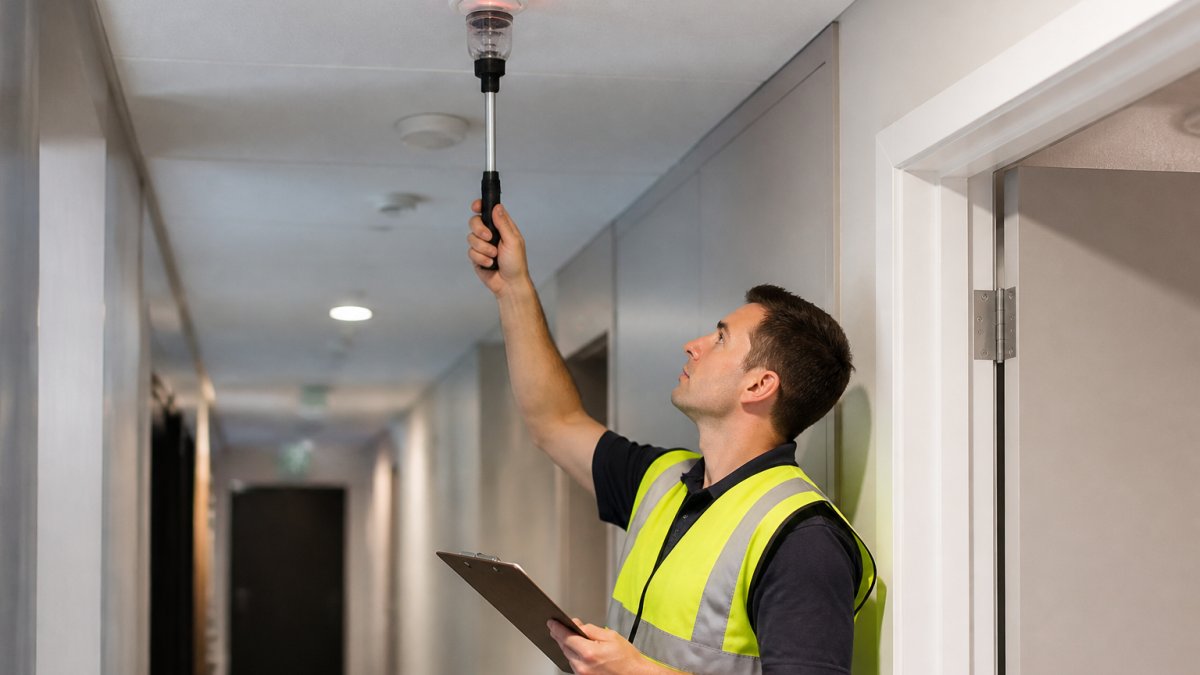
A proper inspection is not a quick walk-through. A licensed technician tests each device, checks the panel’s fault log, and verifies audibility of notification devices.
Assessing Your Existing Equipment and System Condition
Before you commit to a fire alarm upgrade, get a proper system assessment.
Practical Compliance Audit Checklist
Use this checklist to assess your existing system against requirements:
- Confirm the panel model, age and manufacturer support status
- Review the last two years of service reports for recurring faults
- Check the fault log for unresolved alerts
- Verify every detector and notification device has been tested on schedule
- Confirm coverage matches current floor plans and tenancies
- Check battery backup condition and date
- Confirm records are complete and audit-ready
- Identify any building changes since the last design review
The Fire Alarm Upgrade Process, Step by Step
A fire alarm upgrade follows a predictable sequence, and the steps that decide whether the project runs smoothly are approvals, inspection, commissioning and documented handover.
Permits, Inspections and Acceptance
Approval requirements vary by jurisdiction and building class, so confirm them early rather than assuming. In practice, the sequence usually involves:
- Design review against the adopted standard edition and any fire safety schedule conditions.
- Permit or approval lodgement where the work affects the building approval, occupancy or fire safety schedule.
- Inspection at agreed hold points, often before ceilings close or before commissioning begins, so defects are found while access is easy.
- Acceptance testing of the completed system, witnessed by the AHJ or certifier where required.
- Documented handover of as-built drawings, device schedules, commissioning results and maintenance instructions.
Book inspections early. Inspection sign-off is a common bottleneck, and a delayed acceptance test can hold up occupancy even when the installation itself is finished.
Keeping Occupants Protected During the Work
You rarely need to shut a building down to upgrade its alarm system, but you do need a documented impairment procedure. A phased upgrade lets you replace sections while the rest stays live.
Plan the phases around occupancy:
- Work in unoccupied areas first, and isolate only the circuits being replaced.
- Keep temporary detection in place wherever coverage drops, and record where it is installed.
- Notify tenants and occupants in advance of any isolation, and confirm the notification method for each phase.
- Maintain a fire watch or equivalent interim measure where the AHJ requires it during isolation.
- Record every isolation and restoration, so the system’s status is auditable at any point.
Panel, Detector and Device Compatibility
Compatibility is where budgets go sideways. A new fire alarm panel will not always run your existing detectors, and older interface units often cannot talk to modern systems.
Check these before you commit:
- Whether the new panel supports your current detector protocol.
- Whether existing notification devices meet current audibility and visibility requirements.
- Whether interface units need replacing alongside the panel.
Phased Upgrades, Permits and Keeping Occupants Safe During Work
You rarely need to shut a building down to upgrade its alarm system. A phased upgrade lets you replace sections while the rest stays live.
Plan the phases around occupancy. Work in unoccupied areas first, isolate only the circuits you are replacing, and keep temporary detection in place where coverage drops.
Permits and approvals vary by jurisdiction and building class. Confirm what your authority having jurisdiction requires before work starts, and book inspections early. Delays in inspection sign-off hold up occupancy.
Occupant safety during work comes down to three things: a clear isolation plan, temporary coverage, and a documented communication process with tenants.
Planning Your Fire Alarm Upgrade with Fyrepower
A fire alarm upgrade is a compliance project and a budget project at once. Learn how system upgrades can reduce fire service fees to help justify the investment. Getting the scope right first time avoids paying for work twice. Find out how to avoid surprise fire service charges through proactive maintenance and clear service agreements.
Fyrepower is fully insured and QBSA-licensed, and we work to Australian safety standards including AS2444 and AS1851.
Frequently Asked Questions
How do I know if my fire alarm system needs upgrading?
Look for a system past its service life, repeated faults or false alarms, detectors that keep failing testing, and coverage gaps after a renovation or fit-out. If your panel no longer has manufacturer support or spare parts are hard to source, that points to replacement rather than repair. A documented system assessment against current compliance requirements and the relevant Australian standards will confirm whether a fire alarm upgrade is the right call.
Can existing fire alarm wiring and detectors be reused during an upgrade?
Sometimes. Reusing existing cabling and devices depends on their condition, type and compatibility with the new control panel. Older conventional wiring often cannot support addressable panels, and legacy detectors may not be supported by current manufacturers.
How do I minimise disruption while a fire alarm system is being upgraded?
Phased replacement is the usual approach: upgrade the control panel and critical zones first, then work through remaining areas in stages. Schedule noisy or shutdown work outside trading hours, keep temporary detection or warning arrangements in place, and brief occupants and tenants in advance.
Who can assess and upgrade a fire alarm system?
Use a licensed fire protection specialist with experience in Australian standards for fire detection, installation and maintenance. Ask for proof of licensing and insurance.
If your panel is ageing, your fault log is filling up, or your last audit left you short on evidence, the risk is already live. Fyrepower can assess your system, plan a phased upgrade, and hand over documentation that stands up to scrutiny. Get started with Fyrepower and put your building on a compliant footing before the next audit finds the gaps for you.