Table of Contents
- Understanding Fire Service Call-Out Charges and False Alarms
- False Alarm Call-Out Fees in Queensland
- Fire Safety System Maintenance Schedule
- How to Reduce Unwanted Fire Alarms
- Building Owner and Occupier Responsibilities
- Choosing a Transparent Service Provider
- Facility Manager Checklist and Action Plan
- Frequently Asked Questions
Last Updated: August 27, 2026
Understanding Fire Service Call-Out Charges and False Alarms
Fire service call-out charges represent one of the largest unexpected costs facing property managers across Australia. When an automatic fire alarm activates without a genuine emergency, most jurisdictions impose substantial fees on the building owner or occupier. The challenge is preventing unwanted alarm activation in the first place.
At Fyrepower, we’ve spent years helping commercial and strata property managers avoid these charges by addressing root causes of false alarms before they trigger expensive fire service attendance.
What triggers a call-out charge
An automatic fire alarm system triggers a call-out charge when the fire service attends a property in response to an alarm activation that does not represent a genuine fire emergency. In Queensland, false alarm call-out fees apply when fire service crews respond to unwanted alarm activation. A sensor detecting cooking smoke in a commercial kitchen carries the same financial consequence as a sensor malfunction triggered by dust or humidity. This is why prevention matters far more than hoping for leniency after the fact.
Unwanted alarm activation versus genuine emergencies
An unwanted alarm activation is any alarm signal resulting in fire service attendance when no actual fire or emergency exists. This includes sensor malfunctions, environmental triggers, accidental activation, and system faults. A genuine emergency is a confirmed fire or life-threatening situation that warrants immediate response and does not incur charges.
Building owners are responsible for unwanted activations, but not for genuine emergencies. Most building owners assume their monitoring provider will screen out false alarms before dispatching. That assumption is dangerously wrong. Monitoring providers are trained to err on the side of caution and dispatch first, letting the fire service confirm. Once crews arrive and find no fire, the property owner receives an invoice. If you can prevent the alarm from triggering in the first place, you eliminate the entire chain of events that leads to charges.
False Alarm Call-Out Fees in Queensland
Queensland’s regulatory framework treats false alarm call-out fees as a cost-recovery mechanism. The Queensland Fire and Emergency Services (QFES) charges property owners when crews respond to unwanted alarm activations.
How fees are calculated and invoiced
False alarm call-out fees in Queensland are calculated per attendance. When the fire service responds to an alarm activation and confirms no emergency exists, an invoice is generated. Fees accumulate quickly for properties with chronic false alarm problems. A venue experiencing four unwanted activations annually faces multiple invoices across the billing cycle.
Leniency periods and grace thresholds
Queensland’s regulatory framework includes a leniency period for properties managing their false alarm rate. The Queensland Fire and Emergency Services (QFES) allows each monitored automatic fire alarm an initial ‘no charge’ unwanted alarm call in a continuous 60-day period. A second or subsequent alarm within 60 days will be chargeable. After each chargeable unwanted alarm activation, the 60-day count resets. Leniency is not forgiveness, it’s conditional on demonstrating that you’re actively managing the problem. Documentation of maintenance work, system upgrades, and staff training strengthens your position if you need to appeal or request consideration.
Applying for a fee waiver
A fee waiver application is a formal request to the fire service asking them to cancel or reduce a charge based on the property owner taking reasonable steps to prevent recurrence. Successful waiver applications typically include documentation of maintenance work completed after the incident, evidence of system upgrades addressing the root cause, staff training records, and a written explanation of the specific circumstances. Submit documentation promptly within the specified timeframe after the charge is issued. The application must be submitted by the account holder/owner and include a scanned version of the onsite Routine Service Record in accordance with AS1851 (minimum previous 6 months).
Queensland Fire and Emergency Services false alarm policy
Fire Safety System Maintenance Schedule
The most effective strategy for avoiding false alarm charges is a rigorous maintenance schedule. Systems receiving regular professional testing generate far fewer unwanted activations than systems left to operate without oversight.
Six-monthly testing and annual compliance
Fire alarm systems in commercial and strata properties require professional testing at six-monthly intervals to maintain compliance with Australian Standard AS1851 (standards.org.au). This is a regulatory requirement. Six-monthly testing involves a qualified technician conducting a full functional test of all sensors, detectors, alarm panels, and notification devices. Annual compliance verification includes full documentation of all testing conducted throughout the year and confirmation that the system meets current Australian safety standards.
Preventative maintenance to reduce system faults
Preventative maintenance addresses potential problems before they trigger false activations. This includes cleaning sensors to remove dust and debris, checking battery backup systems, verifying power supply stability, and testing communication pathways to the monitoring provider. Dust and environmental particles are the single largest cause of sensor false activations in commercial buildings. Regular cleaning as part of preventative maintenance eliminates this common source of false activations. Battery backup systems require periodic testing to confirm they’ll function during power failure.
Documentation and reporting requirements
Every maintenance action must be documented in a compliance file maintained at the property. This file becomes your protection if you need to defend your maintenance practices to the fire service or during a regulatory audit. Documentation should include date and time of each visit, technician name and qualifications, specific components tested or serviced, any faults identified and corrective actions taken, and next scheduled maintenance date. Detailed documentation demonstrates that you’re taking compliance obligations seriously and provides evidence if you need to apply for a fee waiver.
[AS1851 Australian Standard for fire safety(/fire-protection-specialists-on-the-gold-coast/) equipment maintenance | standards.org.au]
How to Reduce Unwanted Fire Alarms
Preventing false alarm activations requires understanding the environmental and operational factors that trigger unnecessary alarms. Most unwanted activations result from controllable causes that respond to targeted intervention.
Environmental factors and sensor sensitivity
Sensor sensitivity is calibrated to detect genuine fire conditions while minimizing false triggers. Humidity is a significant trigger in commercial kitchens, bathrooms, and humid storage areas. Improving ventilation in these areas reduces humidity levels and prevents sensor false alarms. Cooking smoke, steam, and aerosol particles from cleaning activities trigger sensors in hospitality venues. Installing sensors away from cooking areas or using heat-based detectors instead of smoke detectors in these zones eliminates this trigger. Dust and airborne particles in warehouses and industrial spaces accumulate on sensor lenses, causing sensitivity drift. Regular sensor cleaning removes this buildup and restores proper sensitivity calibration.
Common causes and how to prevent them
Accidental activation occurs when staff members trigger alarms during maintenance or cleaning without notifying the monitoring provider. Prevention requires staff training on how to notify the monitoring provider before conducting any work that might trigger the system. System malfunctions result from aging equipment, failed components, or communication faults. Regular maintenance and timely component replacement prevent these failures. Sensor misalignment or obstruction happens when sensors become covered by dust or building materials. Regular inspection and cleaning keep sensors clear and properly aligned. Power supply instability can cause intermittent system faults. Ensuring stable power supply and functional backup batteries prevents these issues.
Staff training and emergency procedures
Staff who understand the fire alarm system and proper emergency procedures are your most effective prevention tool. Training should cover how to recognize when the alarm system is armed or disarmed, how to notify the monitoring provider before conducting maintenance that might trigger sensors, how to evacuate safely during a genuine alarm activation, and how to report potential system faults to management. Regular drills reinforce these procedures and identify gaps in staff understanding.
| Cause of False Alarm | Prevention Strategy | Expected Outcome |
|---|---|---|
| Dust and debris on sensors | Regular sensor cleaning | Reduced environmental false triggers |
| Humidity in kitchens or bathrooms | Improved ventilation | Fewer moisture-related activations |
| Staff accidental activation | Training and communication protocols | Elimination of human-error triggers |
| System component failure | Six-monthly professional testing | Early detection of faults before false activation |
| Sensor misalignment | Quarterly visual inspection | Maintained sensor alignment and function |
| Power supply issues | Battery backup testing | Stable system operation |
Building Owner and Occupier Responsibilities
Liability for false alarm charges depends on who occupies and controls the property. Understanding these responsibilities clarifies who bears the financial burden and who has authority to implement preventative measures.
Who is liable for false alarm charges
The building owner is typically liable for false alarm charges. However, in strata properties and multi-tenancy buildings, responsibility can shift to the occupier of the specific tenancy where the alarm originated. If a false alarm originates in a common area, the body corporate or building owner typically bears the charge. If the alarm originates in a specific tenancy, the occupier of that tenancy may be liable. Lease agreements often specify who bears responsibility for false alarm charges.
Compliance obligations and regulatory standards
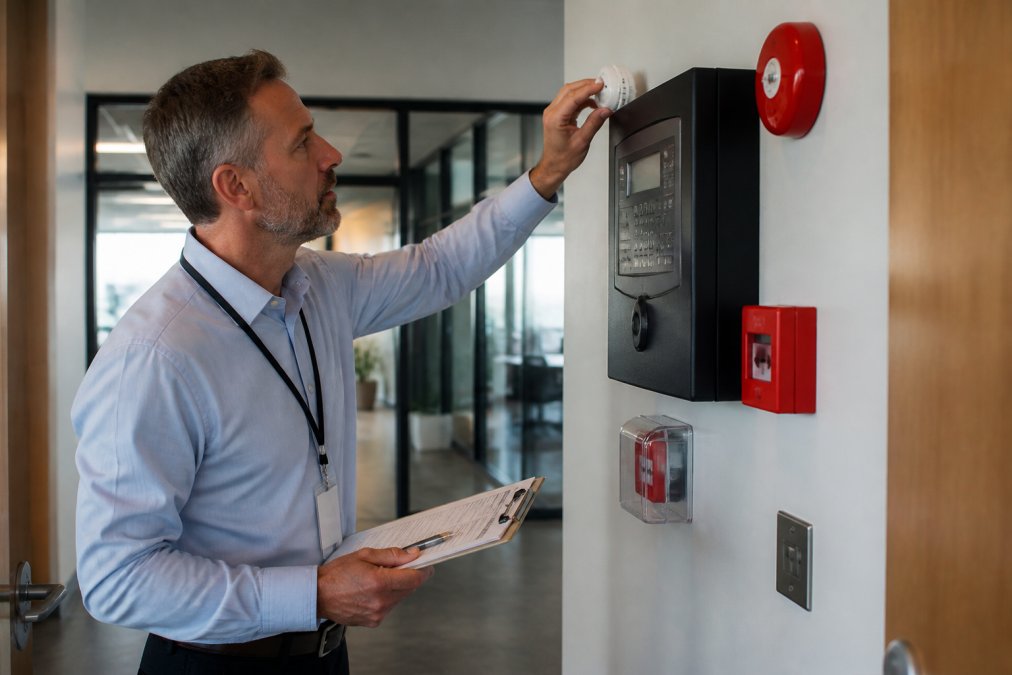
Building owners are obligated to maintain fire safety systems in compliance with Australian Standard AS1851. This obligation includes regular professional testing, prompt repair of faults, and documentation of all maintenance work. Occupiers have an obligation not to deliberately trigger alarms or interfere with system operation. They also must report suspected system faults to the building owner or manager. Regulatory compliance ensures the system functions properly during a genuine emergency.
Choosing a Transparent Service Provider
Your service provider’s practices directly influence your false alarm rate and exposure to charges. Providers who prioritize preventative maintenance and detailed documentation reduce your risk significantly.
What to look for in a monitoring provider
A transparent monitoring provider clearly explains their fee structure, response protocols, and documentation practices. They provide detailed service reports after each visit, not vague invoices that leave you guessing about what was actually done. Look for providers offering fixed-rate pricing for routine maintenance, clear communication before and after each service visit, detailed service reports documenting every component tested, proactive scheduling to prevent maintenance gaps, and direct communication with your property management team. A provider’s QBSA licensing and insurance status should be verifiable on demand.
Service agreements and cost visibility
Service agreements should specify exactly what’s included in your regular maintenance fee and what triggers additional charges. Cost visibility means published pricing for routine services, clear explanation of what triggers additional charges, no surprise invoices after service visits, and transparent communication about system upgrades or repairs needed. Request a service agreement that locks in pricing for a specified period.
Verification of licensing and insurance
Verify your service provider’s QBSA licensing by checking the Queensland Building and Construction Commission register. Insurance verification ensures the provider carries adequate liability coverage. Fyrepower holds QBSA licensing and full insurance coverage, with expertise in Australian safety standards including AS2444 and AS1851. Our service reports provide comprehensive documentation of every maintenance action, creating a compliance record that protects your property.
Facility Manager Checklist and Action Plan
A structured approach to fire safety management prevents most false alarm incidents and positions your property to defend against charges if an incident does occur.
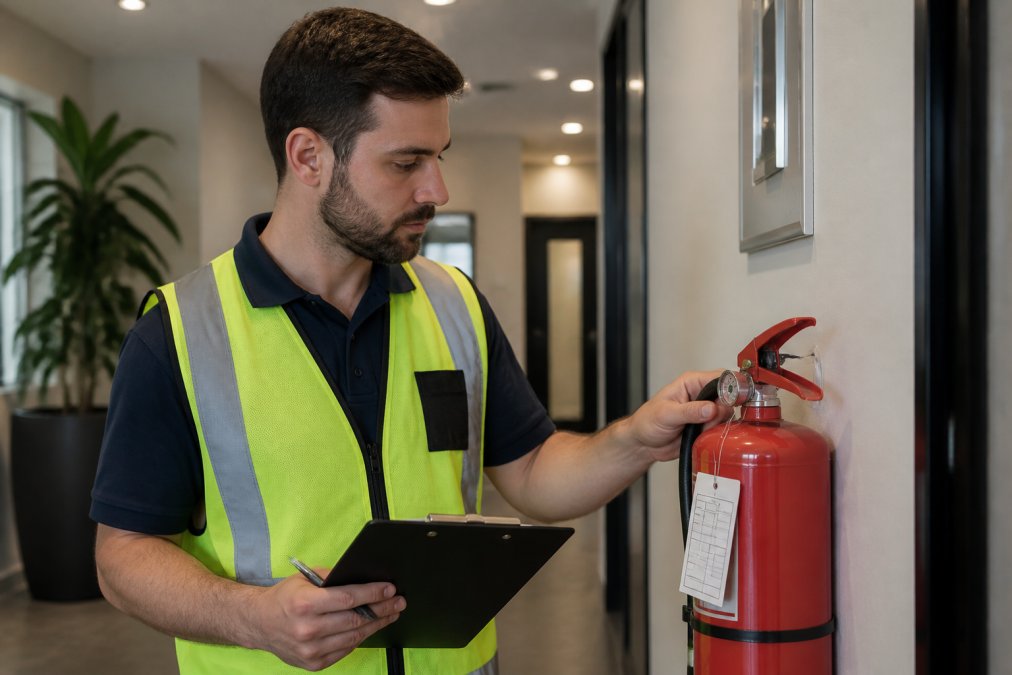
Monthly and quarterly inspection tasks
Monthly tasks:
- Visual inspection of all fire alarm sensors and detectors for dust, debris, or obstruction
- Check that all exit signs and emergency lighting are illuminated
- Verify that fire extinguishers are accessible and pressure gauges show normal range
- Confirm that fire safety signage is visible and not obscured
- Document any visible faults or concerns for maintenance team
Quarterly tasks:
- Test emergency lighting by switching off main power (if safe to do so)
- Verify that fire hose reels are accessible and hoses are properly stored
- Check that sprinkler system gauges show normal pressure (if applicable)
- Review staff training records and identify any staff who need refresher training
- Audit compliance documentation to ensure all maintenance records are current
Documentation tracking and compliance deadlines
Maintain a compliance calendar tracking six-monthly professional testing dates, annual compliance verification due dates, staff training refresher dates, lease renewal dates, and service provider contract renewal dates. Use a shared document or property management software to track these deadlines and assign responsibility to a specific person for each task. Document every maintenance action, test result, and corrective measure taken. Create a system for tracking false alarm incidents, recording the date, time, apparent cause, and corrective actions taken.
False alarm charges are not inevitable. Properties that invest in preventative maintenance, staff training, and transparent service provider relationships operate cleanly for years without triggering unnecessary fire service responses.
Fyrepower helps commercial and strata property managers eliminate false alarms through rigorous maintenance schedules, comprehensive staff training, and detailed compliance documentation. Our fully insured and QBSA-licensed team ensures your fire safety systems function reliably while keeping your property compliant with Australian safety standards including AS2444 and AS1851. Get in touch with us now to protect your property from surprise fire service charges.
=== FAQ ANSWERS (audit these too, same rules) ===
[1] Q: What triggers a false alarm call-out charge in Queensland?
A: A false alarm call-out fee is charged when emergency services respond to an unwanted alarm activation, when your fire alarm system triggers without a genuine fire. This includes accidental activation from burnt food, steam, dust, or system malfunction. The Queensland Fire and Emergency Services (QFES) allows each monitored automatic fire alarm an initial ‘no charge’ unwanted alarm call in a continuous 60-day period. A second or subsequent alarm within 60 days will be chargeable. After each chargeable unwanted alarm activation, the 60-day count resets. Genuine emergencies and activations caused by actual fire hazards are not charged.
[2] Q: How can I prevent unwanted fire alarms in my building?
A: Prevent unwanted alarm activations by maintaining your fire safety system maintenance schedule through regular professional testing and cleaning of sensors. Train staff on proper use of cooking equipment and ventilation to avoid steam and dust triggering detectors. Adjust sensor sensitivity if your environment generates false activations from non-fire sources. Install detectors away from kitchens, bathrooms, and areas with high humidity. Schedule maintenance during low-risk periods and ensure your monitoring provider receives accurate contact information so they can verify alarms before dispatching emergency services. Conduct quarterly checks on detector placement and functionality.
[3] Q: What should I look for in a fire safety service provider to avoid hidden charges?
A: Choose a provider who offers transparent, itemised quotes before work begins and clearly outlines all costs in writing. Verify they are fully insured and hold current licensing (such as QBSA or QBCC certification). Ask for detailed service reports that document exactly what was tested and any issues found, vague reports often hide incomplete work. Confirm their monitoring arrangements and whether they charge for false alarm dispatch or verification calls. Request a service agreement that specifies maintenance schedules, response times, and any additional fees. Check references from existing clients about unexpected charges or billing surprises.
[4] Q: Are there ways to get a false alarm charge waived?
A: Yes, most jurisdictions allow fee waiver applications if the activation was caused by a genuine system fault, not occupier negligence. To apply, provide evidence that your fire safety system maintenance schedule was current, that you maintained the equipment properly, and that the alarm resulted from a technical defect rather than misuse. Submit your incident report and service history documentation to the relevant authority. The Queensland Fire and Emergency Services (QFES) does not charge for attendance at unwanted alarms when the cause is considered beyond the control of the building owner, such as malicious actions, extreme weather conditions, or smoke from another location. If poor maintenance or deliberate misuse caused the activation, waivers are unlikely. Contact your local fire authority or monitoring provider about their specific waiver process and deadlines for appeals.
Frequently Asked Questions
Q: What triggers a false alarm call-out charge in Queensland?
A: A false alarm call-out fee is charged when emergency services respond to an unwanted alarm activation, when your fire alarm system triggers without a genuine fire. This includes accidental activation from burnt food, steam, dust, or system malfunction. The Queensland Fire and Emergency Services (QFES) allows each monitored automatic fire alarm an initial ‘no charge’ unwanted alarm call in a continuous 60-day period. A second or subsequent alarm within 60 days will be chargeable. After each chargeable unwanted alarm activation, the 60-day count resets. Genuine emergencies and activations caused by actual fire hazards are not charged.
Q: How can I prevent unwanted fire alarms in my building?
A: Prevent unwanted alarm activations by maintaining your fire safety system maintenance schedule through regular professional testing and cleaning of sensors. Train staff on proper use of cooking equipment and ventilation to avoid steam and dust triggering detectors. Adjust sensor sensitivity if your environment generates false activations from non-fire sources. Install detectors away from kitchens, bathrooms, and areas with high humidity. Schedule maintenance during low-risk periods and ensure your monitoring provider receives accurate contact information so they can verify alarms before dispatching emergency services. Conduct quarterly checks on detector placement and functionality.
Q: What should I look for in a fire safety service provider to avoid hidden charges?
A: Choose a provider who offers transparent, itemised quotes before work begins and clearly outlines all costs in writing. Verify they are fully insured and hold current licensing (such as QBSA or QBCC certification). Ask for detailed service reports that document exactly what was tested and any issues found, vague reports often hide incomplete work. Confirm their monitoring arrangements and whether they charge for false alarm dispatch or verification calls. Request a service agreement that specifies maintenance schedules, response times, and any additional fees. Check references from existing clients about unexpected charges or billing surprises.
Q: Are there ways to get a false alarm charge waived?
A: Yes, most jurisdictions allow fee waiver applications if the activation was caused by a genuine system fault, not occupier negligence. To apply, provide evidence that your fire safety system maintenance schedule was current, that you maintained the equipment properly, and that the alarm resulted from a technical defect rather than misuse. Submit your incident report and service history documentation to the relevant authority. The Queensland Fire and Emergency Services (QFES) does not charge for attendance at unwanted alarms when the cause is considered beyond the control of the building owner, such as malicious actions, extreme weather conditions, or smoke from another location. If poor maintenance or deliberate misuse caused the activation, waivers are unlikely. Contact your local fire authority or monitoring provider about their specific waiver process and deadlines for appeals.
This article was written using GrandRanker