Table of Contents
- Why POTS Lines and Traditional Monitoring Are Being Retired
- Comparison Table: Monitoring Technologies at a Glance
- Cellular Fire Alarm Monitoring Benefits and Trade-offs
- IP Monitoring: Lower Costs, Real Cybersecurity Risks
- NBN Migration Fire Alarm Services: What Changes for Your Site
- AS 1670.1 Fire Alarm Compliance When You Change Pathways
- Wireless Systems and Fire-Engineered Alternatives
- Retrofitting or Replacing: Making the Call
- Frequently Asked Questions
Last Updated: September 29, 2026
Why POTS Lines and Traditional Monitoring Are Being Retired
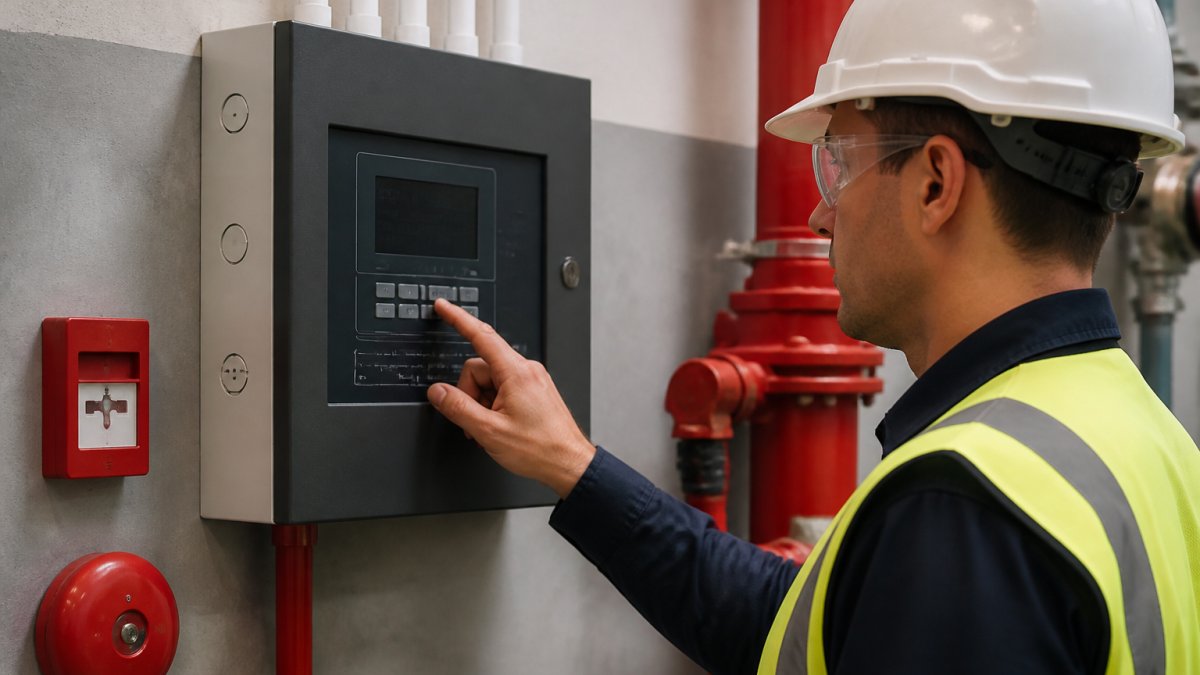
The copper phone line that has carried fire alarm signals for decades is being switched off, and that changes how every commercial site manages its fire alarm monitoring. Australia’s legacy telephone network is being retired as the NBN rolls out, which means the POTS line your fire panel has relied on may no longer exist within a few years.
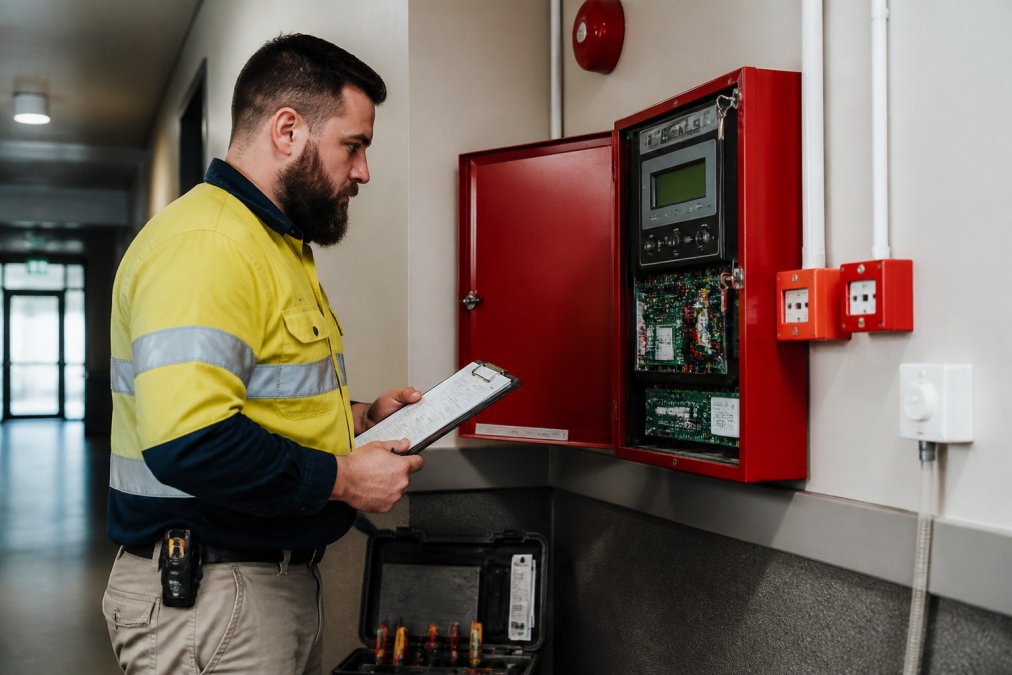
Sites that wait until their copper line is disconnected to plan a migration often face rushed, non-compliant fixes. Plan the pathway change well before the switch-off date reaches your building.
Comparison Table: Monitoring Technologies at a Glance
| Technology | Signal Path | Best For | Main Trade-off |
|---|---|---|---|
| Cellular monitoring | Mobile network | Sites without reliable fixed lines | Ongoing SIM and data costs |
| IP monitoring | Internet connection | Buildings with stable broadband | Cybersecurity exposure |
| Radio frequency | Dedicated radio | Remote or high-risk sites | Limited coverage areas |
| Wireless systems | Mesh radio | Hard-to-wire buildings | Battery maintenance |
This table is a starting point, not a verdict. The right choice depends on your building, your budget, and what your fire panel already supports.
Cellular Fire Alarm Monitoring Benefits and Trade-offs
Cellular fire alarm monitoring sends alarm signals over the mobile network instead of a fixed line, which removes the single biggest point of failure in a legacy setup. If the phone line is cut or the internet drops out, the alarm still transmits.
The benefits are clear:
- No dependence on a copper line that is being retired
- Fast signal transmission with low latency
- Works in buildings where running new cabling is impractical
- Redundancy options using dual SIMs or dual networks
IP Monitoring: Lower Costs, Real Cybersecurity Risks
IP monitoring routes alarm signals over an internet connection, and for many sites it is the cheapest pathway to maintain. The catch is that anything connected to a network is exposed to that network’s risks.
The cybersecurity angle is where most guides go quiet. An IP-connected fire panel is a device on your network, and it needs the same discipline as any other connected system:
- Segment the fire panel onto its own network
- Change default credentials before commissioning
- Keep firmware patched and monitored
- Restrict remote access to authorised users only
NBN Migration Fire Alarm Services: What Changes for Your Site
NBN migration fire alarm services exist because the shift from copper to fibre breaks the old dialler pathway. When a site moves to the NBN, the fire panel needs a new way to reach the monitoring centre, and the change has to be planned rather than improvised. Reliable remote site connectivity often requires moving beyond standard cellular networks to ensure that critical signals remain uninterrupted during the transition.
What actually changes:
- The alarm no longer dials out over a phone line
- A cellular or IP pathway replaces the copper connection
- The receiving centre must be able to accept the new signal format
- The change must be documented for compliance records
- The old copper path should remain live until the new path is proven
A practical migration sequence that most facility managers follow:
- Audit the existing panel. Confirm the make, model, firmware version, and whether it supports a cellular or IP module. Panels older than roughly fifteen years often cannot accept a modern pathway without a panel change.
- Confirm the disconnection timeline. Copper switch-off dates vary by area and by carrier, so the deadline for your building is not the same as the national rollout. Get the date in writing from the carrier or your provider.
- Select the pathway. Cellular suits sites with poor fixed-line reliability; IP suits sites with stable broadband and a segmented network. Dual-path configurations (two cellular networks, or cellular plus IP) are the common choice where the risk profile is higher.
- Install and commission. The new module or gateway is fitted, the panel is reprogrammed, and the receiving centre is configured to accept the new signal format.
- Test end to end. A signal must travel from the panel, through the new pathway, and be received and acknowledged at the monitoring centre. Testing only the panel output is not enough.
- Document and decommission. Once the new pathway is verified, the copper line can be retired and the change recorded for compliance purposes.
Where the costs sit:
- Hardware: a cellular or IP module, or a gateway device, plus installation labour
- Ongoing: SIM and data charges for cellular, or a share of broadband costs for IP
- Monitoring: the receiving centre’s fee, which may change if the signal format changes
- Compliance: testing, commissioning, and record-keeping time
Ask your provider to confirm the new pathway is tested end to end, from panel to monitoring centre, before the old line is disconnected. A signal that leaves the panel but never arrives is worse than no migration at all.
Do not cancel the copper line until the new pathway has passed an end-to-end test and the result is documented. Cancelling early can leave the site unmonitored for days.
AS 1670.1 Fire Alarm Compliance When You Change Pathways
AS 1670.1 fire alarm compliance is not optional when you change how signals travel. The standard sets out how fire detection, warning and control systems must be designed and installed, and altering the monitoring pathway is a change that must be documented and verified.
The practical requirements:
- The new pathway must meet the standard’s transmission requirements
- The system must be tested and commissioned after the change
- Records must show what was changed and when
- Ongoing inspection and testing must continue under AS 1851
Wireless Systems and Fire-Engineered Alternatives
Wireless fire alarm systems connect detectors and devices through radio frequency rather than hardwired cabling. For heritage buildings, retrofits, or sites where running cable is impractical, they solve a real problem.
Retrofitting or Replacing: Making the Call
Retrofitting keeps your existing panel and adds a new monitoring pathway, while replacing swaps the whole system. The right call comes down to the age and capability of what you already have, and to the total cost of ownership over the next decade rather than the upfront invoice.
Retrofit when:
- The panel is current and supports cellular or IP modules
- Detection devices are in good condition and within their service life
- Budget is tight and downtime must be minimal
- The building’s use and zoning have not changed
Replace when:
- The panel is obsolete or parts are hard to source
- The building has changed use and zoning no longer fits
- Repeated faults suggest the system is near end of life
- The panel cannot accept a modern monitoring pathway without a full board change
Total cost of ownership: the angle most guides skip
A retrofit usually wins on upfront cost, but the picture changes over a ten-year horizon. A retrofit on an ageing panel often means:
- Higher ongoing maintenance as components fail more frequently
- Limited spare parts availability, which can mean long outages
- Repeated compliance testing costs if faults recur
- A second migration later when the panel finally reaches end of life
A full replacement typically carries a higher upfront cost but can reduce:
- Maintenance call-outs, because the system is under warranty and parts are current
- Downtime, because faults are resolved faster
- Future migration risk, because the new panel supports current and emerging pathways
A practical decision framework
- Get the panel’s age, model, and firmware version confirmed in writing.
- Ask whether the panel supports a cellular or IP module, and whether that module is still manufactured.
- Estimate the remaining service life of detection devices, not just the panel.
- Compare the ten-year cost of retrofitting against replacing, including maintenance, testing, and likely future migration.
- Factor in downtime: a retrofit can often be done in hours, while a replacement may need a planned outage.
- Check whether the building’s use or zoning has changed since the system was installed.
Retrofitting is usually the right call when the panel is current and the detection devices have life left in them. Replacing is usually the right call when the panel is obsolete, parts are scarce, or the building’s use has changed. The ten-year cost, not the upfront quote, is the number that matters.
Frequently Asked Questions
What are the different types of fire alarm monitoring systems?
Most sites now choose between cellular, IP, and radio frequency monitoring. Cellular uses a SIM and mobile network, IP sends signals over your internet connection, and radio frequency relies on a dedicated wireless network. Each has different costs, latency, and redundancy. Traditional POTS lines are being retired as the NBN rolls out, so any new install should plan for a digital pathway that suits your building and budget.
How do cellular fire alarm monitoring systems compare to traditional landlines?
Cellular monitoring removes the dependence on a copper phone line, which matters as POTS services are withdrawn. A cellular dialler sends alarm signals over the mobile network, so there is no line rental and no risk of a phone cable being cut. The trade-off is that signal strength varies by location, so a site survey is worth doing. Cellular fire alarm monitoring benefits include faster fault reporting and easier installation where cabling is difficult.
What happens to fire monitoring services during the NBN migration?
When a site moves to the NBN, legacy alarm signalling over a PSTN line stops working. NBN migration fire alarm services involve reprogramming or replacing the dialler so signals travel over the new connection, often via cellular or IP. This work should be scheduled before the copper cut-off date, not after, so your monitoring centre never loses contact with the panel. Ask your provider for a migration plan with dates.
Are wireless fire alarm systems a viable alternative to hardwired monitoring?
Wireless systems suit heritage buildings, fitouts where cabling is impractical, and smaller sites that need faster installation. They still need to meet AS 1670.1 fire alarm compliance for signal transmission and monitoring. The main considerations are battery maintenance, signal interference, and whether the system can expand as the site grows. For many commercial properties, a hybrid approach works well: wireless detection with a cellular or IP monitoring pathway.
What are the compliance requirements for fire alarm monitoring under Australian Standards?
AS 1670.1 sets out how automatic fire alarm systems must transmit signals to a monitoring centre, including requirements for redundancy and fault reporting. AS 1851 covers ongoing inspection and testing, including the six-monthly checks many commercial sites need. If you change monitoring technology, the new pathway still has to satisfy these standards. Keep documentation from your provider showing the system meets AS 1670.1 after any migration or retrofit.
The challenge with any monitoring change is that compliance does not pause while you decide. Fyrepower handles the full transition, from pathway migration and AS 1670.1 documentation to ongoing AS 1851 testing and staff training, backed by QBSA licensing and full insurance. Get in touch with Fyrepower to move your site onto a compliant monitoring pathway before the copper switch-off reaches your building.