Table of Contents
- What Fire Safety Compliance Testing Involves
- Commercial Fire Extinguisher Testing Frequency and Requirements
- Understanding AS 1851-2012 Maintenance Requirements
- Building Your Fire Safety Audit Checklist for Businesses
- Smoke Alarms, Emergency Lighting, and Exit Signs
- Common Fire Safety Non-Compliance Penalties
- Professional Testing vs. DIY Maintenance: Where to Draw the Line
- Getting Your Fire Safety Certificate and Annual Statement
- Frequently Asked Questions
Last Updated: August 19, 2026
What Fire Safety Compliance Testing Involves
Fire safety compliance testing is the systematic inspection and verification of fire protection equipment and systems to ensure they function correctly and meet Australian safety standards. This process protects lives, prevents property damage, and keeps your business legally compliant with mandatory requirements.
Compliance testing covers multiple components: fire extinguishers, smoke alarms, emergency lighting, exit signs, fire hose reels, fire blankets, and detection systems. Each element must be tested on a defined schedule, documented thoroughly, and certified by a qualified technician. The goal isn’t just to pass an audit, it’s to ensure that if a fire occurs, your equipment will actually work.
Many property managers and business owners underestimate the complexity here. You might assume a quick visual check is enough. It isn’t. Testing requires specialist knowledge, calibrated equipment, and detailed documentation that will hold up under regulatory scrutiny. This is where the difference between DIY maintenance and professional fire safety compliance testing becomes critical.
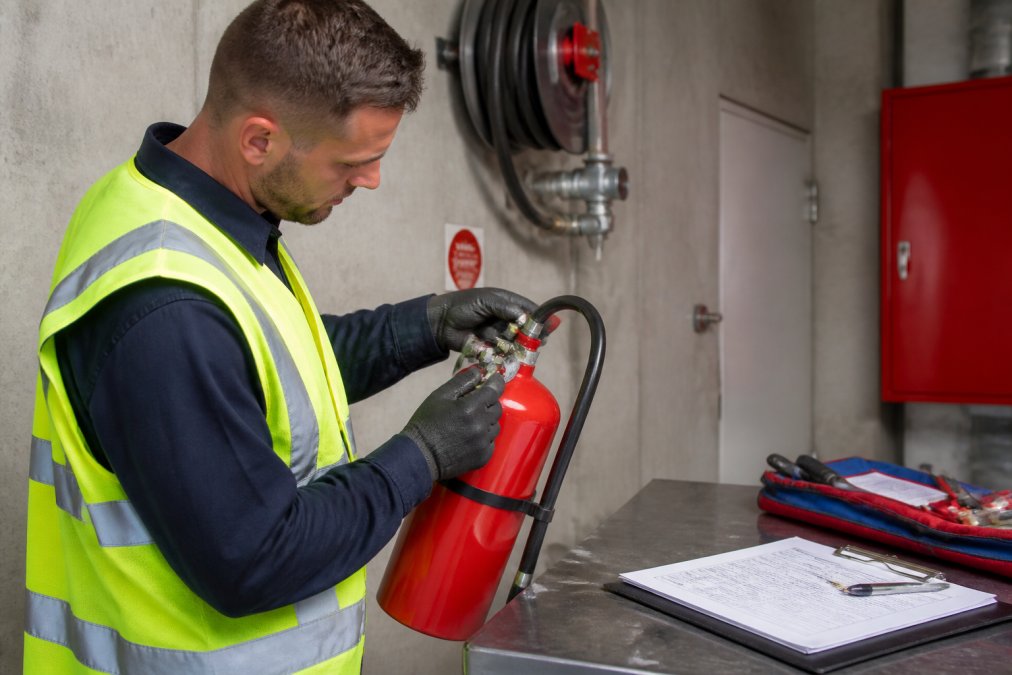
At Fyrepower, we understand that fire safety compliance testing isn’t a box-ticking exercise, it’s a fundamental responsibility. Our QBSA-licensed team conducts thorough, documented testing that protects your property and keeps you compliant with Australian standards. We work with commercial property managers, body corporate teams, and business owners across the Gold Coast and South Brisbane to ensure all fire protection systems are tested, maintained, and certified on schedule.
Commercial Fire Extinguisher Testing Frequency and Requirements
Commercial fire extinguishers must be tested and serviced regularly to remain effective. The testing frequency depends on the type of extinguisher, its location, and the environment where it’s installed.
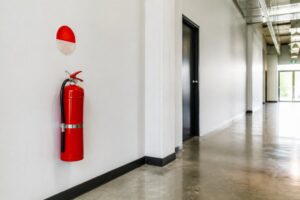
Most commercial fire extinguishers require servicing every 12 months as a minimum. However, some types, particularly those in high-risk environments or with specific chemical contents, may need testing every six months. Pressurised water and foam extinguishers typically follow the 12-month cycle, while CO₂ and powder extinguishers may require more frequent checks depending on their application.
Beyond annual servicing, commercial extinguishers must undergo a full hydrostatic pressure test every five years. This test verifies that the cylinder can safely contain pressurised gas without rupturing. Extinguishers that fail this test must be removed from service immediately, as they become a safety hazard rather than a protection asset.
Documentation is non-negotiable. Every test must be recorded with the date, technician name, work performed, and any defects found. This creates an audit trail that proves your property has been maintained to standard. If a fire occurs and you’re questioned about your maintenance history, this documentation is your evidence of compliance.
Understanding AS 1851-2012 Maintenance Requirements
What AS 1851 covers
AS 1851-2012 is the Australian Standard that governs the inspection, testing, and maintenance of fire protection systems and equipment. This standard applies to all commercial properties and defines exactly what testing is required, how often it must occur, and who is qualified to perform it.
The standard covers fire extinguishers, hydrants, hose reels, blankets, detection systems, emergency lighting, and exit signs. It specifies the intervals for different types of equipment, the qualifications required of technicians, and the documentation standards that must be maintained. Compliance with AS 1851 is not optional, it’s a legal requirement for most commercial properties.
One critical point: AS 1851 requires that testing be performed by a licensed, competent person. This isn’t someone who watched a YouTube video. It’s a technician with formal training, industry certification, and documented experience in fire safety systems. The standard exists because improper testing can mask equipment failures that would be catastrophic in a real fire.
Your obligations as a property manager or business owner
If you manage or own a commercial property, you have a legal duty to ensure fire safety equipment is tested and maintained in accordance with AS 1851. This duty falls on you regardless of whether you perform the work yourself or contract it out. If testing isn’t done or is done incorrectly, you’re liable.
Your obligations include:
- Arranging testing at the intervals specified in AS 1851 (typically 6 or 12 months, depending on equipment type)
- Ensuring the technician performing the work is qualified and licensed
- Maintaining detailed records of all testing and maintenance work
- Addressing any defects or failures identified during testing immediately
- Providing access to equipment and systems for testing purposes
- Keeping documentation available for regulatory inspection
Many business owners assume that once they contract a service provider, the responsibility transfers to that provider. It doesn’t. You remain accountable for ensuring the work is actually done, done correctly, and documented properly. This is why choosing a reliable, QBSA-licensed provider like Fyrepower matters, we take the compliance burden seriously and provide detailed reports that prove your obligations have been met.
Building Your Fire Safety Audit Checklist for Businesses
A fire safety audit checklist helps you systematically verify that all required equipment and systems are in place, functional, and compliant. This isn’t a substitute for professional testing, but it’s an essential first step to identify gaps before a formal inspection occurs.
Essential items to inspect
Start by walking through your property and documenting the presence and condition of key fire safety equipment. Check that fire extinguishers are visible, accessible, and mounted at the correct height. Verify that emergency lighting is operational, these lights should illuminate automatically if the main power fails. Inspect exit signs to confirm they’re clearly visible, illuminated, and free from obstruction.
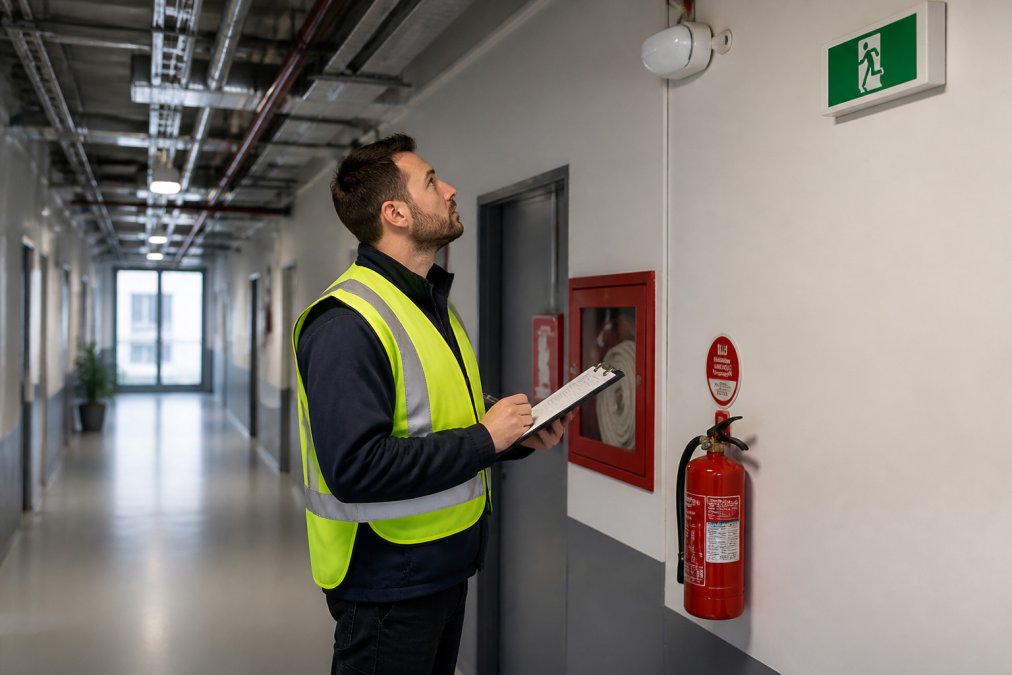
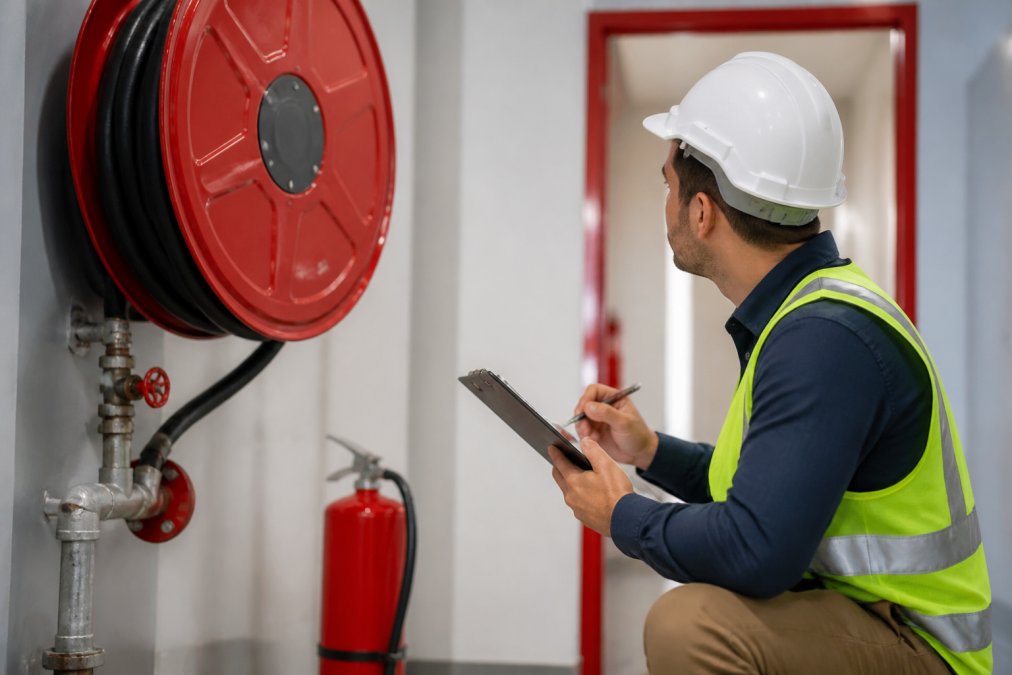
Examine fire hose reels to ensure they’re not blocked by storage or equipment. Check that fire blankets are mounted in accessible locations, particularly in kitchens and food preparation areas. Verify that smoke alarms are present in all required areas and that batteries (if applicable) are functional. Document the last testing date for each item, if you can’t find a record, that’s a red flag.
Look for physical damage to any equipment. A dented or corroded fire extinguisher, a cracked emergency light lens, or a bent exit sign all indicate equipment that may not function properly in an emergency. These aren’t cosmetic issues, they’re safety failures.
Documentation you need to gather
Collect all maintenance and testing records for the past two years. This includes service reports from your current provider, any compliance certificates, and records of equipment installation or replacement. If records are missing or incomplete, this is your cue to engage a professional to conduct a comprehensive audit and establish a proper testing schedule going forward.
Create a simple spreadsheet documenting: equipment type, location, last testing date, next testing due date, and current condition. This becomes your master compliance record. Update it every time work is completed. When a regulator or insurance auditor asks for proof of compliance, this document, backed by detailed service reports, is what you’ll provide.
Smoke Alarms, Emergency Lighting, and Exit Signs
Smoke alarms, emergency lighting, and exit signs are often overlooked in fire safety planning, yet they’re critical to life safety. Smoke alarms provide early warning, emergency lighting guides occupants to safety in darkness, and exit signs ensure everyone knows where to go.
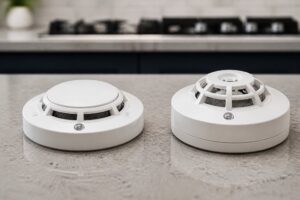
Smoke alarms must be tested every 12 months in commercial properties. Many business owners rely on the battery test button, but this only confirms the alarm is powered, it doesn’t verify that the detector itself is functioning. Professional testing involves checking the sensor, ensuring it responds to smoke, and verifying the alarm sounds at the correct volume. Detectors accumulate dust and lose sensitivity over time, so annual professional testing is essential.
Emergency lighting must illuminate automatically if the main power fails and must operate for at least 90 minutes. Testing verifies that the backup battery charges properly and that the lights activate when power is cut. Exit signs must remain illuminated and visible at all times. If an exit sign is dim, flickering, or obscured, it fails to serve its purpose.
These systems are tested as part of your broader fire safety compliance testing program. Fyrepower conducts comprehensive testing of smoke alarms, emergency lighting, and exit signs, providing detailed reports that confirm all systems are operational and compliant.
Common Fire Safety Non-Compliance Penalties
Non-compliance with fire safety standards carries serious consequences. Regulatory bodies in Australia have enforcement powers that result in significant penalties for businesses that fail to maintain fire safety equipment and systems.
Penalties for fire safety non-compliance vary depending on the severity of the breach and the jurisdiction, but they can include substantial fines, enforcement notices requiring immediate remediation, and in serious cases, prosecution. Beyond financial penalties, non-compliance creates liability if a fire occurs and someone is injured or property is damaged. Insurance policies often exclude claims if the property wasn’t maintained to required standards, leaving you personally liable.
The most common compliance failures are: failure to test equipment on the required schedule, failure to maintain proper documentation, use of unqualified technicians to perform testing, and failure to address identified defects. Each of these is avoidable with a structured maintenance program and a reliable service provider.
The cost of compliance testing is negligible compared to the cost of non-compliance. A single penalty notice or insurance claim denial can cost thousands of dollars. Regular, documented testing prevents these outcomes entirely.
Professional Testing vs. DIY Maintenance: Where to Draw the Line
Some fire safety maintenance can be done in-house. Other work requires a qualified, licensed technician. Understanding the boundary is crucial for compliance.
You can perform basic visual checks: ensuring equipment is visible and accessible, checking that exit signs are illuminated, and verifying that smoke alarm batteries are functional. These are housekeeping tasks that support compliance but don’t substitute for professional testing.
Professional testing, the kind required by AS 1851, must be performed by a qualified technician. This includes fire extinguisher servicing, hydrostatic pressure testing, smoke alarm sensor verification, emergency lighting battery testing, and exit sign functionality checks. These require specialist equipment, training, and certification. Attempting these tasks without proper qualifications creates safety risks and voids your compliance status.
The practical boundary: if the work involves opening, pressurising, or testing fire protection equipment, or if it generates a compliance certificate, it must be done by a licensed professional. If it’s a visual check or routine maintenance that doesn’t affect equipment function, you can handle it internally.
Many business owners try to minimise costs by doing DIY maintenance, then discover during an audit that the work doesn’t meet standards or isn’t documented properly. This creates compliance gaps and regulatory exposure. The cost of professional testing is far lower than the cost of remediation and penalties.
Getting Your Fire Safety Certificate and Annual Statement
A fire safety certificate is formal documentation that your property’s fire safety equipment and systems have been tested and certified as compliant. This certificate is often required for insurance purposes, property sales, and regulatory compliance.
The certificate is issued by the qualified technician who performs the testing. It includes details of all equipment tested, the dates of testing, the technician’s qualifications, and confirmation that the work meets AS 1851 standards. This document is your proof of compliance and must be retained for the period specified by your insurance policy and local regulations.
An annual fire safety statement is a formal declaration that fire safety requirements have been met. In some jurisdictions and property types, this statement is mandatory. It confirms that all required testing has been completed, that equipment is functional, and that documentation is current.
Fyrepower provides comprehensive fire safety certificates and statements that document all testing performed, equipment condition, and compliance status. Our detailed reports give you the documentation you need to satisfy insurance requirements, regulatory inspections, and due diligence obligations.
Fire safety compliance testing is a non-negotiable responsibility for any commercial property owner or manager. The process protects lives, prevents property damage, and keeps your business legally compliant with Australian standards. Yet many businesses struggle with the complexity of scheduling, documentation, and finding a reliable service provider they can trust.
Fyrepower specialises in comprehensive fire safety compliance testing across the Gold Coast and South Brisbane. Our QBSA-licensed team conducts thorough testing of extinguishers, hydrants, smoke alarms, emergency lighting, and exit signs, all documented to AS 1851 standards. We handle the compliance burden so you can focus on running your business. Get in touch with us now to schedule your fire safety audit and establish a testing program that keeps your property safe and compliant.
Frequently Asked Questions
How often must fire extinguishers be tested in commercial properties?
Commercial fire extinguishers must be serviced annually under AS 1851-2012. Hydrostatic pressure testing is required every 5 years for most extinguishers, and every 10 years for specific types. Your testing frequency may be higher if your property is classified as high-risk or has specific legislative requirements. A professional fire safety provider can confirm your exact schedule based on your equipment and building type.
What is the Australian Standard for fire safety compliance testing?
AS 1851-2012 is the primary standard governing the maintenance, inspection, and testing of fire protection equipment in Australia. It covers fire extinguishers, hose reels, blankets, and detection systems. The standard specifies testing intervals, documentation requirements, and competency levels for technicians. Compliance with AS 1851 is mandatory for commercial properties and is often a condition of building insurance and lease agreements.
What are the penalties for non-compliance with fire safety regulations?
Penalties for fire safety non-compliance vary by state and severity but can include substantial fines, prosecution, and liability claims if an incident occurs. In Queensland, building owners and managers can face significant financial penalties under the Building Fire Safety Regulation and the Fire and Emergency Services Act. Beyond financial consequences, non-compliance can void insurance coverage, delay lease renewals, and damage your reputation. Professional compliance testing protects you legally and operationally.
Who is responsible for fire safety compliance in a leased commercial building?
Responsibility is typically shared between the building owner and the tenant, though the lease agreement defines specific obligations. Owners are usually responsible for structural safety systems (emergency lighting, exit signs, fire detection). Tenants are typically responsible for maintaining equipment within their tenancy and ensuring staff training. Body corporate managers of multi-tenancy complexes must coordinate testing across all areas. Always review your lease and consult a fire safety professional to clarify roles.
This article was written using GrandRanker