Table of Contents
- What is AS 1851-2012 and why it matters in 2026
- Key changes and compliance deadlines from February 13, 2026
- Building class applicability and mandatory compliance requirements
- Fire safety compliance checklist for building managers
- Fire protection system testing frequency and routine service schedules
- Commercial fire alarm maintenance and documentation obligations
- Asset register, record keeping, and audit readiness
- Budgeting and cost planning for AS1851 compliance
- Frequently Asked Questions
Last Updated: August 17, 2026
What is AS 1851-2012 and why it matters in 2026
AS 1851-2012 is the Australian Standard governing routine service and maintenance of fire protection systems and equipment. It’s mandatory compliance for most commercial buildings, strata properties, and facilities across the country. If your building has fire extinguishers, hydrants, alarms, or suppression systems, this standard defines testing frequency, qualified personnel requirements, and record-keeping obligations.
From February 13, 2026, significant regulatory changes tightened compliance deadlines and expanded mandatory maintenance schedules. Non-compliance carries real consequences: failed audits, insurance claims rejection, and liability exposure if fire safety systems fail when needed. Building regulators now actively audit compliance records, and property managers who can’t demonstrate proper maintenance face penalties.
The core principle is simple: fire protection systems only work if properly maintained. A fire extinguisher unserviced for two years is a liability. An alarm system with dead batteries is worse than no alarm. This standard ensures systems stay functional and ready.
Key changes and compliance deadlines from February 13, 2026
The regulatory reform introduced on February 13, 2026 reshaped how AS1851 fire maintenance requirements apply across different building classes. The most significant change is mandatory compliance deadline acceleration for Class 1b to Class 9 buildings, requiring documented proof of routine service completion within strict timeframes.
Before this date, many property managers operated under older compliance schedules with longer service intervals. The new framework compresses those intervals and introduces stricter documentation standards. Buildings that previously had 12-month fire extinguisher service intervals now face 6-monthly mandatory testing. Hydrant systems previously inspected annually now require more frequent certification checks.
What changed specifically:
Fire extinguisher and portable equipment: Routine service is now mandatory every 6 months, not annually, across all commercial buildings, hospitality venues, retail spaces, and multi-tenancy complexes.
Fire hydrant systems: Hydrostatic pressure testing and certification must occur every 5 years, with routine visual inspections at 6-monthly intervals. New installations require immediate certification before occupancy.
Fire detection and alarm systems: Annual testing is now supplemented with quarterly functional checks documented in a logbook. Critical defects must be rectified within 48 hours of discovery.
Essential fire safety measures: All fire safety equipment must be accessible, clearly marked, and supported by staff training documentation.
The compliance deadline is firm: buildings must demonstrate full compliance by the end of the first service cycle after February 13, 2026. Missing this deadline triggers regulatory notification, and subsequent non-compliance can result in building prohibition orders.
The 48-hour critical defect rectification window is not a suggestion. If your fire alarm system is found to have a critical fault during routine testing, you have two days to fix it or your building may be deemed non-compliant. Plan maintenance budgets accordingly.
Building class applicability and mandatory compliance requirements
AS1851 fire maintenance requirements apply differently depending on your building’s classification under the Building Code of Australia. Requirements scale based on occupancy, risk profile, and building use.
Class 1b buildings (multi-unit residential complexes, apartment blocks) require routine service of all fire safety equipment at 6-monthly intervals. The owners corporation is responsible for ensuring compliance and maintaining asset registers.
Class 2 buildings (hotels, hostels, student accommodation) fall under stricter requirements due to transient occupancy. Fire alarm systems, extinguishers, and hydrants must be serviced every 6 months, with quarterly functional checks for alarm systems.
Class 3 to 6 buildings (offices, retail, assembly spaces, car parks) require the full suite of mandatory compliance measures. Testing frequency depends on system type: extinguishers and hydrants every 6 months, alarms quarterly.
Class 7 to 9 buildings (storage, industrial, high-hazard facilities) face the most rigorous requirements. Suppression systems, detection equipment, and emergency lighting must be tested more frequently, with immediate notification to building regulators for critical defects.
Higher-risk buildings with more occupants require more frequent testing and stricter documentation. Only fire safety practitioners certified under the relevant state or territory scheme can conduct routine service on certain systems. Hiring a qualified provider like Fyrepower ensures full compliance across all building classes.
Fire safety compliance checklist for building managers
Building managers often inherit compliance responsibilities without clear guidance on what “compliant” actually looks like. Here’s a practical checklist that translates the standard into actionable steps.
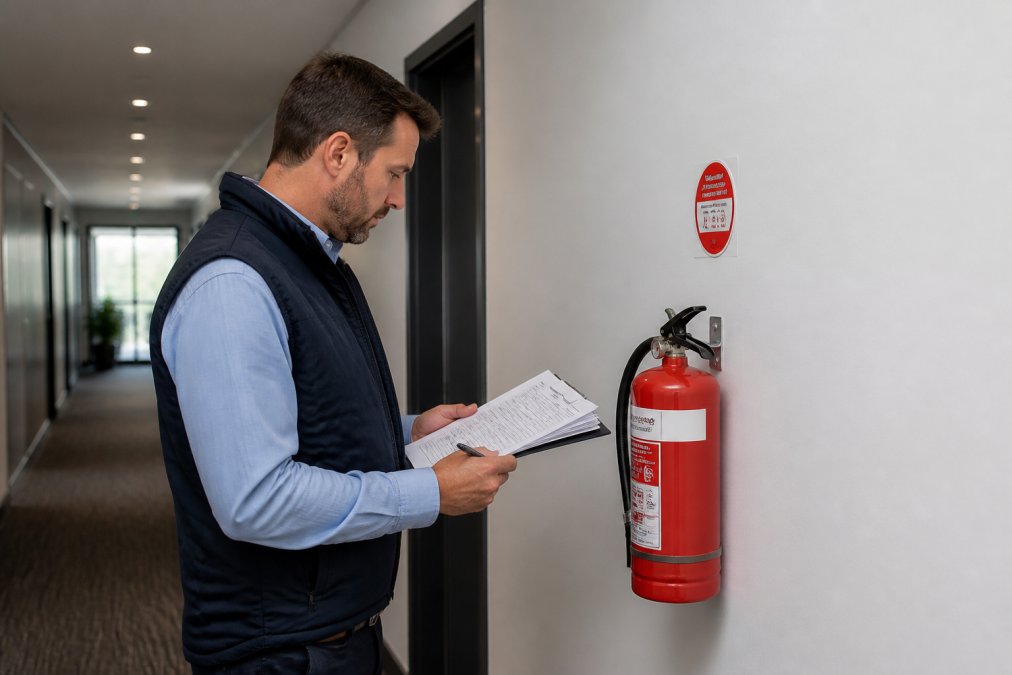
Step 1: Audit your current fire safety equipment inventory. Walk through your building and document every fire extinguisher, hydrant, alarm sensor, and suppression component. Note installation dates and last service dates. This inventory becomes your asset register, the foundation of compliance.
Step 2: Establish a service schedule. Based on your building class, determine which systems need 6-monthly service, which need annual testing, and which need quarterly checks. Mark these dates on a calendar and set reminders 30 days before each service is due.
Step 3: Engage a certified fire safety practitioner. You cannot perform routine service yourself. The standard requires a qualified practitioner. Fyrepower provides professional maintenance and testing services with full documentation.
Step 4: Maintain a logbook and asset register. Document every service, test result, and defect identified. Include the date, technician name, systems tested, and any issues found. This logbook is your proof of compliance during audits.
Step 5: Address critical defects immediately. If testing identifies a critical defect, a fire extinguisher that won’t discharge, an alarm sensor that doesn’t respond, a hydrant with low pressure, you have 48 hours to fix it. Document the defect and remediation.
Step 6: Train staff on fire safety procedures. The standard requires documented evidence that occupants and staff understand how to use fire equipment and follow evacuation procedures. Run annual training sessions and keep attendance records.
Step 7: Prepare for audit readiness. Regulators can request compliance documentation at any time. Your asset register, service logbooks, training records, and maintenance reports should be organized and accessible within 48 hours.
The single biggest compliance failure is incomplete or missing logbooks. Services get done, but documentation is vague or scattered. Build a centralised logbook system that clearly shows what was tested, when, by whom, and what the results were.
Fire protection system testing frequency and routine service schedules
Testing frequency mandated by AS1851 fire maintenance standards depends on system type. Different equipment has different failure modes, so the standard staggers testing intervals to catch problems before they become emergencies.
Fire extinguishers: Routine service every 6 months includes pressure gauge inspection, nozzle function check, and pin/seal verification. Annual hydrostatic pressure testing is required for extinguishers over 10 years old. Keep a service tag on each unit showing the last service date.
Fire hydrants: Visual inspection every 6 months to check for damage, obstruction, or corrosion. Hydrostatic pressure testing every 5 years to ensure the system can deliver water at required pressure. New installations must be certified before occupancy.
Fire detection and alarm systems: Quarterly functional testing of all sensors, call points, and alarm sounders. Annual full system testing by a certified technician. If a sensor fails the quarterly check, it must be replaced or repaired within 48 hours.
Emergency lighting and exit signage: Annual testing to verify battery backup systems work and all exit routes are clearly illuminated.
Suppression systems (sprinklers, foam, gas): Annual inspection and testing of all components. Five-yearly hydrostatic testing of pressure vessels. Any system showing low pressure or component failure must be serviced immediately.
Fire safety equipment deteriorates over time. Pressure drops in extinguishers. Alarm sensors accumulate dust and become less responsive. Hydrant systems develop corrosion. Regular testing catches these issues before they matter.
Schedule your 6-monthly services at the same time each year, for example, always in January and July. This creates a predictable rhythm and makes it harder to miss deadlines.
Commercial fire alarm maintenance and documentation obligations
Fire alarm systems are the early warning system for your entire building. A malfunctioning alarm puts everyone at risk, which is why the standard imposes strict maintenance and documentation requirements.
Routine maintenance means quarterly functional testing of all components: smoke detectors, heat sensors, manual call points, alarm sounders, and notification devices. Each test must be documented with the date, time, components tested, results, and the technician’s name.
Critical defects in alarm systems trigger the 48-hour rule. If a sensor doesn’t respond during testing, the alarm sounder is inaudible, or the control panel shows a fault, you have two days to repair it. Having a responsive service provider matters, Fyrepower can typically respond to urgent repairs within 24 hours.
Logbook requirements are specific. Each entry must include:
- Date and time of test
- System components tested
- Test method used
- Results for each component
- Any defects identified
- Name and licence number of the technician
- Signature of the person authorising the work
This level of detail serves a purpose: if a fire occurs and the alarm system fails, investigators will examine your logbook. Complete documentation showing regular testing demonstrates due diligence. A blank or vague logbook increases liability exposure significantly.
Asset register, record keeping, and audit readiness
An asset register is your definitive record of every fire safety component in your building. It’s mandatory and the first thing regulators ask for during audits.
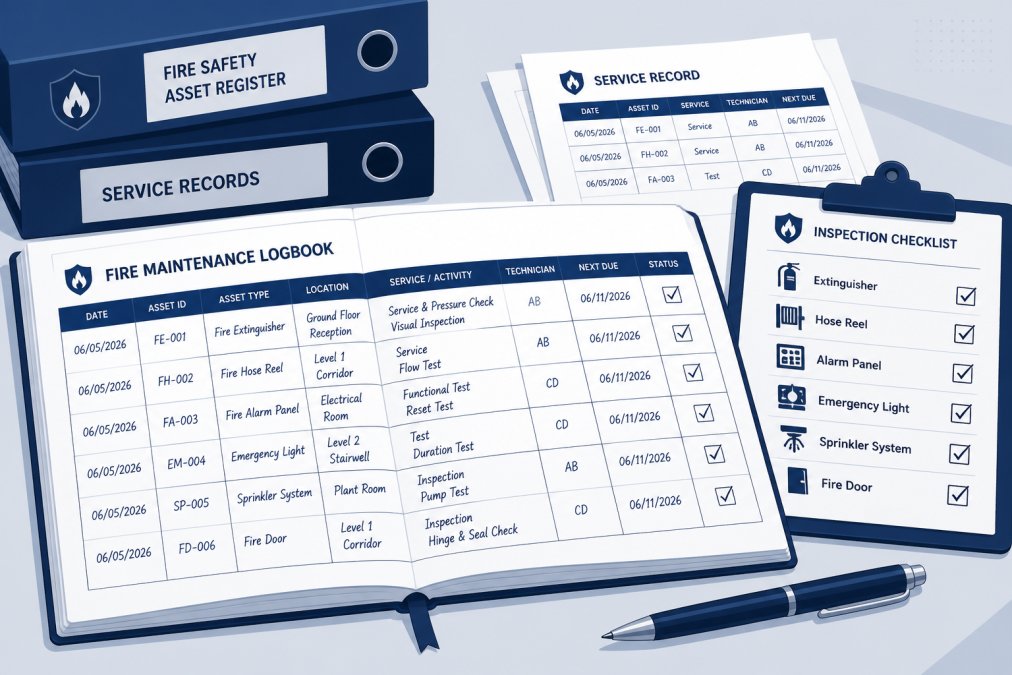
What goes in the asset register:
- Equipment type (extinguisher, hydrant, alarm sensor, etc.)
- Installation date
- Location in building (include floor and room number)
- Manufacturer and model number
- Unique identifier or serial number
- Last service date and next due date
- Service history (all dates and technician names)
- Current status (compliant, defect identified, awaiting repair)
Update the register after every service. If a technician services your fire extinguishers on June 15, 2026, the register is updated that day.
Record keeping obligations extend beyond the asset register. You must maintain:
- Service reports from every routine maintenance event
- Test results and logbook entries
- Defect reports and remediation records
- Staff training documentation and attendance records
- Building compliance certificates
- Correspondence with regulators (if any)
Store these records centrally, ideally digitally with backup copies, and organised by system type and date. During an audit, you’ll be asked to produce records for the past two years.
Audit readiness means demonstrating compliance within 48 hours of a request. Building regulators conduct surprise audits, and response time matters. Maintain a compliance folder containing your current asset register, last 12 months of service reports, current logbook entries, any defect reports and resolutions, staff training records, and building compliance certificates.
Incomplete or vague service reports are a common audit failure. A report that says “fire extinguishers serviced” without listing specific units, pressures, or defects won’t satisfy an auditor. Insist on detailed reports from your service provider.
Budgeting and cost planning for AS1851 compliance
Compliance costs money, and property managers need to budget for it. Costs vary based on building size, equipment quantity, system complexity, and service frequency.
Fire extinguisher servicing is typically charged per unit for 6-monthly routine service. Budget for two service cycles per year.
Hydrant system inspection and testing depends on system size and complexity. Visual inspections are lower cost; hydrostatic pressure testing (required every 5 years) is more expensive.
Fire alarm system testing is usually charged as a fixed fee per quarterly test or as an annual contract. Budget a contingency for unexpected repairs at hourly rates.
Staff training can be delivered on-site or through external providers. Annual training typically costs per person per session.
Contingency planning is essential. Budget an additional 15-20% for unexpected repairs. A failed alarm sensor, a hydrant needing pressure repair, or an extinguisher failing pressure testing will trigger urgent repairs outside your regular schedule.
Treat compliance as a fixed operational cost, not an optional expense. Budget for it annually, schedule services in advance, and work with a provider like Fyrepower who can forecast costs and deliver transparent pricing.
Many property managers try to defer compliance costs by skipping services or extending intervals beyond the standard. This creates liability. A single failed audit or system failure during an actual fire makes deferred maintenance the most expensive decision you can make.
Compliance with AS1851 fire maintenance standards isn’t about ticking boxes, it’s about ensuring your fire safety systems actually work when needed. The regulatory changes from February 13, 2026 tightened deadlines and enforcement, but the underlying principle remains: regular testing, detailed documentation, and qualified service providers keep buildings safe.
Fyrepower provides the expertise and documentation rigour that transforms compliance into a manageable operational routine. Our fully insured and QBSA-licensed team delivers professional maintenance, detailed service reports, and audit-ready documentation that protects your building and your liability exposure. Get in touch with us now to schedule your first compliance assessment.
Frequently Asked Questions
What are the key changes to AS1851 maintenance requirements in 2026?
From 13 February 2026, AS1851 fire maintenance requirements introduce stricter compliance deadlines and enhanced documentation standards. Building owners and managers must ensure all fire protection systems, including extinguishers, hydrants, alarms, and suppression systems, are serviced within mandatory intervals. The regulatory reform emphasises detailed asset registers, comprehensive logbooks, and proof of critical defect rectification. Owners corporations and building managers must engage qualified fire safety practitioners to conduct routine service and annual inspections. Non-compliance carries significant liability and insurance implications.
How often must fire protection systems be serviced under AS1851?
Fire protection system testing frequency varies by equipment type. Fire extinguishers require service annually or every 12 months. Fire detection and alarm systems need routine service every 6 months and annual comprehensive testing. Fire hydrants and suppression systems typically require annual inspection and maintenance, with hydrostatic pressure testing every 5 years. Building managers must maintain a detailed maintenance schedule and logbook documenting all service dates, findings, and any critical defects identified. Your fire safety practitioner will specify exact intervals based on your building class and system configuration.
Which building classes must comply with AS1851 fire maintenance requirements?
AS1851 applies to Buildings Classes 1b through 9, covering multi-storey residential, commercial, retail, hospitality, industrial, and mixed-use properties. Class 1b includes multi-unit dwellings and strata schemes where owners corporations are responsible for common fire safety equipment. Classes 2-9 encompass office buildings, shopping centres, hotels, hospitals, factories, and storage facilities. Each building class has specific fire safety equipment requirements and maintenance obligations. Building managers must verify their building’s classification and engage a qualified fire safety practitioner to ensure all mandatory systems are properly maintained and documented.
What documentation is required to prove AS1851 compliance?
Comprehensive fire safety documentation includes a current asset register listing all fire protection systems and equipment, detailed service logbooks recording every maintenance visit with dates and findings, fire safety certificates from qualified practitioners, annual fire safety statements, and evidence of critical defect rectification. Reports must clearly describe work performed, components tested, any deficiencies found, and corrective actions taken. Building managers should retain records for at least 7 years. This documentation protects against regulatory penalties and is essential if your property faces a compliance audit or insurance claim.
What happens if a building fails to meet AS1851 compliance deadlines?
Non-compliance with AS1851 fire maintenance requirements carries serious consequences. Building owners and managers face regulatory penalties, potential prosecution, and liability if a fire occurs and equipment failure is proven. Insurance claims may be denied if maintenance records are inadequate or overdue. Strata scheme owners corporations can face disputes and legal action from residents. Beyond legal risk, non-compliance endangers occupant safety and can result in evacuation orders or building closure. Engaging a qualified fire safety practitioner to establish a compliant maintenance schedule and logbook is the most effective way to avoid these outcomes.
How do I verify that a fire safety practitioner is qualified to conduct AS1851 maintenance?
A qualified fire safety practitioner must hold relevant credentials and be listed on the appropriate regulatory body’s approved provider register. In many jurisdictions, they must be licensed or certified by industry bodies that recognise AS1851 expertise. Always request proof of qualifications, insurance coverage, and QBSA licensing (if applicable in your state). Verify their experience with your building class and system type. A reputable provider will supply detailed service reports, maintain transparent communication about findings, and be available for emergency callouts. Ask for references from other building managers they serve.
Can I integrate AS1851 compliance with my existing fire safety statement?
Yes. Your annual fire safety statement should reference and align with your AS1851 maintenance logbook and asset register. The statement confirms that all mandatory fire protection systems are installed, functional, and maintained in accordance with the standard. Service reports from your fire safety practitioner feed directly into the statement’s evidence base. Building managers should ensure their fire safety practitioner coordinates with the statement preparer to avoid gaps or inconsistencies. Integrated documentation strengthens your compliance position and simplifies audit preparation.
This article was written using GrandRanker