Table of Contents
- Understanding Fire Safety Comparison
- Fire Protection Services and Equipment Range
- AS 1851 Maintenance Requirements and Compliance
- Installation, Testing and Certification Capabilities
- Fire Safety Compliance Checklist for Property Managers
- Service Coverage, Response Times and Reliability
- Making Your Final Decision
- Frequently Asked Questions
Last Updated: August 31, 2026
Understanding Fire Safety Comparison
Choosing the right fire safety service provider is critical for commercial and multi-unit properties. The wrong choice exposes you to compliance failures, equipment malfunctions, or system failures during emergencies. A proper fire safety comparison requires understanding what each provider delivers: equipment range, compliance certifications, testing capabilities, and real-world reliability.
At Fyrepower, we’ve worked across the Gold Coast, South Brisbane, and Northern New South Wales long enough to see what separates providers that genuinely protect properties from those that simply process paperwork. This guide breaks down critical differences between major service providers so you can make an informed decision based on your property’s actual needs.
Your 6-monthly testing deadlines aren’t optional under Australian standards. Your staff need practical training, not just a checkbox on a form. Your service reports must hold up during compliance audits. Here’s what matters when comparing fire safety providers.
Fire Protection Services and Equipment Range
The breadth of equipment and services a provider offers directly impacts whether they can handle your property’s full scope of needs or whether you’ll manage multiple vendors. “Full service” means different things to different providers, and the gaps matter.
Service Scope Comparison
Interfire Systems specialises in fire alarm and detection systems, emergency warning systems, and intercommunication infrastructure. Their core strength is sophisticated system design and installation for complex commercial buildings. However, their service scope does not extend to portable extinguisher servicing, hydrant maintenance, suppression system testing, or general fire equipment compliance. You will need a second provider for these services.
Eximm positions itself as a facility management solutions provider with fire safety as one component. They cover fire alarm installation, detection systems, and some equipment maintenance, but service depth varies by location and contract. The broader facility management angle means they’re set up for properties managing multiple service categories simultaneously. The trade-off is less specialisation in fire safety specifically, which can result in missed testing deadlines or deprioritised maintenance.
Fyrepower provides a complete range including portable extinguishers, hydrants, suppression systems, fire alarm systems, and detection equipment, alongside professional installation and testing services. This integrated approach means a single provider understands how your systems work together, how a suppression system interacts with alarm activation, how hydrant placement affects coverage, how detection zones integrate with evacuation procedures. The 55-month warranty on equipment reflects confidence in durability and provides one point of accountability if equipment fails (peer-reviewed research).
The Coordination Cost of Multiple Vendors
When fire safety services are split across multiple providers, several risks emerge:
- Compliance gaps: One provider tests portable extinguishers on schedule; another misses the hydrant testing deadline. Your compliance record shows inconsistency, which regulators flag during audits.
- Documentation conflicts: Different providers use different report formats and terminology. During a compliance audit or insurance claim investigation, conflicting documentation creates liability exposure.
- Scheduling friction: Coordinating service visits across multiple vendors creates delays and missed compliance deadlines.
- Accountability diffusion: When something goes wrong, it’s unclear which provider is responsible. Your property remains at risk while blame shifts between vendors.
Which Approach Fits Your Property?
For small commercial properties (under 1,000 m²) with straightforward fire safety needs, using a specialist provider like Interfire Systems for alarms and a second provider for extinguishers is manageable.
For strata complexes, multi-tenancy buildings, or properties with complex suppression systems, a single comprehensive provider eliminates coordination overhead and compliance risk. The cost difference is often negligible, one invoice instead of two, but the compliance certainty is substantial.
For properties where facility management is already fragmented across multiple vendors, adding Eximm as a facility management umbrella can simplify vendor management, though you’ll need to verify their fire safety compliance processes are as rigorous as a dedicated fire safety provider’s.
AS 1851 Maintenance Requirements and Compliance
AS 1851 is the Australian standard governing the inspection, testing, and maintenance of fire safety equipment. It’s the regulatory baseline for compliance across all Australian states. Understanding what AS 1851 requires and whether your provider genuinely follows it is non-negotiable.
The standard mandates specific inspection intervals: 6-monthly for most portable fire extinguishers, annual for hydrants, quarterly for certain suppression systems (standards.org.au). Each inspection must be documented with detailed records showing what was tested, equipment condition, and actions taken. Vague service reports don’t satisfy this standard; auditors and fire authorities expect specificity.
Fyrepower’s expertise in AS 1851 and AS2444 (the standard for hydrant systems) means compliance is built into every service visit. Detailed documentation ensures your records will withstand scrutiny during a compliance audit or insurance claim investigation.
Interfire Systems is deeply versed in testing protocols for detection and alarm systems under AS 1851. However, if your property relies on portable extinguishers or hydrants, you’ll need to verify whether a second provider is handling those compliance requirements correctly and whether documentation aligns.
Eximm’s facility management approach means compliance is part of a broader service offering. The risk is that fire safety compliance gets deprioritised when teams juggle heating, electrical, cleaning, and dozens of other responsibilities. Fire safety requires focus.
A common mistake is assuming any service provider automatically complies with AS 1851. Ask directly: do they provide detailed inspection reports naming specific components tested? Do they document defects and remedial actions? Can they show you a sample report? Vague answers indicate compliance risk.
Installation, Testing and Certification Capabilities
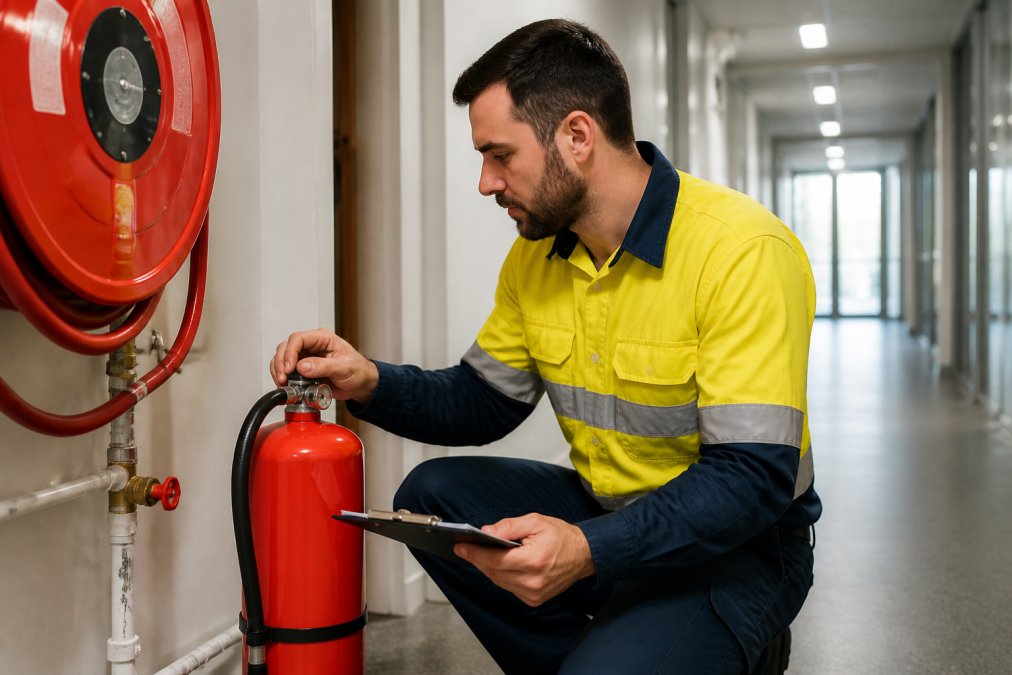
Installation quality determines whether your fire safety systems will actually perform in an emergency. Testing and certification prove the system works as designed and create documented evidence for compliance audits or insurance claims.
What Proper Certification Actually Requires
Under AS 1851, testing requires documented evidence that specific work was performed to a defined standard. A proper test report must include:
- Equipment identification: Exact location, model, serial number, and last service date
- Test methodology: Which specific test procedure was used (e.g., pressure gauge reading for extinguishers, flow test for hydrants)
- Condition assessment: Whether equipment passed or failed, with specific defects noted
- Remedial actions: What was done to correct defects (e.g., “recharged to 12 bar”, “replaced faulty sensor”)
- Technician certification: Name, licence number, and signature of the person who performed the work
- Next service date: When equipment must be tested again to remain compliant
Many providers issue vague reports stating “equipment serviced and found satisfactory” without this detail. These reports won’t satisfy a compliance auditor or insurer. If a fire occurs and your insurance claim is investigated, a detailed test report proves you maintained equipment properly. A vague report creates doubt and can result in claim denial.
Installation Licensing and Insurance
Fyrepower’s QBSA-licensed team handles installation with full insurance backing. Queensland Building and Services Authority (QBSA) licensing means the team has demonstrated competency and maintains professional standards. Full public liability insurance protects your property if something goes wrong during installation. QBSA licensing also means the provider is subject to disciplinary action if they fail to meet standards, creating accountability.
Interfire Systems’ installation strength lies in system design and installation for complex alarm and detection networks. You should verify whether they hold equivalent licensing and carry full public liability insurance. Installation in occupied buildings carries liability risk; a provider without proper insurance creates exposure for your property.
Eximm’s installation capabilities cover their offered systems, but verify their licensing status and insurance coverage. Facility management companies sometimes subcontract installation work to licensed specialists, which is acceptable provided the subcontractor is properly licensed and insured.
Testing Methodology and Defect Response
When a provider discovers a defect during testing, a pressure gauge reading below minimum, a faulty sensor, a corroded hydrant connection, how they respond matters.
Immediate remediation: The best providers carry spare parts and fix defects on-site during the service visit. An extinguisher with low pressure is recharged immediately. A faulty alarm sensor is replaced immediately. This minimises downtime and ensures your property remains compliant.
Scheduled remediation: Some providers note the defect and schedule a follow-up visit. This creates a compliance gap, your equipment is technically non-compliant until corrected. If a fire occurs during this gap, your compliance record is compromised.
Before engaging a provider, ask: “If you find a defect during testing, can you fix it immediately or do I need to schedule a follow-up visit?” A provider that handles immediate remediation reduces compliance risk and downtime.
Certification After Testing
After testing or installation, your provider should supply a certificate proving the work meets Australian standards. This certificate should reference the specific standard (AS 1851, AS 2444, AS 1670, etc.) and include the technician’s licence details. A provider that cannot produce clear certification documentation is creating compliance risk.
Before signing a service agreement, ask the provider to conduct a sample test on one piece of equipment and provide a sample report. Review that report: does it identify the specific equipment, describe the test methodology, note the condition, and specify the next service date? If the sample report is vague or incomplete, the provider’s ongoing testing will be equally vague.
Fire Safety Compliance Checklist for Property Managers
Use this checklist to evaluate any fire safety provider before committing to a service agreement.
- Provider holds current QBSA licensing (or equivalent state authority certification)
- Provider carries full public liability insurance
- Sample service reports show specific equipment tested, condition noted, and actions documented
- Provider can explain AS 1851 compliance requirements for your property type
- Provider offers on-site staff training in equipment use and evacuation procedures
- Provider supplies certificates of compliance after testing and installation work
- Provider has documented processes for meeting 6-monthly testing deadlines
- Provider can handle your full equipment range (extinguishers, hydrants, suppression systems, alarms)
- Provider supplies detailed quotations with no hidden charges or scope ambiguity
- Provider has experience with your property type (strata, commercial, hospitality, industrial)
- Provider can demonstrate response time commitments in writing
- Provider maintains equipment inventory to minimise downtime during servicing
This checklist will expose which providers cut corners and which ones take compliance seriously.
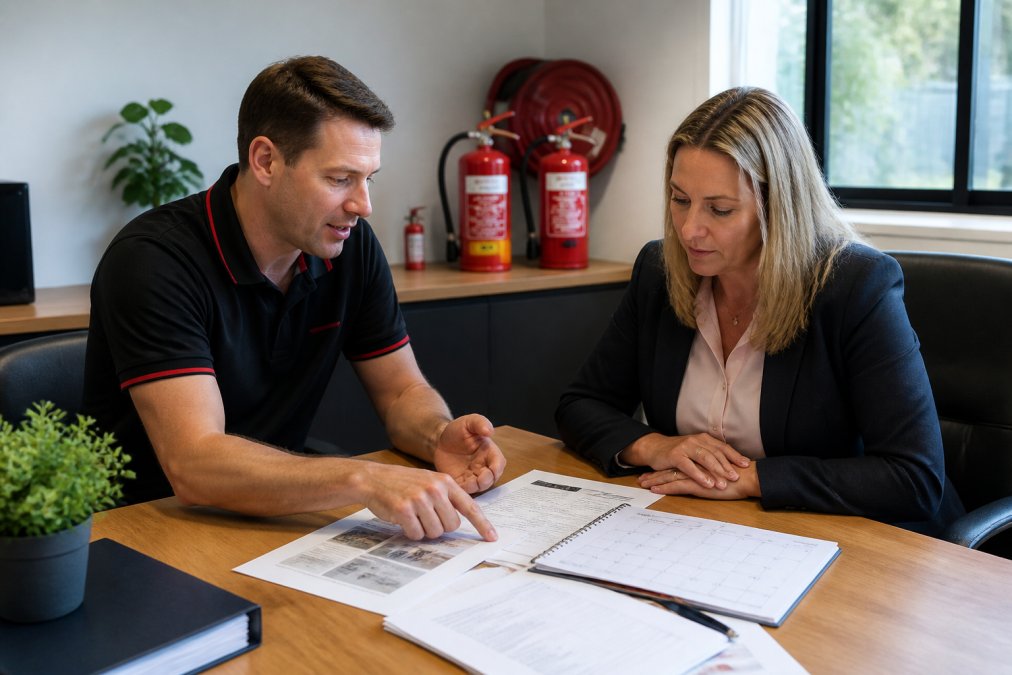
Service Coverage, Response Times and Reliability
When your fire safety equipment fails or a compliance deadline approaches, response time matters. A provider that takes three weeks to schedule a service visit creates risk.
Fyrepower’s service coverage across the Gold Coast, South Brisbane, and Northern New South Wales means local presence and faster response. You’re working with a team that knows your region’s building codes and can respond quickly to urgent requests. Reliability is built on consistency: meeting 6-monthly testing deadlines without requiring property managers to chase appointments.
Interfire Systems operates across multiple regions but response capability depends on local team capacity. For properties in areas where they have strong presence, response times are competitive. For outlying areas, you may experience longer wait times.
Eximm’s facility management structure means they’re set up for scheduled maintenance cycles rather than emergency response. This works for routine 6-monthly testing but can be problematic if equipment fails unexpectedly and you need rapid replacement or repair.
The real test of reliability is this: when you call with an urgent request, how quickly do they respond? When you have a 6-monthly compliance deadline, do they proactively contact you or do you chase them? When they discover a defect during testing, do they fix it immediately or leave you waiting? Ask existing clients these questions directly.
A provider missing even one compliance deadline can trigger regulatory action. Insurance companies may deny claims if service records show missed testing intervals. The cost of unreliability extends far beyond the service fee.
Making Your Final Decision
Your choice comes down to three core questions: Can this provider handle your full scope of fire safety needs? Will they consistently meet your compliance deadlines? Do they demonstrate genuine expertise in Australian fire safety standards?
Fyrepower answers all three affirmatively. The combination of comprehensive equipment range, QBSA licensing, full insurance, local presence, and demonstrated expertise in AS 1851 and AS2444 creates a complete solution. For property managers managing multiple properties or strata complexes, consolidating fire safety services with a single expert provider reduces risk and simplifies compliance.
Interfire Systems excels for properties with sophisticated detection and alarm system requirements. If your primary need is advanced system design and installation, they’re a strong choice. However, you’ll likely need a second provider for other fire safety components.
Eximm works well for properties seeking facility management integration. If fire safety is one component of a broader facilities strategy and you’re comfortable with a generalist approach, they can handle it. The trade-off is less specialisation in fire safety specifically.
The decision ultimately depends on your property’s complexity, your risk tolerance, and whether you prefer working with one comprehensive provider or managing multiple specialists. For most commercial and strata properties, consolidating fire safety services with a single expert provider reduces risk and simplifies compliance.
=== FAQ ANSWERS (audit these too, same rules) ===
[1] Q: How often should fire extinguishers be inspected in accordance with AS 1851?
A: Australian Standard AS 1851 requires fire extinguishers to be serviced annually (standards.org.au). However, some extinguishers may require six-monthly inspections depending on their type, location, and usage patterns. A qualified fire safety provider will assess your specific equipment and determine the correct inspection frequency for your property. Regular compliance testing ensures your extinguishers remain functional and meet regulatory requirements.
[2] Q: What qualifications should I look for in a fire safety service provider?
A: Your provider should hold QBSA licensing, full insurance coverage, and demonstrated expertise in Australian fire safety standards including AS 1851 and AS 2444. They should provide detailed testing reports that document all work performed, offer transparent pricing, and maintain reliable appointment scheduling for your compliance deadlines. Ask about their experience with your property type and whether they provide staff training alongside equipment maintenance.
[3] Q: What is included in a fire safety compliance checklist?
A: A comprehensive fire safety compliance checklist covers fire extinguisher servicing and certification, fire alarm system testing, emergency warning system functionality, hydrant and hose reel inspection, exit signage and emergency lighting verification, evacuation plan documentation, and staff training records. Regular audits against this checklist ensure your property remains compliant with Australian standards and ready for emergency situations. Your service provider should deliver detailed reports confirming each item has been completed.
[4] Q: Are there specific benefits to choosing a local fire protection specialist?
A: Local specialists understand regional compliance requirements, maintain faster response times for urgent inspections, and provide personalised service suited to local property types and conditions. They typically offer flexible scheduling for multi-property portfolios and can respond quickly if compliance deadlines are at risk. Local providers also build ongoing relationships with your team, making them familiar with your specific safety needs and emergency procedures.
Frequently Asked Questions
How often should fire extinguishers be inspected in accordance with AS 1851?
Australian Standard AS 1851 requires fire extinguishers to be serviced annually. However, some extinguishers may require six-monthly inspections depending on their type, location, and usage patterns. A qualified fire safety provider will assess your specific equipment and determine the correct inspection frequency for your property. Regular compliance testing ensures your extinguishers remain functional and meet regulatory requirements.
What qualifications should I look for in a fire safety service provider?
Your provider should hold QBSA licensing, full insurance coverage, and demonstrated expertise in Australian fire safety standards including AS 1851 and AS 2444. They should provide detailed testing reports that document all work performed, offer transparent pricing, and maintain reliable appointment scheduling for your compliance deadlines. Ask about their experience with your property type and whether they provide staff training alongside equipment maintenance.
What is included in a fire safety compliance checklist?
A comprehensive fire safety compliance checklist covers fire extinguisher servicing and certification, fire alarm system testing, emergency warning system functionality, hydrant and hose reel inspection, exit signage and emergency lighting verification, evacuation plan documentation, and staff training records. Regular audits against this checklist ensure your property remains compliant with Australian standards and ready for emergency situations. Your service provider should deliver detailed reports confirming each item has been completed.
Are there specific benefits to choosing a local fire protection specialist?
Local specialists understand regional compliance requirements, maintain faster response times for urgent inspections, and provide personalised service suited to local property types and conditions. They typically offer flexible scheduling for multi-property portfolios and can respond quickly if compliance deadlines are at risk. Local providers also build ongoing relationships with your team, making them familiar with your specific safety needs and emergency procedures.
Fire safety isn’t an area where you want to discover gaps in your provider’s capabilities during an emergency or audit. Fyrepower’s comprehensive approach to fire protection, combining equipment, installation, testing, training, and compliance documentation, ensures your property is genuinely protected, not just compliant on paper. Get in touch with us now to discuss your fire safety needs and receive a detailed assessment of your current systems.
This article was written using GrandRanker