Last Updated: October 27, 2026
Quick Summary
Interconnected heat detectors are linked devices that sound a common alarm throughout the home when one unit senses a rise in temperature. Their benefit is whole-home alerts, which reach sleeping occupants in distant rooms and give earlier warning for escape. They are best used in kitchens, garages and utility rooms, alongside smoke alarms in bedrooms and escape routes.
- Interconnected heat detectors ensure one activation alerts occupants in every room.
- Heat detectors respond to temperature rather than smoke, so they suit kitchens and garages.
- Bedrooms, hallways, stairwells and living rooms should keep smoke alarms.
- Keep detectors at least 1 m from air-conditioning vents, ceiling fans and heaters.
- Test the system room by room with doors closed after installation.
Table of Contents
- What Interconnected Heat Detectors Are and How They Work
- Whole-Home Alerts and Earlier Warning
- Heat Detector vs Smoke Alarm: Choosing the Right Device for Each Room
- Heat Detector Placement in Homes
- Wired and Wireless Interconnected Fire Alarms Compared
- Heat Detector Installation and Maintenance Requirements
- Booking a Fyrepower Assessment for Your Home
- Frequently Asked Questions
Interconnected heat detectors are one of the more practical upgrades a homeowner can make, yet most guides only discuss interconnected smoke alarms. At Fyrepower, we work across residential and commercial properties on the Gold Coast, South Brisbane and Northern New South Wales. The short answer is that it depends on where the detectors sit and how the house is used. Interconnected heat detectors are devices that trigger a common alarm across the whole home when one unit senses a rise in temperature. This article sets out the benefits, the trade-offs and the practical steps to decide whether they suit your property.
What Interconnected Heat Detectors Are and How They Work
An interconnected heat detector is a heat alarm that signals every other linked unit in the home when it activates. Heat detectors respond to a rapid rise in temperature or a fixed threshold rather than to smoke particles. That makes them less prone to nuisance triggering from cooking, which is why they are often placed in kitchens and garages.
Interconnection can be wired into the building or delivered wirelessly between units. In both cases the goal is the same: a single detector’s activation becomes an alert throughout the property, not just at the source.
Whole-Home Alerts and Earlier Warning
The main advantage of interconnection is that people in distant rooms hear the alarm. A standalone unit in a hallway may not be audible from a bedroom with the door closed, particularly at night. A linked system ensures the alert reaches sleeping occupants wherever they are.
Earlier warning also buys escape time. When every unit sounds at once, occupants do not need to find the source before they start moving. That matters most in multi-storey homes, where a fire on the ground floor may otherwise go unnoticed upstairs for valuable minutes.
Heat Detector vs Smoke Alarm: Choosing the Right Device for Each Room
Heat detectors and smoke alarms are not interchangeable, and treating them as such is the most common mistake in home fire planning. Understanding what each device actually senses explains why a linked system usually needs both.
A smoke alarm responds to smoke particles in the air. It is the earlier warning device for the fires that kill most people at home: slow, smouldering fires started by electrical faults, overheated appliances, cigarettes or bedding. A heat detector responds to temperature, either a fixed threshold (commonly around 57-60°C at the sensing element) or a rapid rate of rise. It does not see smoke at all. That single difference drives every placement decision that follows.
The practical consequence is that a heat detector is slower to respond to a smouldering fire, because a smouldering fire may produce little heat for a long time before it flares. It is also slower in a room where the fire is shielded from the ceiling by furniture or a closed door. A heat detector is therefore a complement to smoke alarms, never a replacement for them in bedrooms, hallways, living areas or escape routes.
Where heat detectors earn their place is in rooms where a smoke alarm would nuisance-trigger in normal use:
- Kitchens. Cooking smoke and steam are the leading cause of nuisance alarms. A heat detector tolerates normal cooking while still responding if a pan fire or oven fire raises ceiling temperature sharply. Keep it away from the cooktop and oven door so ordinary cooking heat does not trip it.
- Garages and carports. Vehicle exhaust, dust and fumes will set off a smoke alarm repeatedly. A heat detector is the standard choice here, provided the space is not used for sleeping or as a thoroughfare.
- Utility rooms, laundries and plant rooms. Dryers, boilers and dust can cause nuisance triggering; heat detection is often more appropriate than smoke detection.
- Attics, roof spaces and storage areas. Dust and temperature swings make smoke detection unreliable; heat detection is commonly used where the space is not occupied.
A simple rule of thumb used by most installers: smoke alarms where people sleep and move, heat detectors where smoke or fumes are a normal part of the room’s use. For a deeper comparison focused on kitchens, see our smoke alarm vs heat detector guide for kitchens. Bedrooms, hallways, stairwells and living rooms should have smoke alarms; kitchens, garages and utility spaces can use heat detectors. If a room could be both, a garage converted into a bedroom, for example, it needs smoke detection, not heat.
A heat detector is not a substitute for a smoke alarm in any habitable room or escape route. If you are replacing a smoke alarm with a heat detector to stop nuisance alarms, fix the cause of the nuisance instead, relocate the alarm, clean it, or change its type, rather than removing early smoke detection from a sleeping area.
Because the two devices respond to different things, the strongest arrangement is a mixed system where both are interconnected. A heat detector activating in the kitchen should sound the smoke alarms in the bedrooms, and vice versa. That is the whole point of interconnection: the device that senses first warns the whole home, regardless of which technology it uses.
Fire and Rescue NSW home fire safety guidance
The two devices respond to different things, so each room type calls for a different choice.
| Room | Recommended device | Reason |
|---|---|---|
| Bedrooms | Smoke alarm | Early smoke detection protects sleeping occupants |
| Hallways and stairwells | Smoke alarm | Protects the escape route |
| Living rooms | Smoke alarm | Smouldering fires produce smoke before heat |
| Kitchen | Heat detector | Tolerates normal cooking smoke and steam |
| Garage or carport | Heat detector | Vehicle exhaust and fumes cause nuisance alarms |
| Utility or laundry room | Heat detector | Dryers and boilers cause nuisance triggering |
| Attic or roof space | Heat detector | Dust and temperature swings make smoke detection unreliable |
Heat Detector Placement in Homes
Placement is where interconnected systems succeed or fail. A perfectly linked system with a detector in the wrong spot will either nuisance-trigger constantly or miss the fire entirely. The guidance below covers the rooms where heat detectors are typically used, plus the multi-storey considerations that matter most in Australian homes.
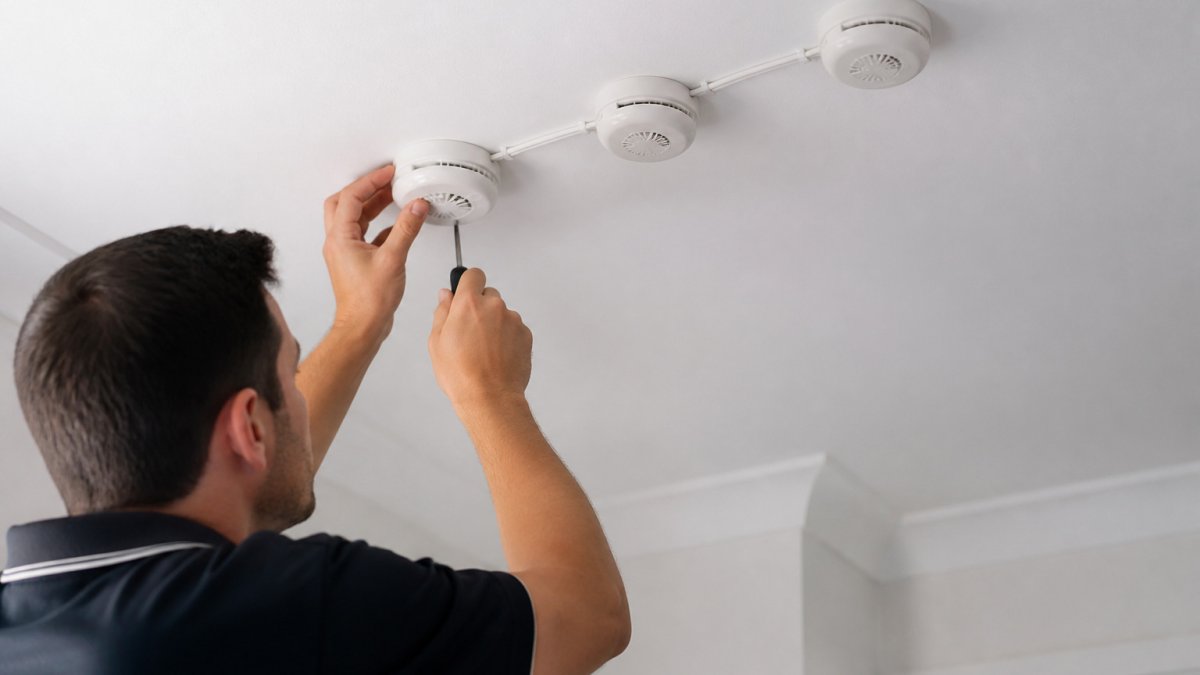
General rules for every heat detector:
- Mount on the ceiling, as central to the room as practical, with the sensing element exposed to the air.
- Keep at least 300 mm clear of walls and light fittings, and at least 300 mm from the corner where wall meets ceiling, so dead air space does not delay response.
- Keep at least 1 m from air-conditioning vents, ceiling fans, heaters and openable windows. Moving air dilutes the heat plume and can delay or prevent activation.
- Avoid direct sunlight, which can cause false triggering on rate-of-rise units.
- Do not paint the unit or cover it with a decorative housing.
Kitchen. Position the detector on the ceiling away from the cooktop, a common approach is at least 1.5-2 m horizontally from the cooktop, and not directly above the oven door or sink. The aim is to sense a real kitchen fire without reacting to steam from a kettle or a pot of boiling water.
Garage and carport. Mount centrally on the ceiling, clear of the vehicle door opening and away from the exhaust line of a parked car.
Utility room, laundry and plant room. Ceiling-mount, clear of dryers, hot-water units and ducting. These rooms are often small and cluttered; keep the detector accessible for testing rather than boxing it in behind shelving.
Attic and roof space. Mount on the underside of the roof structure or ceiling joists, clear of insulation and away from the eaves where ventilation is strongest. Heat rises, so the highest practical point is usually correct, but confirm the unit is rated for the temperature range of the space.
Multi-storey homes. Interconnection matters most here. A fire on the ground floor can take many minutes to make a first-floor bedroom untenable, and a standalone alarm downstairs may not be audible upstairs with doors closed. Ensuring these interconnected systems receive consistent power is a critical safety measure, which often necessitates upgrading your home consumer unit to handle the increased electrical demand of modern fire protection.
Hallways and escape routes. These should have smoke alarms, not heat detectors, because early smoke detection is what protects the escape path. Do not substitute a heat detector in a hallway to avoid nuisance alarms from a nearby bathroom.
After installation, test the system room by room with doors closed. Walk to the furthest bedroom, shut the door, and have someone activate a detector. If you cannot hear it clearly, the system needs another interconnected unit or a louder sounder, not a bigger detector.
Finally, placement must satisfy the relevant Australian Standard and any local building requirements for the property type. The standard sets minimum coverage and interconnection expectations, but it does not design the system for your floor plan. A licensed installer should map the layout, confirm distances from heat sources and obstructions, and document where each device sits, particularly for multi-storey and mixed smoke/heat systems where the interaction between devices is the whole benefit.
Standards Australia store, AS 3786 smoke alarms
Wired and Wireless Interconnected Fire Alarms Compared
Wired interconnection links units through the building’s cabling and is generally the most reliable option for new builds or major renovations. Wireless interconnection uses radio signals between units and avoids chasing cable through finished walls, which makes it popular for retrofits.
Both approaches can work well. Wireless systems need a check that signal strength is adequate across the whole house, particularly in larger or brick-built properties. Confirm compatibility between devices before buying, as units from different manufacturers may not interconnect.
Heat Detector Installation and Maintenance Requirements
Installation should follow the relevant Australian Standards and the requirements of your local building authority. Because these rules vary with property type and occupancy, it is best to confirm the specifics with a licensed professional rather than rely on general guidance. A maintenance schedule keeps the system dependable over time. Test units regularly, replace batteries as directed, and keep a record of inspections, particularly for commercial properties where documentation may be audited.
For commercial sites, a structured plan for keeping fire systems compliant over time is worth putting in place. Our guide to fire system maintenance backup plans covers how to build contingency arrangements so that a single missed service does not leave a property exposed.
Booking a Fyrepower Assessment for Your Home
If you are unsure whether interconnected heat detectors suit your property, a site assessment can help you find out. Before booking, you can read about what affects assessment costs and how to avoid hidden fees. You can compare local fire safety providers on the Gold Coast to find a licensed technician to book with. Our fully insured and QBSA-licensed team Get in touch with us now!
Frequently Asked Questions
What are the benefits of interconnected heat detectors in a home?
Interconnected heat detectors mean that when one unit activates, every connected unit in the home sounds. This matters most when a fire starts in a room where nobody is awake, such as a garage or kitchen, because occupants in bedrooms are alerted at the same time. Heat detectors respond to a rapid rise in temperature rather than smoke, so they are less prone to nuisance activation from cooking. Pairing them with smoke alarms in the right locations gives broader coverage. Check the requirements for your property with a licensed fire protection provider before deciding on a layout.
Should heat detectors be interconnected with smoke alarms?
Interconnecting heat detectors with smoke alarms is possible in some systems, but compatibility depends on the specific products and their signalling protocols. Mixing devices from different manufacturers can cause alarms not to communicate reliably. Before combining device types, confirm the interoperability of the components with the supplier.
Do interconnected heat detectors need professional installation?
Professional installation is strongly recommended. Correct positioning relies on ceiling height, airflow, distance from cooking appliances and the location of bedrooms and escape routes. Wireless units also need careful placement to maintain signal strength across the home.