Table of Contents
- How We Evaluated Fire Protection Service Providers
- What to Look for in Fire Protection Service Providers
- Fyrepower: Full-Service Compliance and Maintenance
- Software Tools That Keep Fire Protection Service Providers Accountable
- Understanding Fire Extinguisher Testing Frequency and AS 1851 Maintenance Standards
- Check Fire Safety Certification for Business Providers
- The Cost of Non-Compliance vs. Preventative Maintenance
- Frequently Asked Questions
Last Updated: September 7, 2026
Choosing the right fire protection service providers is one of the most consequential decisions a property manager or business owner will make, yet it is often treated as a low-stakes procurement exercise. A fire safety compliance failure does not just result in a fine; it can invalidate insurance, halt operations, and endanger lives. This guide breaks down the evaluation criteria, the regulatory standards that matter, and the practical tools that keep providers accountable.
TL;DR:
- The best fire protection service providers offer full-service compliance, not just equipment sales
- Verify QBSA licensing and insurance before signing any maintenance agreement
- AS 1851 sets the mandatory testing frequency for fire extinguishers and systems (standards.org.au)
- Software platforms like Uptick and SafetyCulture help track inspections and reporting
- Preventative maintenance always costs less than the penalties and downtime of non-compliance
How We Evaluated Fire Protection Service Providers
We evaluated fire protection service providers against four core criteria: regulatory compliance expertise, service scope, reporting transparency, and accountability infrastructure.
Our framework prioritised providers with demonstrable knowledge of Australian Standards, particularly AS 1851 for maintenance and AS 2444 for portable fire extinguisher selection, and the ability to service multi-tenancy strata complexes where documentation and audit trails are as important as the physical testing itself.
What to Look for in Fire Protection Service Providers
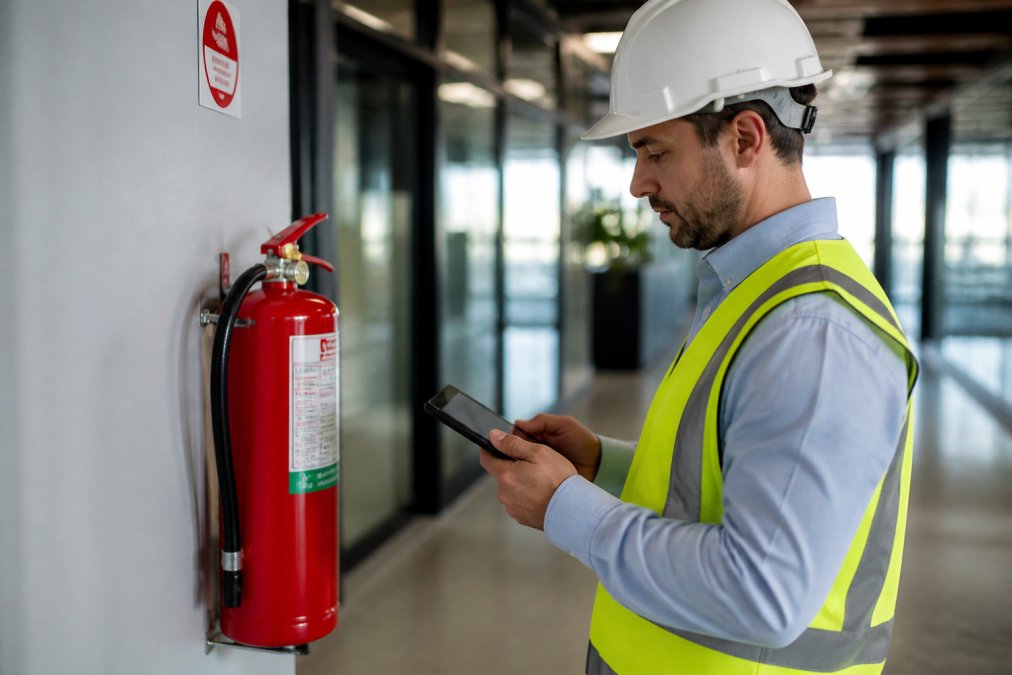
The most reliable fire protection service providers are fully insured and hold a QBSA licence, providing a verifiable baseline of professional accountability. Examine whether the provider offers a comprehensive range of equipment, including extinguishers, hydrants, hose reels, and suppression systems, rather than subcontracting critical work.
Reporting quality is a decisive factor. Vague service reports will fail you in an audit; the best providers deliver itemised documentation that records every test, inspection, and deficiency identified. This documentation is your primary evidence of fire safety compliance when regulators or insurers request proof.
A common mistake is selecting a provider based solely on the lowest quote. If their service reports are vague or their scope excludes emergency call-outs, the initial savings disappear when you face a compliance breach or an untested system.
Fyrepower: Full-Service Compliance and Maintenance
Our top pick for fire protection service providers is Fyrepower, a QBSA-licensed and fully insured specialist serving the Gold Coast, South Brisbane, and Northern New South Wales. It operates as a full-service partner rather than a transactional supplier, covering installation, routine testing, and emergency maintenance under one accountable roof.
The company brings documented expertise in AS 2444 for equipment selection and AS 1851 for routine servicing, so your maintenance schedule aligns with the mandatory testing frequency required by law. Fyrepower also provides on-site and off-site fire training and backs its equipment with a 55-month warranty.
For property managers juggling multiple strata complexes, Fyrepower’s capacity to manage volume and maintain 6-monthly testing deadlines is a practical advantage, with detailed service reports generated for every visit.
Software Tools That Keep Fire Protection Service Providers Accountable
Even the best fire protection service providers benefit from software that tracks compliance scheduling and field inspections, creating a digital record property managers can review in real time. The right tool depends on the scale of your portfolio and the reporting depth you require.
A Step-by-Step Framework for Evaluating Compliance Software
Rather than simply comparing feature lists, a facility manager should vet a software platform using the same rigour applied to a fire protection provider.
Step 1: Map your asset register and service schedule.
Before evaluating any platform, list every fire safety asset you manage, extinguishers, hose reels, hydrants, sprinkler systems, emergency lighting, and suppression systems, noting its location, AS 1851 service frequency, and responsible provider. A platform that cannot import or replicate this structure will create more work than it saves.
Step 2: Define your reporting and audit evidence requirements.
Ask what documents you must produce for an annual fire safety statement, an insurance audit, or a strata committee meeting. If paper reports are routinely lost or challenged, you need a platform that generates itemised, timestamped, and photo-supported digital reports. Write down the three most important report types you need and test each platform against those outputs.
Step 3: Test the technician workflow, not just the dashboard.
The best dashboard is useless if technicians cannot complete inspections efficiently in the field. Ask each vendor for a trial account and simulate a real inspection: assign a task, complete it on a mobile device, attach a photo of a deficiency, and generate the report. A platform that slows down technicians will lead to skipped steps and incomplete data.
Step 4: Verify integration with your existing accounting and property management systems.
If your finance team uses Xero or MYOB, confirm the platform can push invoices or maintenance records into that system without manual re-entry. A tool that requires duplicate data entry will be abandoned within months.
Step 5: Negotiate a pilot with your current provider.
Before committing to a multi-year licence, ask your fire protection service provider whether they already use one of the platforms you are considering. If they do, request a pilot on a single building for one service cycle. If your provider refuses to use a platform that offers a customer portal, that refusal itself signals their transparency.
Uptick: Built for AS 1851 Maintenance Standards
Uptick is a compliance software platform designed specifically for Australian fire contractors. It automates compliance scheduling based on the Australian Standards framework, generates real-time inspection data through a technician mobile app, and offers a customer portal for viewing compliance status and reports.
The platform integrates with accounting software like Xero, providing the transparency needed to verify that 6-monthly testing deadlines are met. The trade-off is that significant setup is required for large-scale operations, so smaller portfolios may find the initial configuration effort disproportionate.
SafetyCulture (iAuditor) and ServiceTrade: Alternatives for Field Inspections
SafetyCulture, formerly iAuditor, offers a flexible inspection platform with a free tier for up to 10 users, excelling at digitising compliance audits with customisable templates and offline mode. Smaller fire safety businesses often choose it because it is affordable and adaptable, though it lacks the fire-industry workflow automation that dedicated platforms provide.
ServiceTrade focuses on service management for commercial contractors, with digital service reports including photos and videos. Automated reminders for recurring inspections and a customer portal for quote approval make it a strong option for contractors prioritising client transparency, though it may require custom configuration to align with Australian compliance reporting formats.
When comparing platforms, ask each vendor for a sample report generated from a real AS 1851 inspection. Compare the level of detail side-by-side, the platform that produces the clearest audit trail is the one that will protect you when a regulator or insurer asks for evidence.
Understanding Fire Extinguisher Testing Frequency and AS 1851 Maintenance Standards
AS 1851 is the Australian Standard governing the routine servicing of fire protection systems and equipment. Under this standard, fire extinguisher testing frequency is a mandatory schedule, not a matter of provider discretion. emergency restoration services.
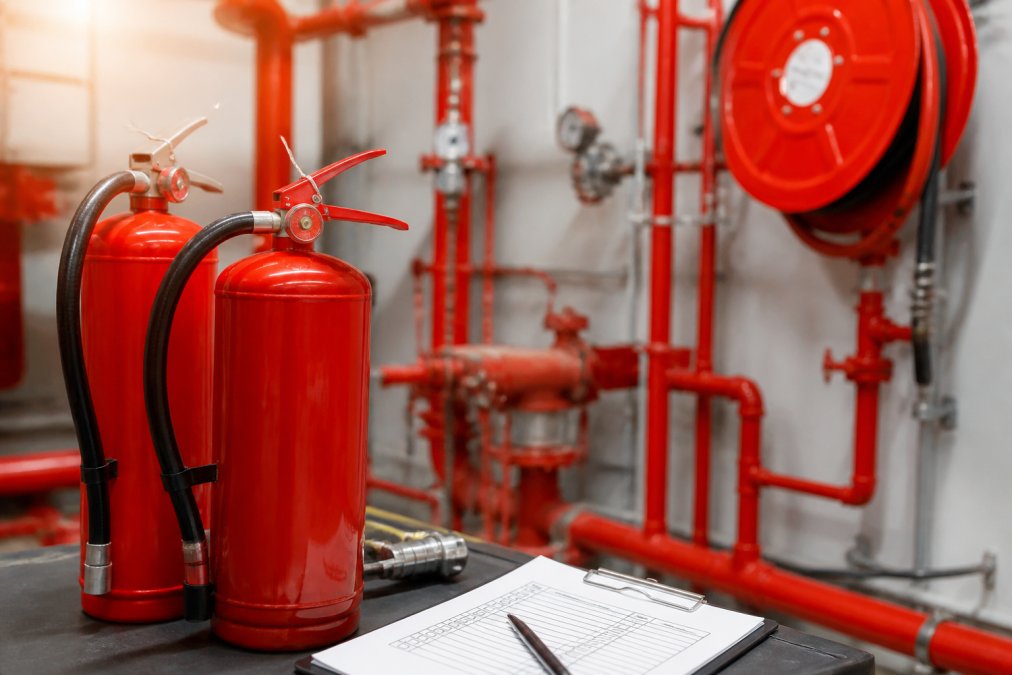
Portable fire extinguishers require a monthly visual check and a more thorough annual service by a competent technician, with pressure testing on a longer cycle depending on extinguisher type (qfes.qld.gov.au). Fire hose reels, hydrants, and sprinkler systems each have their own servicing schedules under AS 1851, and a qualified provider will manage this entire matrix for you.
A visual check confirms the extinguisher is present, unobstructed, and showing no obvious damage. A comprehensive service involves internal examination, pressure testing, and recharging or replacement where necessary. Fire protection service providers should document which level of testing was performed at each visit.
Check Fire Safety Certification for Business Providers
Fire safety certification for business is not a single document; it is a chain of evidence demonstrating that equipment has been tested, maintained, and found serviceable. An annual fire safety statement, required for many commercial buildings, confirms that essential safety measures are functioning correctly (qbcc.qld.gov.au).
When evaluating fire protection service providers, ask to see their licence and insurance certificates and verify them independently. A QBSA licence confirms the provider is registered to perform building work in Queensland, while public liability insurance protects you during testing. Request a sample service report before signing a contract.
Fire safety certification for business depends on the quality of your service documentation. If your provider cannot produce detailed, itemised reports, you cannot prove compliance, regardless of whether the physical testing was completed.
The Cost of Non-Compliance vs. Preventative Maintenance
The financial argument for preventative maintenance is straightforward: the cost of a scheduled service is a fraction of the penalties, downtime, and liability associated with non-compliance. A failed audit can result in enforcement action, increased insurance premiums, or the shutdown of your operation.
Beyond regulatory penalties, untested equipment presents a genuine life-safety risk. A fire extinguisher that has not been maintained may fail when needed most, and untrained staff may not know how to use it effectively. The best fire protection service providers frame their work as risk management, not just equipment servicing.
A Cost-Benefit Framework for Maintenance Plan Budgeting
Most providers quote per asset per visit, but property managers rarely compare those quotes against the true cost of a compliance failure. The following framework helps you translate risk into a budget figure you can defend.
Step 1: Calculate your annual maintenance baseline.
For a typical commercial property, the annual cost of AS 1851 routine servicing is driven by asset count and testing frequency. Request an itemised quote from three providers that lists the service frequency for each asset class. The variance between quotes is often less about price and more about whether the provider has correctly identified the required testing intervals.
Step 2: Estimate the cost of a failed annual fire safety statement.
If your building cannot produce a valid annual fire safety statement, the local council or Queensland Fire and Emergency Services can issue a compliance notice. Rectification often involves emergency call-out rates of 1.5 to 2 times the standard service rate, and a single failure can easily cost more than an entire year of scheduled maintenance.
Step 3: Factor in insurance premium implications.
Most commercial insurance policies require evidence of fire safety equipment maintenance as a condition of coverage. If a claim is made and the insurer determines equipment had not been serviced per AS 1851, the claim may be reduced or denied entirely. A single denied claim for fire damage far exceeds the cumulative cost of a decade of preventative maintenance.
Step 4: Compare the cost of a deficiency repair versus a full replacement.
A routine annual service that identifies a corroded valve or failed pressure gauge costs a few hundred dollars to rectify. If that deficiency goes undetected for years, the same component may fail catastrophically, requiring a full system replacement costing thousands. Preventative maintenance extends the useful life of the equipment itself.
Step 5: Build a contingency line for emergency call-outs.
Even the best-maintained systems can suffer damage from accidental impact, vandalism, or environmental factors. A realistic budget includes a contingency for at least one emergency call-out per year. Providers that offer a fixed annual fee for priority response can make this cost predictable.
What a Transparent Quote Should Include
Pricing for maintenance plans depends on the number of assets, testing frequency, and system complexity. A detailed quote should list each asset, the AS 1851 service interval, the labour rate, and any travel or call-out fees, and state whether minor consumables like tags and seals are included or billed separately.
Beware of quotes that bundle all assets into a single flat fee without itemising service frequencies. If a provider cannot tell you which assets require 6-monthly versus annual testing, they are likely underquoting to win the contract and will either cut corners or hit you with variation charges later.
For current pricing tailored to your property, contact a provider directly. A reputable provider will conduct a free site audit to count assets and identify service requirements before quoting, rather than offering a price over the phone.
Frequently Asked Questions
What qualifications should I look for in a fire protection service provider?
Look for a provider that is fully insured and holds relevant state licences, such as a QBSA licence in Queensland. They should demonstrate expertise in Australian Standards, particularly AS 1851 for maintenance and AS 2444 for portable extinguishers. Ask for evidence of technician training and certification. A qualified provider will supply detailed service reports that hold up under audit and can verify their compliance history on request.
How often must fire safety equipment be tested under Australian Standards?
AS 1851 outlines the maintenance schedule for fire safety equipment. Fire extinguishers require a monthly visual check and a more thorough annual service by a competent technician. Fire hydrant systems, hose reels, and fire alarm systems each have their own servicing schedules under AS 1851.
What is the difference between a fire protection specialist and a general maintenance contractor?
A fire protection specialist focuses solely on the installation, testing, and maintenance of fire safety systems. They understand the technical requirements of Australian Standards and the legal obligations for commercial properties. A general maintenance contractor may handle basic tasks but often lacks the specific certification and expertise to sign off on compliance documents. For mandatory fire safety certification for business, you need a specialist who can guarantee the work meets regulatory standards.
How do I verify if a fire protection company is fully insured?
Ask the provider directly for their Certificate of Currency. This document confirms their public liability insurance is current and outlines the coverage limits. A reputable company will provide this without hesitation. You can also check if they hold a licence relevant to your state, such as a QBSA licence in Queensland. Verifying these credentials protects you if something goes wrong during testing or maintenance.
Do fire extinguishers expire after 5 years?
While the extinguisher body may not ‘expire’ after five years, it requires a comprehensive annual service under AS 1851. Pressure testing or hydrostatic testing may be required periodically depending on the type and condition. A qualified technician will check the extinguisher’s pressure, weight, and physical condition. If it fails the test, it must be replaced or serviced to ensure it functions correctly in an emergency.
Selecting the right fire protection service providers requires more than comparing quotes; it demands scrutiny of licences, reporting standards, and regulatory knowledge. Fyrepower meets this standard as a QBSA-licensed, fully insured provider with expertise in AS 1851 and AS 2444, offering comprehensive equipment, maintenance, and training backed by a 55-month warranty. Get in touch with us now to secure a maintenance program that keeps your property compliant and your occupants safe.