
Table of Contents
- Why You Need to Verify a QBSA Fire Licence Before Hiring
- What Changed: QBSA Is Now the QBCC
- Fire Protection Licensing Requirements You Should Know
- How to Use the QBCC Licensee Register Search
- How to Verify a QBSA Fire Licence Card on the Spot
- Common Red Flags When Checking a Fire Protection Contractor
- Verification Checklist for Property and Body Corporate Managers
- What to Do If a Contractor Cannot Be Verified
- Frequently Asked Questions
Last Updated: August 12, 2026
Why You Need to Verify a QBSA Fire Licence Before Hiring
Hiring an unlicensed fire protection contractor voids your insurance, exposes you to legal liability, and endangers building occupants. The Queensland Building and Construction Commission licensing requirements requires fire protection work to be carried out by a licensed tradesperson. This guide walks you through verifying a QBSA fire licence, interpreting results, and addressing discrepancies. Whether you manage a strata complex, commercial tenancy, or hospitality venue, this process is non-negotiable before any contractor arrives.
Most property managers assume a licence card is sufficient. It isn’t. Cards can be expired, suspended, or outside the relevant licence class. The only way to confirm credentials is checking the public register directly.
What Changed: QBSA Is Now the QBCC
The Queensland Building Services Authority (QBSA) was replaced by the Queensland Building and Construction Commission (QBCC) under the Queensland Building and Construction Commission Act 1991. The QBCC now administers all building and trade licences, including fire protection licensing.
Older documentation and contractor websites still reference “QBSA-licensed” status. This reflects the historical framework, but verification runs entirely through the QBCC. When searching the licensee register or requesting credentials, you work with QBCC systems. A current contractor should have up-to-date QBCC credentials on record.
Fire Protection Licensing Requirements You Should Know
Fire protection licensing in Queensland sits under the QBCC’s contractor licence framework. Understanding the structure confirms not just that a contractor is licensed, but that they hold the right class for your specific work.
Licence Classes for Fire Protection Work
The QBCC issues fire protection licences across several distinct classes, each authorising different work:
- Fire protection, inspect and test: Inspection and testing of fire safety equipment including extinguishers, hose reels, and detection systems
- Fire protection, water-based fire systems: Installation, maintenance, and repair of sprinkler systems, hydrant systems, and water-based suppression systems
- Fire protection, special hazard fire systems: Gaseous suppression, foam, and specialised suppression systems in high-risk environments
- Fire protection, passive fire protection: Fire-rated construction elements including fire doors, penetration seals, and compartmentation systems
A contractor licensed for inspect and test is not automatically authorised to install water-based fire systems. Confirm the relevant class before work begins.
Passive vs Active Fire Protection Licences
Active fire protection refers to systems that respond dynamically to fire: sprinklers, suppression systems, detection panels, and alarms. These require water-based or special hazard licence classes.
Passive fire protection refers to built fabric that contains or slows fire spread: fire-rated walls, floors, doors, and penetration seals. Passive fire protection work requires its own specific licence class and is often overlooked in compliance audits.
Confirm the relevant class before work begins.
How to Use the QBCC Licensee Register Search
The QBCC licensee register is a free, public, searchable database that verifies a contractor’s current licence status, licence class, and disciplinary history. No account is required.

Step-by-Step: Running a Contractor Search
- Go to the QBCC licensee register via the QBCC contractor search tool
- Select “Contractor licence” from the licence type dropdown
- Enter the contractor’s name, company name, or licence number (licence number produces the most precise result)
- Click through to the individual licence record
- Confirm the licence class matches the quoted work
- Check the licence status reads “Active”
- Review any disciplinary actions listed
- Note the licence expiry date
The process takes under five minutes.
Ask the contractor for their licence number before searching; it produces a direct result and eliminates ambiguity. A contractor who hesitates to provide it is a red flag.
What the Licence Status Results Mean
| Status | What It Means | Action Required |
|---|---|---|
| Active | Licence is current and valid | Proceed, confirm the licence class matches the work |
| Suspended | Licence is temporarily inactive | Do not engage, contractor cannot legally perform work |
| Cancelled | Licence has been revoked | Do not engage under any circumstances |
| Expired | Licence period has lapsed | Do not engage, work is not authorised |
| Conditions | Licence has restrictions or conditions attached | Review conditions carefully before proceeding |
A “Conditions” status does not automatically disqualify a contractor, but you must understand what the conditions are. Some restrict scope or require supervision; others relate to financial or disciplinary matters.
How to Verify a QBSA Fire Licence Card on the Spot
Physical licence cards contain security features allowing on-site verification without internet access.
Security features include:
- A holographic watermark embedded in the card surface, visible at an angle
- A mirror foil stamp that reflects light distinctly
- Ultraviolet light markings: under a UV torch, additional security markings appear on genuine cards
- The contractor’s photo, full name, licence number, and expiry date printed clearly
- The QBCC logo and issuing authority details
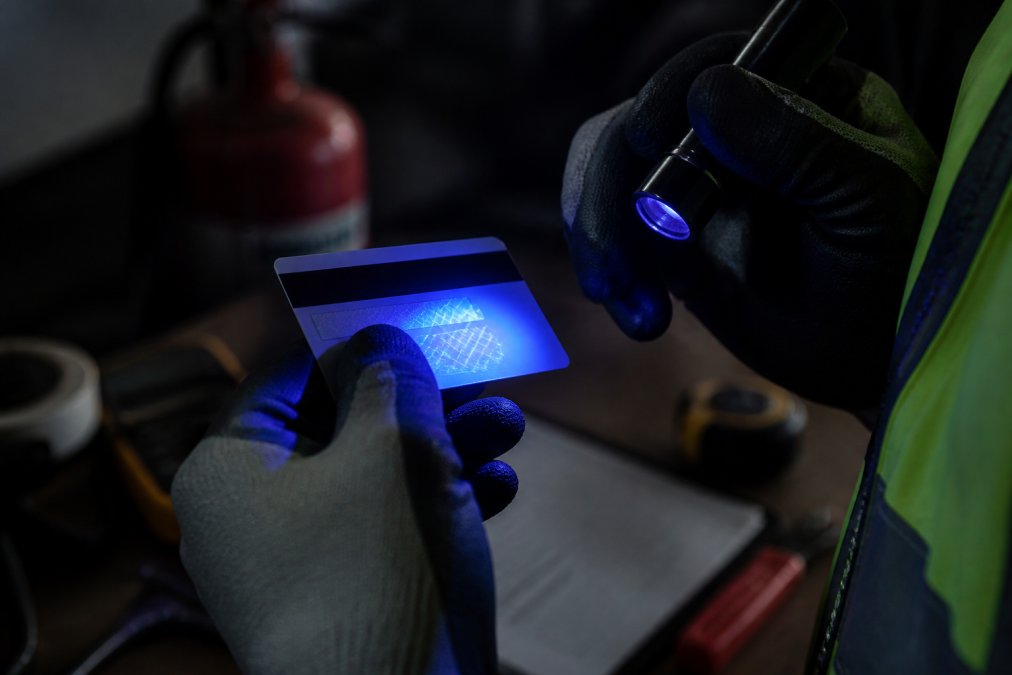
Security Features to Check on a Physical Licence Card
Treat the licence card as a secondary check, not a substitute for the licensee register search. Cards can be altered, photocopied, or presented past expiry. Use the physical card check to complement the register search. If the card looks genuine but the register shows suspended or expired status, the register result governs.
A licence card that passes visual checks but does not appear in the QBCC register, or appears with a different status, should be treated as unverified. Do not allow work to proceed until the discrepancy is resolved with the QBCC.
Common Red Flags When Checking a Fire Protection Contractor
Most unlicensed contractors are not obviously fraudulent. Red flags tend to be subtle and appear during pre-engagement.
Watch for:
- Reluctance to provide a licence number. Licensed contractors offer this without hesitation.
- Licence class mismatch. The contractor holds a licence, but not for the quoted work.
- No professional indemnity or public liability insurance. Licensing and insurance are separate requirements.
- Vague or incomplete service reports. Reports that cannot demonstrate what was tested, inspected, or replaced fail compliance audits.
- Pressure to proceed without paperwork. Any contractor discouraging written documentation is not operating to required standards.
- Licence number that does not return a result in the QBCC register.
Documentation trails matter as much as the work itself. A well-executed inspection with no paper trail is functionally useless in an audit.
Verification Checklist for Property and Body Corporate Managers
Before Engagement:
- Obtain the contractor’s QBCC licence number in writing
- Search the QBCC licensee register and confirm status is “Active”
- Confirm the licence class matches the specific scope of work
- Check for any conditions or disciplinary actions
- Request a current certificate of currency for public liability and professional indemnity insurance
- Confirm the licence expiry date extends beyond scheduled works
On the Day of Work:
- Sight the physical licence card and check security features
- Verify card details match the register record
- Confirm the scope of work matches the licence class before work commences
After Completion:
- Obtain a detailed service report specifying what was inspected, tested, or replaced
- Confirm the report references relevant Australian Standards (such as AS1851)
- Retain all documentation for audit purposes
For body corporate managers overseeing multiple properties, verify contractor credentials once and maintain records for each property. Re-verify at each engagement period, as licence status can change.
What to Do If a Contractor Cannot Be Verified
Do not allow work to proceed if a contractor cannot be verified through the QBCC licensee register or if the register returns a status other than “Active.” Unlicensed fire protection work creates liability for the property owner or manager, not just the contractor.
Contact the QBCC directly to clarify. The QBCC contact and complaints page allows you to report unlicensed contractors and seek guidance on verification queries.
If the contractor claims their licence is current but the register shows otherwise, ask for written evidence from the QBCC confirming their status. A legitimate contractor resolves this quickly. A contractor who cannot or becomes defensive should not be engaged.
Engaging a new, verifiable contractor is always the right call. The short-term inconvenience of finding a replacement is significantly less than the long-term consequence of a compliance failure, insurance dispute, or fire safety incident.
Fyrepower operates as a fully QBSA-licensed and insured fire protection specialist. Our team’s credentials are verifiable through the QBCC register, and we provide detailed service documentation that holds up under audit. Get in touch with us now.
Fire protection compliance is not optional. The QBCC licensee register gives property owners and managers a reliable, real-time way to verify contractor credentials before work begins. The verification process takes minutes; the consequences of skipping it can take years to resolve. Fyrepower’s licensed team brings fully documented, audit-ready fire safety services across the Gold Coast, South Brisbane, and Northern New South Wales, including comprehensive equipment maintenance, testing, and compliance reporting to AS1851 and other applicable Australian Standards. Get in touch with Fyrepower and know exactly who is working on your property.
Frequently Asked Questions
What is the difference between a QBSA and QBCC licence?
The Queensland Building and Construction Commission (QBCC) replaced the Queensland Building Services Authority (QBSA) in 2014. The licensing system itself did not change, contractors who held a QBSA fire protection licence had their credentials transferred to the QBCC. When you verify a QBSA fire licence today, you are searching the QBCC licensee register, which holds all current and historical records. Any contractor still presenting credentials under the QBSA name is using outdated documentation.
How can I check a QBCC licence online?
Visit the QBCC website and use the public licensee register search tool. Enter the contractor’s name, company name, or licence number. The register returns the licence status (active, suspended, cancelled, or expired), the licence classes held, and any disciplinary action on record. No account or login is required, the register is free to access. Always run this check before signing any service agreement for fire protection work on your property.
Why is it important to verify a fire protection contractor’s licence?
Unlicensed fire protection work can void your building’s compliance certification and expose you to liability under Queensland’s building safety legislation. If a fire system installed or tested by an unlicensed tradesperson fails during an emergency, your insurer may decline the claim. Property managers and body corporate managers also face direct accountability under statutory requirements. Verifying the licence before work begins is the single fastest way to protect yourself, your tenants, and your building.
What information do I need to search the QBCC licensee register?
You need at least one of the following: the contractor’s full name, their company or trading name, or their QBCC licence number. Having the licence number produces the most precise result. If you only have a name, the register may return multiple results, confirm the correct record by cross-checking the licence class against the type of fire protection work being quoted, such as inspect and test, water-based fire systems, or special hazard fire systems.
This article was written using GrandRanker

