Quick Summary
Fire sprinkler system design for unheated buildings must plan for freezing from the start, because water left in exposed pipe can freeze, split the pipe and leave the space unprotected. Designers map temperature zones and usually choose dry-pipe, pre-action or hybrid arrangements in cold areas, while keeping wet pipe in heated spaces.
- Record the minimum expected temperature in each zone, not just the current heating layout.
- Treat heating that can be switched off or fail as absent for design purposes.
- Dry-pipe systems hold water back with air, so the unheated section cannot freeze.
- Dry-pipe systems introduce a water-delivery delay that the hydraulic design must account for.
- Place drain points at every low point, and make sure they are accessible for maintenance.
Table of Contents
- Why Unheated Buildings Need a Different Sprinkler Design
- Assessing Freeze Risk and Mapping Temperature Zones
- Choosing Between Wet-Pipe, Dry-Pipe and Pre-Action Systems
- Designing Against Freezing: Fire Sprinkler Pipe Freeze Protection
- Hydraulic Design, Drainage and Low-Point Management
- Dry-Pipe Sprinkler System Maintenance and Seasonal Inspection
- Booking a Design Review for Your Unheated Building
- Frequently Asked Questions
Why Unheated Buildings Need a Different Sprinkler Design
Last Updated: November 20, 2026
Fire sprinkler system design for unheated buildings is not the same job as designing for a heated office.
The core issue is simple. Designers therefore have to decide early whether the water can stay in the pipe, must be kept out of it, or needs protection from the cold. Estimate what freeze-protected installation costs for your building type before committing to a design.
Many building owners assume the sprinkler contractor will handle this automatically. In practice, the layout, pipe routing and system type are chosen at the design stage, and changing them later is costly.
Assessing Freeze Risk and Mapping Temperature Zones
The first step is to identify which parts of the building can drop below freezing.
Key factors to record include:
- Minimum expected temperature in each zone
- Whether heating is planned, reliable or switched off in winter
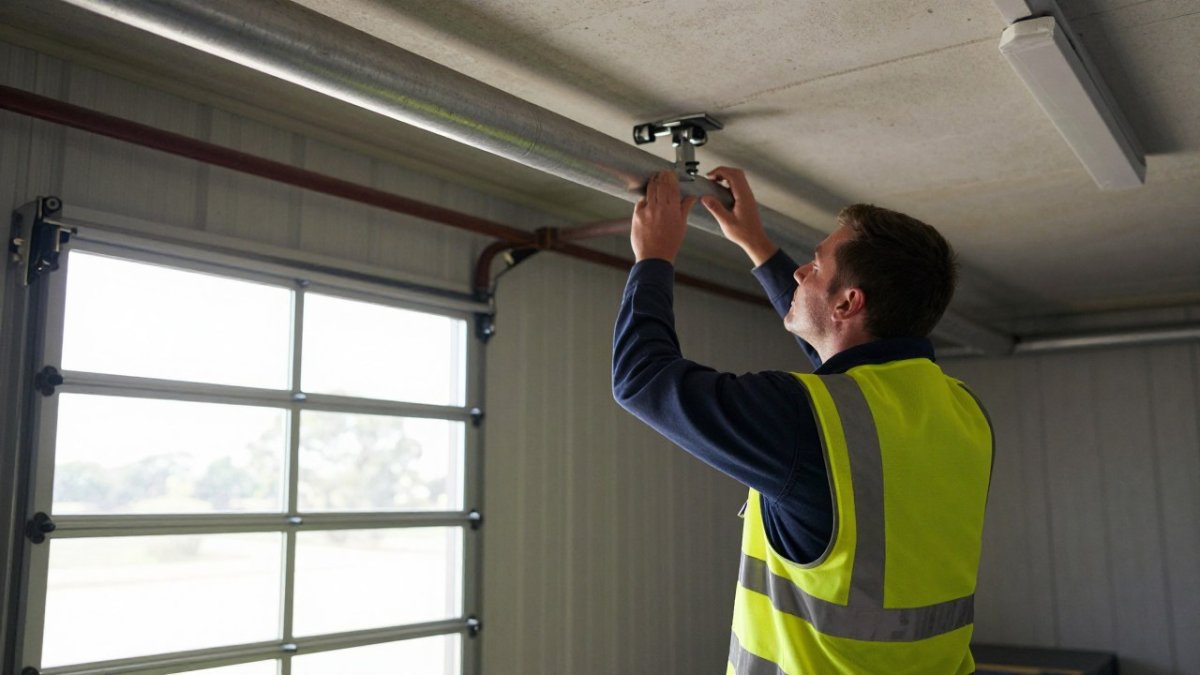
- Proximity to external walls, doors and roller shutters
- Height of the ceiling and the roof space above it
- How often the space is occupied
A common mistake is relying on the building’s current heating layout. Heating can be changed, turned off or fail, so the design should assume the worst reasonable temperature.
Watch out: a pipe run through an external wall or roof void often sits colder than the room it serves, even when the room itself is heated.
Choosing Between Wet-Pipe, Dry-Pipe and Pre-Action Systems
The harder question is which arrangement actually suits a given unheated space, and that decision is driven by temperature exposure, response requirements, maintenance capability and the approval of the relevant fire authority.
A practical way to work through the choice is to compare the realistic options side by side on the criteria that matter in cold spaces.
Decision criteria for unheated spaces
- Minimum expected temperature and duration of exposure. A space that dips to 2°C overnight is a different problem from one that sits below freezing for weeks.
- Whether the space is truly unheated or intermittently heated. Heating that can be switched off or fail should be treated as absent for design purposes.
- Response time expectations. Dry-pipe systems introduce a water-delivery delay; some occupancies cannot tolerate it.
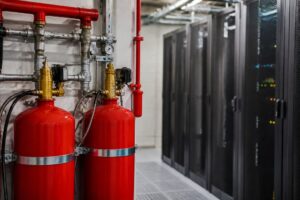
- Water damage tolerance. Stock rooms, server areas and heritage interiors may justify pre-action despite the added complexity.
- Maintenance capability on site. Dry-pipe and pre-action systems need air supply, valve and drain checks that wet systems do not.
- Approval pathway. The relevant fire authority must accept the arrangement, and some authorities impose conditions on antifreeze or on dry-barrel arrangements.
How the main arrangements compare
- Wet-pipe systems. Water is in the pipe at all times. Simplest, cheapest to install and maintain, and fastest to deliver water. Only suitable where no part of the pipe can freeze, including roof voids, external walls and isolated runs through cold zones.
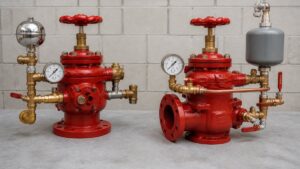
- Dry-pipe systems. Compressed air or nitrogen holds water back at a dry-pipe valve until a sprinkler head opens and the air pressure drops. The unheated section holds no water, so it cannot freeze. The trade-off is a water-delivery delay and the need for a reliable air supply, drains and low-point management.
- Pre-action systems. Water is admitted to the pipe only after a detection system signals a fire, and then a sprinkler head must also open. They suit spaces where accidental discharge is a serious concern, but they add detection, controls and maintenance burden.
- Dry-barrel sprinklers and exposed-pipe arrangements. For small or isolated unheated areas, dry-barrel sprinkler heads or exposed-pipe arrangements can avoid water in the cold section entirely. They are limited in coverage and are not a substitute for a full dry-pipe system in a large unheated warehouse.
- Antifreeze systems. An approved antifreeze solution can protect a wet-pipe section, but the solution must be approved for sprinkler use, the concentration must be maintained, and the arrangement is generally limited in volume and application. It is not a set-and-forget solution.
A short selection workflow
- Map the temperature zones (see the previous section) and mark every pipe run that can drop below freezing.
- Decide whether water can remain in any part of the cold zone. If not, a dry-pipe or dry-barrel arrangement is the starting point.
- Check whether the occupancy can tolerate the dry-pipe water-delivery delay. If not, consider pre-action or a hybrid arrangement with wet pipe in heated zones and dry pipe in cold zones.
- Confirm the air or nitrogen supply, drainage and low-point access can be maintained on site.
- Confirm the arrangement with the relevant fire authority before documentation.
A common pattern is a hybrid: wet pipe through the heated office and amenities, dry pipe through the unheated warehouse and loading dock, with the dry-pipe valve located in the heated zone where it can be serviced.
Watch out: a dry-pipe valve installed in an unheated plant room defeats the purpose, the valve itself and its trim can freeze, and the system may fail to operate even though the pipe downstream is dry.
For more detail on the differences between the two most common arrangements, see our guide to Wet Pipe vs Dry Pipe Sprinkler Systems.
The main arrangements differ in how they handle water in cold spaces, response time and maintenance needs:
| System | Best for | Key difference |
|---|---|---|
| Wet-pipe | Heated areas with no freeze exposure | Water in pipe at all times; fastest delivery |
| Dry-pipe | Unheated warehouses and loading docks | Air holds water back; water-delivery delay |
| Pre-action | Spaces where accidental discharge is a concern | Water admitted only after detection signal |
| Dry-barrel / exposed-pipe | Small or isolated unheated areas | Avoids water in the cold section; limited coverage |
| Antifreeze | Small wet-pipe sections in cold zones | Approved solution; concentration must be maintained |
Designing Against Freezing: Fire Sprinkler Pipe Freeze Protection
Where dry-pipe is not practical, some designs use heat tracing, insulation or antifreeze solutions. Each option has limits. Choosing among these freeze-protection measures also means checking how the system’s design and installation align with NFPA 13 sprinkler standards.
Good design keeps pipe runs short in unheated areas and routes them through heated spaces where possible. Pipes should not run in the outer skin of a building if there is another route.
Hydraulic Design, Drainage and Low-Point Management
Hydraulic design for a dry-pipe system is not the same calculation as for a wet-pipe system. The water has to travel further and push air ahead of it, and the design must demonstrate that water reaches the most remote sprinkler head within the time the standard and the approval require. The dry-system calculation is a common point where designs need careful checking, because the water-delivery allowance is easy to underestimate.
Hydraulic design points specific to dry systems
- Account for the water-delivery delay. The hydraulic calculation must reflect the time for water to fill the dry pipe and reach the remote head, not just the flow once water is flowing.
- Size the dry-pipe valve and air supply correctly. The valve must trip reliably at the design air pressure, and the air compressor or nitrogen supply must be able to maintain that pressure and recharge after a trip.
- Check the remote-area demand against the available supply. Dry systems often need larger pipe sizes than the equivalent wet system to meet the delivery requirement, which affects routing and cost.
- Confirm the design with the authority. Some authorities impose additional requirements on dry-system water delivery, and the design documentation should show the calculation basis clearly.
Drainage and low-point management
Condensation forms inside the pipe as warm, humid air meets cold metal, and that water collects at low points. If it is not drained, it can freeze, corrode the pipe or block flow when the system operates. Designers should: check whether control valves need supervision as part of the drainage and valve layout.
- Slope pipes so water runs to drain points, and avoid flat runs and sagging spans.
- Install auto-drains or manual drain valves at every low point, and mark each one on the drawings.
- Provide accessible drain points, a drain valve in a sealed roof void is not maintainable.
- Check that the air supply is dry, because wet air accelerates condensation and corrosion.
- Confirm the drain discharge route does not create a freeze or slip hazard.
Low points are where most dry-pipe problems start. Mark them clearly on the drawings, check them during installation, and include them in the routine service schedule.
Corrosion and condensation control
Dry-pipe systems are prone to internal corrosion because the pipe is alternately wet and dry. Corrosion debris can block the dry-pipe valve or the sprinkler heads.
Watch out: a dry-pipe system that loses air pressure may fail to operate in a fire, even though it looks fine from the floor, the air supply and valve trim need to be checked as part of routine service, not just after a trip.
Dry-Pipe Sprinkler System Maintenance and Seasonal Inspection
A dry-pipe system must be inspected regularly, and most problems appear before winter. A typical seasonal check covers air pressure, drain valves, heat tracing if fitted, and any visible frost or damage.
Maintenance should follow the inspection schedule set out in the relevant Australian standard for routine service of fire protection systems. Keep a written log of each inspection and any repairs.
Watch out: a dry-pipe system that loses air pressure may fail to operate in a fire, even though it looks fine from the floor.
Booking a Design Review for Your Unheated Building
Designing a sprinkler system for an unheated building involves temperature data, system choice, hydraulic checks and drainage, and each decision affects the others. Getting the design right at the start is far cheaper than fixing a frozen or failed system later.
If your building has unheated areas, a design review is the sensible next step. Get in touch with Fyrepower now to discuss your site.
Frequently Asked Questions
What type of fire sprinkler system is suitable for an unheated building?
A dry-pipe system is the usual choice for an unheated building, because the pipework holds pressurised air instead of water until a head opens. This removes the water that would otherwise freeze and burst pipes in cold weather. Wet-pipe systems can still be used where the space is kept above freezing, or where the pipework is heat traced or insulated. Whichever system is chosen, the design should follow NFPA 13 requirements for the building’s occupancy and hazard class, and be confirmed with the relevant authority having jurisdiction before installation.
How often should a dry-pipe sprinkler system be inspected and tested?
Dry-pipe systems need regular inspection, with the air pressure, valve set and low-point drains checked on a set schedule. Testing of the trip mechanism and water flow alarms should follow the maintenance intervals set by the relevant Australian requirements and the manufacturer’s instructions. Seasonal checks before winter are sensible in cold regions, because a dry-pipe system that is not maintained can fail to operate when it is needed. Keeping a written record of each inspection helps during audits.
What is the difference between a dry-pipe and pre-action sprinkler system?
A dry-pipe system releases water when a sprinkler head opens and heat activates it, so the air in the pipes is expelled and water follows. A pre-action system adds a detection system, and water is only allowed into the pipes after a detector confirms a fire condition. This extra step reduces the risk of accidental discharge and water damage, which is why pre-action systems are often used in sensitive areas such as data centres or galleries.
What information is needed to design a sprinkler system for a cold storage building?
A designer needs the building’s occupancy, the stored goods and their hazard class, the minimum and maximum internal temperatures, the ceiling height, and the water supply characteristics. The design should also record where pipework runs through unheated areas, the location of low points, and the drainage route. Pricing depends on the building, the system type chosen and the scope of work, so visit the Fyrepower website or request a quote for current pricing.