Table of Contents
- What Drives the Cost of Emergency Fire System Repairs
- Itemised Repair Cost Ranges by Fault and System Type
- Fire System Service Callout Fees and After-Hours Charges
- What a Fire Sprinkler System Repair Cost Includes
- Fire System Repair Response Time and the Price of Urgency
- Repair or Replace? Deciding When to Stop Spending
- Fire Protection System Maintenance That Prevents Emergency Bills
- Frequently Asked Questions
Last Updated: October 19, 2026
What Drives the Cost of Emergency Fire System Repairs
The cost of emergency fire system repairs in Australia is built from five separate charges, and understanding them before a fault occurs is the difference between a fair invoice and a shock.
An emergency fire system repair is any corrective work on fire protection equipment outside a scheduled maintenance visit, usually triggered by a system fault, an alarm activation, or equipment failure found during an inspection.
Three things separate an emergency invoice from a routine one: the time of day, the travel distance, and the minimum charge.
The most common billing dispute we see involves after-hours attendance. A fault logged at 6pm on a Friday is not a standard service call, and it will not be priced like one. Confirm the after-hours rate before you authorise attendance, not after the invoice lands.
The Five Charges Behind Every Repair Invoice
Every emergency repair invoice tends to contain the same five components. Knowing them lets you question any line that looks out of place.
- Call-out or attendance fee, the fixed charge for a technician to arrive on site, separate from any repair work.
- Labour, charged hourly or in blocks, at a standard rate during business hours and a higher rate after hours, on weekends, or on public holidays.
- Parts and materials, the replacement component itself, plus any consumables used during the repair.
- Travel charge, distance-based in many cases, and higher for sites outside a provider’s standard service area.
- Minimum spend, a floor below which a job will not be invoiced, which is why a ten-minute fix can still attract a substantial charge.
Ask any provider to confirm all five before work begins. A quote that lists only labour and parts is incomplete.
Itemised Repair Cost Ranges by Fault and System Type
Most published pricing for emergency fire repairs stops at a single number, which is little help when the invoice arrives with six line items. This section itemises the faults that most often trigger an emergency attendance, so you can map a quote back to the work behind it.
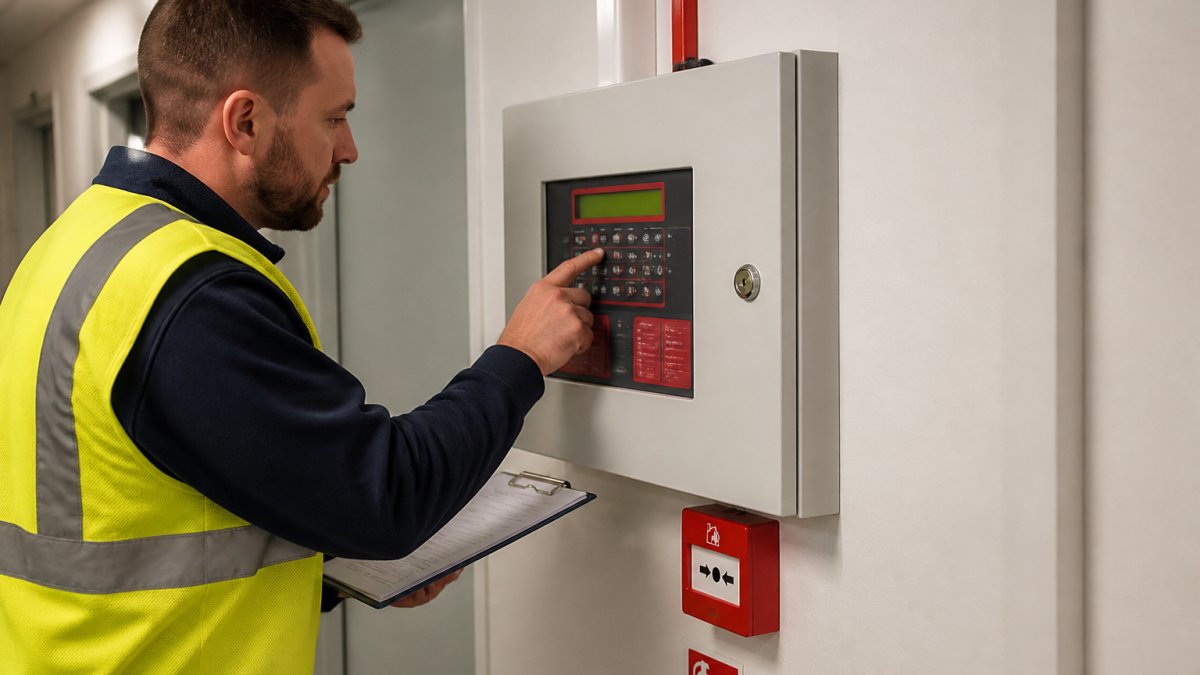
Common emergency faults and what drives their cost
Fire extinguishers. Emergency attendance usually follows a discharge, a pressure gauge in the red, a damaged hose or pin, or tampering.
Sprinkler systems. Sprinkler emergencies typically involve a damaged head, a pipe or fitting failure, a pressure loss, or an accidental discharge.
Suppression and special hazard systems. Kitchen suppression, gas suppression, and foam systems add another layer: specialist components, manufacturer-specific parts, and re-commissioning after any discharge or repair.
Reading an itemised quote
When a provider quotes an emergency repair, the useful questions are not “what is the total” but “what is in it”. A transparent quote separates:
- Diagnosis, the time to find the fault, which may be billed separately from the repair.
- Parts, the component itself, identified by type, and whether it is stock or ordered.
- Labour, the hours or blocks to fit it, at the applicable rate.
- Isolation and reinstatement, the time to shut down and restore the affected section, which is significant on sprinkler and pump work.
- Testing and documentation, the post-repair test and the service report that records it.
- Attendance, the callout and any minimum spend, which apply per visit, not per repair.
A quote that lists only labour and parts is missing at least four of those. Ask for the rest before you authorise.
For any fault that is not creating an immediate life-safety risk, ask the provider to separate the diagnosis charge from the repair charge. That way, if the diagnosis reveals a larger problem, you can decide on repair versus replacement with the diagnosis cost already known rather than buried in a single figure.
Why no responsible provider publishes a fixed schedule
Rates vary by state, provider, site access, and time of attendance. A basement plant room repair takes longer than the same repair at ground level; a site outside a provider’s service area attracts a travel charge; a fault logged at 11pm attracts an after-hours rate. A single national figure would be misleading, so compare the components of a quote, not headline numbers.
Fire System Service Callout Fees and After-Hours Charges
Callout fees are the fixed attendance charge applied before any repair work starts, and the line item property managers most often overlook when budgeting. Understand them not as a single number but as a stack of charges that apply in sequence. Once you can see the stack, you can estimate most of an emergency invoice before anyone arrives.
The charges that stack on an emergency attendance
Travel charge. Distance-based in many cases, and higher for sites outside a provider’s standard service area.
Minimum spend. A floor below which a job will not be invoiced.
Parts and labour for the repair itself. Billed on top of the attendance charges, at the applicable rate.
Testing and documentation. The post-repair test and the service report recording what was found, repaired, and tested. On compliance-critical systems this is not optional.
How the after-hours rate is set
After-hours service exists because faults do not respect business hours. A sprinkler leak at 2am or a panel fault found on a Sunday still requires a qualified technician paid a premium to attend, and providers hold capacity in reserve for emergency work at a cost even when no call comes in.
The same repair can cost materially more at 2am than at 9am the next morning. That is the price of urgency, and the question for a property manager is whether the fault genuinely requires it.
If a fault is not creating an immediate safety risk, ask whether it can be scheduled for the next business day. Many providers will hold a non-urgent job at the standard rate rather than the emergency rate. The saving is real, and the safety outcome is often identical.
Questions to ask before you authorise attendance
A short script saves arguments later:
- What is the call-out fee, and does it apply per visit or per repair?
- What is the after-hours rate, and when does it start and end?
- Is there a minimum spend, and what is it?
- Is travel charged separately, and on what basis?
- Will diagnosis be billed separately from the repair?
- Will the service report and any compliance documentation be included?
A provider who answers all six before attending is one whose invoice you can predict; one who cannot is worth approaching with caution.
Reducing avoidable attendance charges
Attendance charges are the most controllable part of an emergency invoice. Keeping systems on a documented maintenance schedule reduces faults that reach emergency stage, and recording every fault and tracking repeat failures lets you address root causes during scheduled visits rather than paying emergency rates twice.
What a Fire Sprinkler System Repair Cost Includes
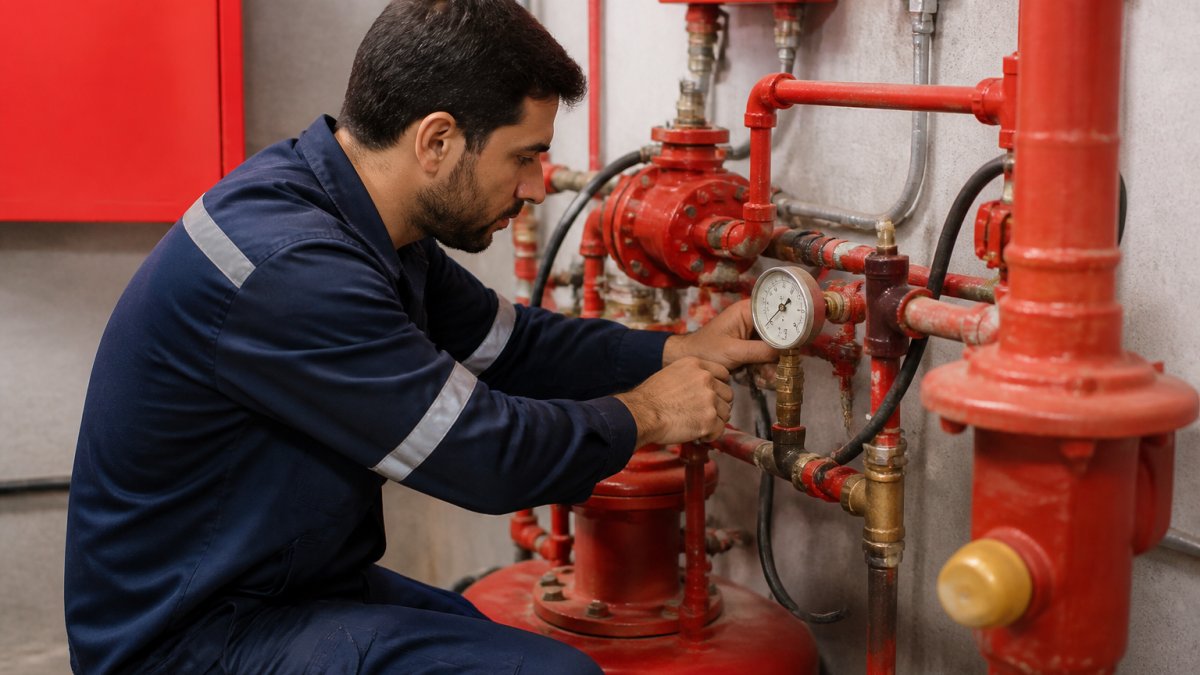
A fire sprinkler system repair cost is rarely just the part. Sprinkler work involves isolating the affected section, which may require shutting down part of the system and notifying the relevant parties, then restoring and testing pressure once the repair is complete.
The components of a typical sprinkler repair invoice include:
- Isolation and shutdown of the affected zone
- Replacement heads, pipe sections, or valves
- Pressure testing after reinstatement
- Documentation confirming the system is back in service
Water damage remediation sits outside the fire contractor’s scope, but the cause of the discharge often sits squarely inside it. A failed head or corroded line that lets go under pressure is a maintenance failure as much as a repair job.
Fire System Repair Response Time and the Price of Urgency
Response time and price move together. An urgent response, meaning attendance within a short window, carries a premium over a next-day or scheduled visit, because it requires holding technician capacity in reserve and disrupting planned work.
A realistic emergency response process looks like this:
- Fault reported and logged with site details
- Triage to confirm whether the fault is safety-critical
- Technician dispatched, with attendance time confirmed
- On-site diagnosis and quote for the repair
- Authorisation to proceed
- Repair completed and system tested
- Service report issued
The authorisation step matters. A provider who diagnoses, quotes, and waits for your approval protects you from surprise charges. A provider who repairs first and invoices later does not.
Response time is a cost lever you control. Genuine emergencies, where the system is offline or a life-safety risk exists, justify the premium. Non-critical faults can almost always wait for a scheduled attendance at the standard rate.
Repair or Replace? Deciding When to Stop Spending
Repeated emergency repairs on the same asset are a signal, not bad luck. When a component fails, is repaired, and fails again within a short period, the money spent on emergency attendance is better directed at replacement.
- Is the asset near the end of its serviceable life? Older equipment fails more often and parts become harder to source.
- Is the fault recurring? Two failures of the same component in a year usually means the underlying cause was never fixed.
- Does replacement reduce future compliance risk? A new asset with a warranty removes both the repair cost and the risk of a failed inspection.
For extinguishers and alarms, replacement is often the cheaper path once repair costs approach the cost of a new unit. For pumps and suppression systems, the calculation is more complex and worth a formal assessment.
Body corporate managers overseeing multiple strata properties who need a clear repair-versus-replace decision on ageing assets before the next compliance cycle.
Fire Protection System Maintenance That Prevents Emergency Bills
Fire protection system maintenance is the single most effective way to reduce emergency repair costs, because most emergency faults are predictable.
A practical prevention checklist for any commercial site:
- Confirm all systems are on a scheduled maintenance plan with dated service reports
- Keep extinguishers accessible, charged, and within service intervals
- Test smoke and fire alarms at the required intervals and log results
- Check sprinkler and hydrant pressures during every scheduled visit
- Record every fault, even minor ones, and track repeat failures
- Verify service reports are detailed enough to withstand an audit
The Australian Building Codes Board maintains the broader regulatory framework that underpins fire safety obligations, and it is worth understanding how your maintenance records fit within it.
Fyrepower provides scheduled testing, inspection, and maintenance across commercial, strata, and industrial properties, along with the documentation that supports compliance.
Emergency fire system repairs will always cost more than planned maintenance, but the gap is manageable with the right preparation.
Frequently Asked Questions
How much do emergency fire system repairs cost?
There is no single figure. The cost of emergency fire system repairs is built from a callout fee, after-hours loading, labour at hourly rates, parts and materials, and any minimum spend the provider applies. Sprinkler and pump faults sit at the higher end because they involve larger components and more labour, while extinguisher and smoke alarm fixes are usually the cheapest. Ask for an itemised quote before work starts so the total is not a surprise.
What affects the cost of an emergency fire system repair?
The biggest factors are the system type, how urgent the response needs to be, the time of day, and how many assets are affected. A single faulty smoke alarm is a short visit; a fire pump failure can mean hours of diagnosis plus parts. Access matters too, since ceiling voids, plant rooms and multi-tenancy strata layouts add time. Whether the fault is a simple equipment failure or a system fault requiring testing across the network also changes the invoice.
Does the fire brigade charge for callouts?
Fire and rescue services can charge for attendance in certain circumstances, particularly where there is no fire and the cause is a false alarm from a poorly maintained system. Charges vary by state and by the type of incident. The practical lesson is that a false alarm attendance is an avoidable cost: keeping smoke alarms, detectors and suppression systems maintained and tested reduces the chance of a crew turning out to a fault you then pay for.
Can a building stay open while its fire protection system is being repaired?
Sometimes, but not automatically. If a system is isolated for repair, the building may need interim measures such as fire wardens, additional extinguishers or a documented isolation notice, depending on what the relevant standard and your fire safety documentation require. A short extinguisher or alarm fix rarely disrupts operations. A sprinkler isolation is different and should be planned with your provider so compliance is not compromised while the repair is underway.