Last Updated: October 22, 2026
Quick Summary
Automated fire safety compliance software schedules inspections, captures field data and stores testing records in one auditable place, so every routine test becomes a dated, asset-linked record you can produce on demand. It removes manual scheduling, tracks faults through to closure and cuts audit preparation from days to minutes.
- Digital checklists timestamp each entry, capture technician identity and store photos against the asset.
- Offline capability lets technicians complete inspections in basements and remote sites, then sync later.
- Fault logging only counts as compliance when remedial actions are tracked through to sign-off.
- Build total cost of ownership from subscription, setup and migration, training, and integration and hardware.
- Give each shortlisted vendor the same realistic scenario and ask them to walk through it end to end.
Table of Contents
- Why Automated Fire Safety Compliance Software Changes the Game
- Fire Equipment Inspection Software: Smarter Scheduling and Field Data Capture
- The Fire Safety Inspection Checklist Goes Digital
- Fire Safety Maintenance Tracking: Faults, Remedial Actions and Real-Time Alerts
- Fire Safety Compliance Records That Stand Up to an Audit
- What Automated Fire Safety Compliance Software Actually Costs
- Choosing and Adopting the Right System Without Disrupting Your Team
- Frequently Asked Questions
Why Automated Fire Safety Compliance Software Changes the Game
Fire safety compliance software is a digital system that schedules inspections, captures field data and stores testing records in one auditable place.
The old model runs on paper, spreadsheets and memory. A building owner juggles monthly, six-monthly and annual obligations across extinguishers, hydrants, alarms and emergency lighting, all under AS1851. One missed cycle becomes an audit finding. One vague service report becomes a dispute you cannot win.
Automation fixes the administrative layer, not the physical work. Technicians still test equipment. Someone still replaces a failed extinguisher. What changes is the scheduling, the evidence trail and the visibility across every site you manage.
That is the throughline here: the software does not make buildings safer by itself. It makes the safety work provable, repeatable and impossible to quietly drop.
The real value of fire safety compliance software is evidence. It turns routine testing into a defensible record you can produce on demand.
Fire Equipment Inspection Software: Smarter Scheduling and Field Data Capture
Fire equipment inspection software removes the biggest cause of missed testing: manual scheduling. The system generates recurring inspection schedules from each asset’s requirements, then sends jobs to technicians with the right checklist attached.
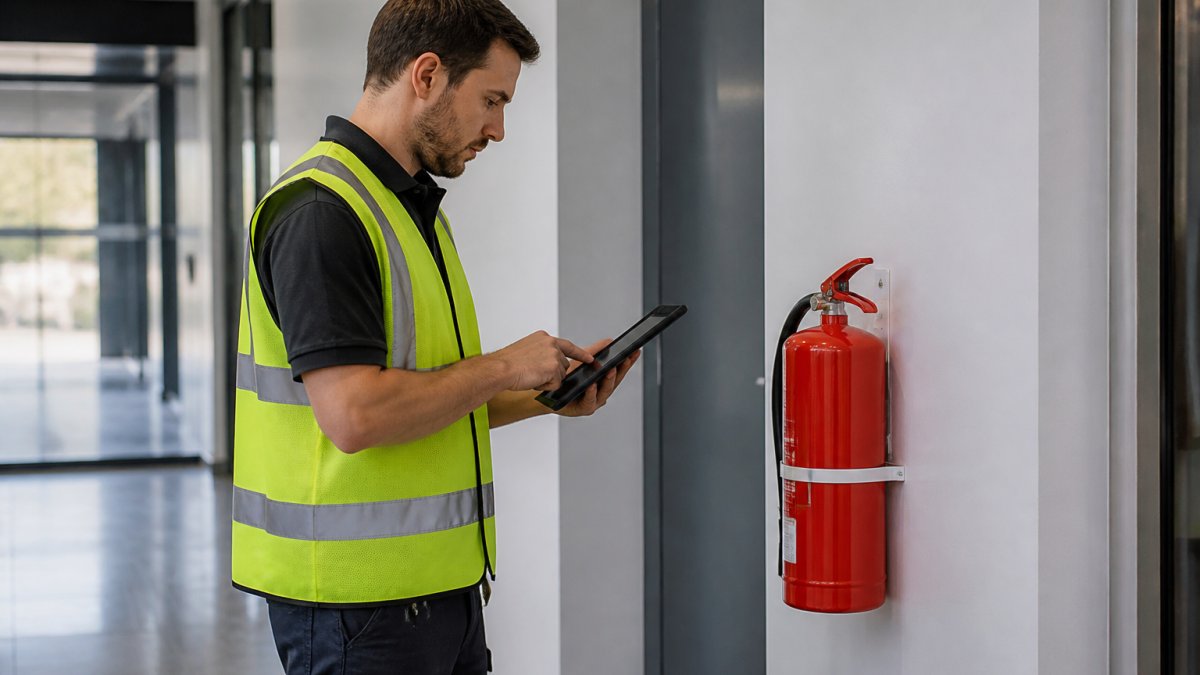
Field data capture is where this earns its keep. Instead of a technician writing “tested” on a form, guided workflows prompt for the actual readings, pass or fail results and photo evidence.
For a portfolio spread across suburbs, automated scheduling means every six-monthly testing cycle is queued months ahead. You can see what is due, what is booked and what has lapsed before a deadline bites.
The AS1851 routine service standards set out what routine servicing must cover. Good software maps those requirements to each asset type so the schedule reflects the standard, not someone’s memory of it.
The Fire Safety Inspection Checklist Goes Digital
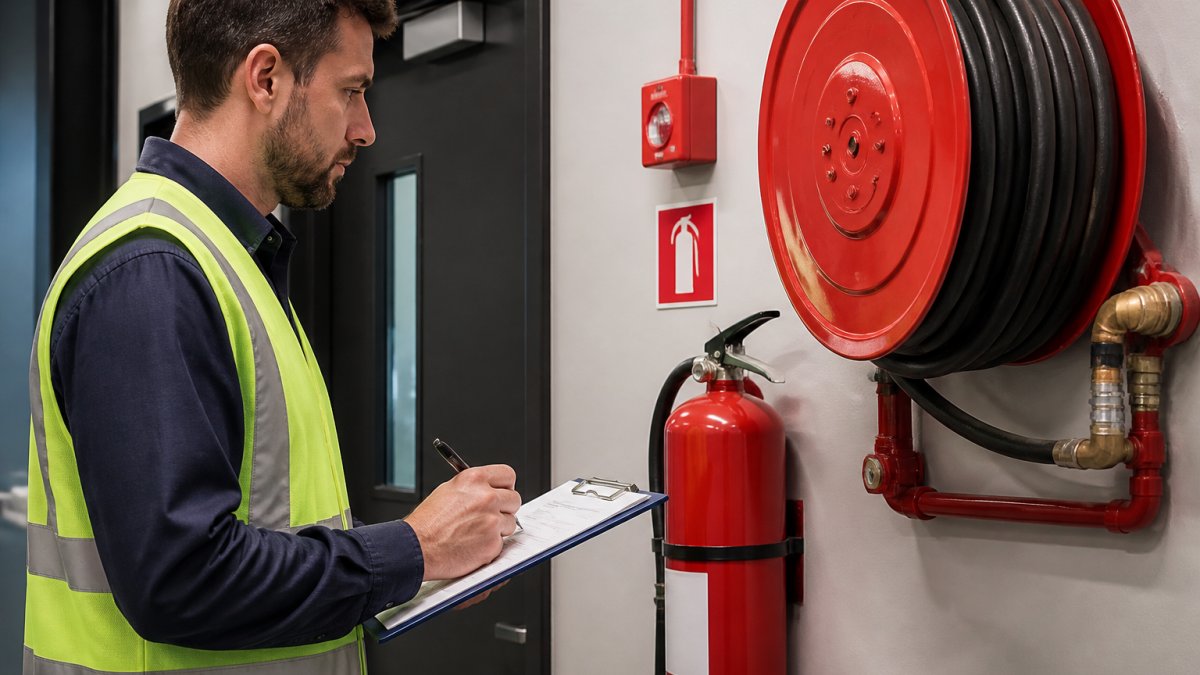
A digital fire safety inspection checklist replaces the clipboard with a guided workflow on a mobile device. Each item is tied to a specific asset, so the technician sees exactly what to test and records the result on the spot.
What most guides miss is how much this changes accountability. A paper checklist can be filled in from a desk. A digital one timestamps each entry, captures the technician’s identity and stores photos against the asset. When a survey completion is questioned, you have evidence rather than a signature.
Practical benefits include:
- Standardised checklists across every technician and site
- Mandatory fields that stop incomplete inspections from being submitted
- Photo capture for defects, so remedial work is documented from day one
- Instant upload, so head office sees results the same day These digital safeguards ensure that every site record remains accurate and audit-ready, providing a robust foundation for the broader oversight required during professional property inspections.
Offline capability matters here. Basements, plant rooms and remote sites often have no signal. A system that lets technicians complete inspections offline and sync later keeps the workflow intact.
Fire Safety Maintenance Tracking: Faults, Remedial Actions and Real-Time Alerts
Fire safety maintenance tracking is the discipline of logging every defect, assigning a remedial action and following it through to closure. Software makes that chain visible instead of leaving it buried in an email thread.
Here is where the operational efficiency gains show up. When a technician flags a failed exit sign, the system raises a fault, notifies the responsible person and tracks the corrective action until it is signed off. Nothing depends on someone remembering to forward a report.
Real-time monitoring and alerts add another layer. For monitored systems, faults and alarms can trigger notifications to the right people immediately, which matters for fire detection and false alarm management. A fault that sits unseen for a week is a compliance risk; one flagged within minutes is a job.
A common mistake is treating fault logging as the finish line. If remedial actions are not tracked to closure, you have a record of problems, not a record of compliance. Always close the loop.
Third-party suppliers fit into the same system. If an external contractor handles a portion of your testing, their results should land in your central log, not a separate spreadsheet you reconcile quarterly.
Fire Safety Compliance Records That Stand Up to an Audit
Audit-ready records are the single strongest argument for digitising. When a regulator or insurer asks for proof of testing, a digital logbook produces dated, asset-linked records in minutes rather than days of file hunting.
Paper records fail audits for predictable reasons: missing pages, illegible entries, no evidence of who did the work, and no link between a report and a specific asset. Digital inspection records close those gaps because every entry is time-stamped, attributed and tied to the equipment it covers.
Compliance reporting becomes a by-product rather than a project. You can generate a report per site, per asset type or per period, and hand it over complete. Survey completion across a portfolio is visible at a glance.
Before any audit, export a full record set for the period under review and store it offline. If a system outage coincides with an inspection, you still have your evidence ready.
What Automated Fire Safety Compliance Software Actually Costs
There is no single price for fire safety compliance software, and anyone quoting you a fixed figure without seeing your portfolio is guessing.
Most pricing in this category falls into one of three shapes: a per-site subscription, a per-asset subscription, or a tiered platform fee with user bands. Ask each vendor to quote on the same asset count and site count so the numbers are comparable. A per-asset model can look cheap on a small site and expensive across a large portfolio; a per-site model can do the reverse. The shape of the pricing matters as much as the headline figure.
Total cost of ownership is the number that matters, not the licence fee. Build it in four lines:
- Subscription or licence, the recurring platform cost at your actual site and asset count.
- Setup and migration, loading asset registers, importing historical service records, configuring checklists and schedules. This is often the largest one-off cost and the one most often left out of comparisons.
- Training and change management, time for technicians, site champions and managers, including the productivity dip during cutover.
- Integration and hardware, connections to monitoring or building systems, plus tablets or rugged devices if field teams are not already equipped.
Then build the benefit side on the same basis. The honest way to do this is to measure your current administrative load rather than estimate it.
Risk reduction is real but harder to price. The costs of a missed six-monthly cycle are not just the re-test: they include remedial work found late, insurer questions after an incident, and the management time spent reconstructing records.
A common approach is to start with a pilot on one or two sites. That gives you real data on time savings and adoption before you commit the whole portfolio. It also surfaces the awkward questions, like how existing service records transfer, while the stakes are low.
We would not recommend choosing on price alone. The cheapest system that your technicians refuse to use costs more than a pricier one they actually adopt.
Before you request quotes, assemble a one-page schedule of your sites, asset counts by type, current testing frequencies and the administrative hours you spend each month. Vendors who quote against that schedule give you comparable numbers; vendors who quote against a vague brief give you a guess.
Choosing and Adopting the Right System Without Disrupting Your Team
Adoption decides whether the software delivers anything. The best-configured system fails if technicians find it slower than paper or managers never trust the dashboard.
Use clear selection criteria before you compare vendors. The table below is a starting point; weight each row to your own risk profile rather than treating them as equal.
| Criterion | What to check | Why it matters |
|---|---|---|
| Scheduling engine | Recurring cycles per asset type, ability to model mixed frequencies | Prevents missed testing deadlines across a varied portfolio |
| Mobile workflow | Offline mode, guided checklists, mandatory fields, photo capture | Field teams keep working without signal and cannot submit incomplete inspections |
| Fault tracking | Defect raised from the field, assigned, tracked to closure with sign-off | Proves corrective work was done, not just logged |
| Reporting | Audit-ready exports per site, per asset type, per period | Cuts audit preparation time and produces consistent evidence |
| Permissions | Role-based access for technicians, managers, contractors and owners | Keeps sensitive records controlled without blocking the field |
| Integrations | Connections to monitoring, building systems or contractor platforms | Avoids a second silo of records |
| Data ownership | Export rights, hosting location, retention and deletion terms | Protects you if you change vendors |
| Security | Access controls, encryption, backup and recovery arrangements | Safeguards sensitive building data |
Run a structured evaluation rather than a demo tour.
Migration is where most rollouts lose time.
Staff adoption deserves its own plan. Nominate a champion per site, run training on real assets rather than demo data, and set a cutover date after which paper is retired.
Cybersecurity and data ownership are the questions competitors skip. Ask where data is hosted, who can access it, how backups are tested and whether you can export everything if you leave.
Finally, measure compliance performance from day one. Track inspection completion rates, time to close faults, overdue inspections and audit findings over time.
Do not treat go-live as the finish line. The first full testing cycle after cutover is where adoption problems surface. Schedule a review at the end of that cycle, with the site champions, before you declare the rollout complete.
Frequently Asked Questions
What does fire safety compliance software actually do?
It replaces paper logbooks and spreadsheets with a single system that schedules inspections, guides technicians through checklists on mobile devices, and stores every record in one place. Automated scheduling keeps 6-monthly and weekly testing cycles on track, while real-time alerts flag faults before they become compliance gaps. The result is fewer missed inspections, cleaner records and audit-ready documentation you can produce on demand rather than reconstructing from filing cabinets.
Can fire safety software send reminders for inspections and servicing?
Yes. Automated scheduling is one of the core functions of fire safety compliance software. You set the testing cycles for each asset, and the system generates reminders for internal teams or third-party suppliers ahead of each due date. Overdue items escalate automatically, so nothing quietly slips past a deadline. For multi-site portfolios, this replaces the manual chasing that often causes missed 6-monthly testing and the compliance exposure that follows.
Does fire safety software replace professional inspections?
No. Software organises and records the work, but competent people still perform the inspections and testing. Australian Standards such as AS1851 set out what must be tested, how often and by whom, and no app changes those obligations. Treat the software as a record-keeping and scheduling layer that supports your technicians and service providers, not a substitute for them. Human judgement remains essential for identifying defects and deciding on remedial actions.
What should businesses look for in a fire safety compliance system?
Prioritise four things: mobile checklists that work offline in the field, automated scheduling tied to your actual testing cycles, fault tracking that links defects to remedial actions, and reporting you can hand to an auditor without editing. Also ask where your data is stored, who owns it, and how you export it if you change providers. Pricing depends on site count and asset volume, so request a quote rather than assuming a headline figure.
The challenge is not choosing software. It is keeping every inspection, fault and record consistent across a growing portfolio while your team gets on with the day job. Fyrepower handles that layer for you, from scheduled testing and detailed service records to staff training that goes beyond a ticked box. Get in touch with us now to see how our QBSA-licensed, fully insured team can keep your properties compliant and audit-ready.