Last Updated: November 21, 2026
Quick Summary
Inert gas cylinder replacement costs cover more than the gas itself, including labour, transport, pressure testing and system reconnection. Prices depend on cylinder size, agent type and site conditions, so no single figure applies to every property. Getting a line-by-line quote is the most reliable way to budget.
- Replacement, refill, exchange and recertification are different services with different costs and timelines.
- Recertification is required before refilling a cylinder that is past its test date.
- Ask whether quotes include testing, certificates and re-stamping, as these are sometimes billed separately.
- Transport is the line item most often left out of verbal estimates.
- Keep a shared register of serial numbers, fill dates and next test dates.
Table of Contents
- Replacement Versus Refill: Which Applies to Your System
- Itemised Breakdown: Cylinder, Labour, Transport and Testing
- Hydrostatic Testing and Recertification Costs
- Factors Influencing Cost for Your Site
- Ongoing Cylinder Servicing and Inspection Schedules
- Requesting an Accurate Quote from Fyrepower
- Frequently Asked Questions
Inert gas cylinder replacement costs are often underestimated because the gas itself is only part of the bill. A cylinder swap, recharge or recertification can also involve labour, transport, pressure testing and system reconnection. Property managers and business owners on the Gold Coast, in South Brisbane and across Northern New South Wales often ask the same question early in their planning: what should they actually budget for?
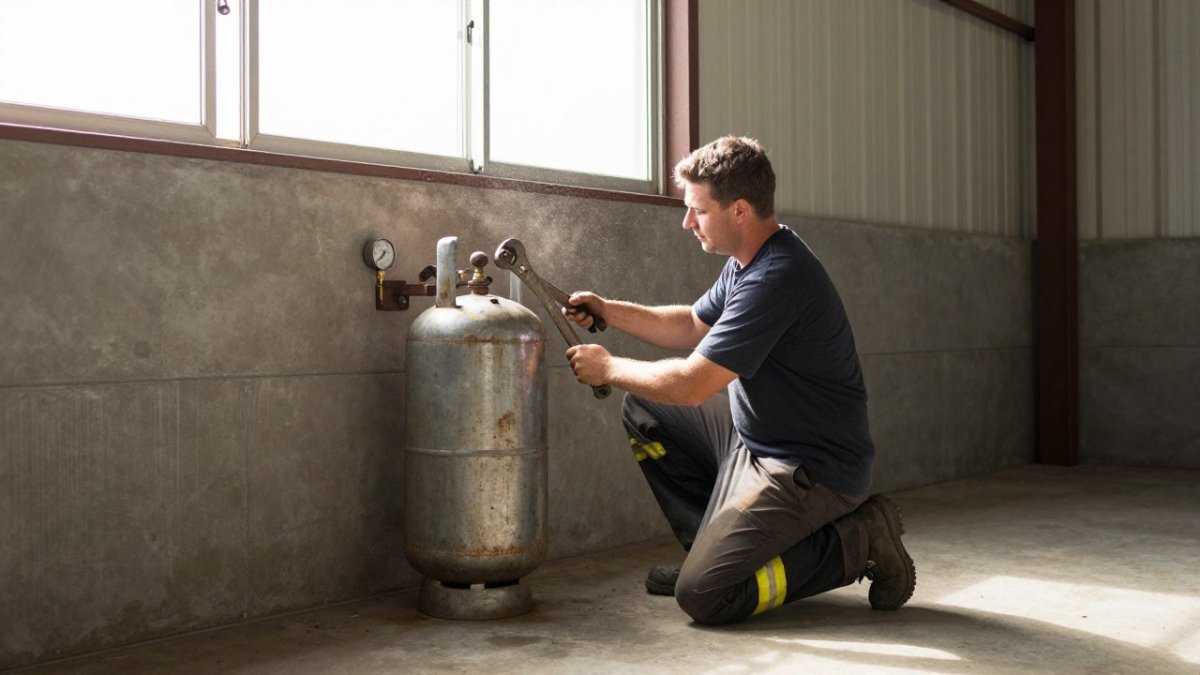
An inert gas suppression system stores nitrogen, argon or blends of these gases in high-pressure cylinders. When a fire is detected, the gas is released to reduce oxygen levels in the protected room. Cylinders therefore have to be kept full, tested and in serviceable condition, and eventually replaced or recertified. Prices vary by cylinder size, agent and site conditions, so no single figure applies to every property.
Replacement is not one task. It can mean swapping an empty cylinder for a fully charged one, refilling an existing cylinder on site, or sending it away for hydrostatic testing before it returns to service. Each route carries different costs and timelines, and the right one depends on how the system was designed.
Several sources describe the cost drivers in general terms. One supplier notes that the cost of an inert gas system depends on room size, agent type, cylinder location, pipework route and detection requirements. Astro Fire Systems guide to inert gas versus chemical clean agent suppression A separate price guide places individual agent storage cylinders in a wide range, though those figures are not in Australian dollars and should not be read as local prices. Spectrum for Fire Protection fire suppression price guide
Replacement Versus Refill: Which Applies to Your System
Replacement and refill are often used interchangeably, but they are different services with different costs, turnaround times and operational impacts. The right choice depends on the cylinder’s condition, its test date, the system design and how long the protected space can safely be without suppression.
Refill (recharge). The cylinder stays in place and is returned to its rated charge with the same gas. A refill avoids cylinder purchase, but the space is unprotected while the cylinder is off the manifold, so temporary cover or a shutdown window is needed.
Exchange. A fully charged cylinder is swapped for the empty one, and the empty is taken away for testing or refilling. This route can minimise downtime because the swap itself can be completed in a single attendance. The trade-off is that you pay for a cylinder as well as the gas, so the unit cost is higher than a straight refill.
Replacement (new cylinder). A new cylinder is supplied outright. This becomes necessary where a cylinder fails hydrostatic testing, has reached the end of its service life, or cannot be recharged to its design pressure. It is the highest-cost route per cylinder but resets the test clock and gives the longest service life.
Recertification. The cylinder is sent away for hydrostatic testing and returned to service with a new test date. This is not a substitute for a refill, a recertified cylinder still needs to be charged, so the two are usually quoted together. Recertification is the correct route where the cylinder is sound but out of test date, and it is almost always cheaper than replacement.
Inert gas systems are often promoted as cheaper to refill than some chemical alternatives, and that direction is generally correct because the agent is not decomposed by the discharge. Fike’s description of inert gas refill costs The supplier material we reviewed does not quantify the saving, so treat it as a direction rather than a budget figure.
A practical decision sequence is:
- Check the test date. If the cylinder is out of test, recertification is required before any refill.
- Check the cylinder condition. If it fails testing or is at end of life, replacement applies.
- Check the operational window. If the space cannot be unprotected for long, exchange is usually the best balance of cost and downtime.
- Check the system design. Some manifolds and valve arrangements only accept like-for-like cylinders, which rules out certain exchange options.
Watch out: ordering a refill on a cylinder that is past its test date does not restore compliance, the cylinder must be recertified first, and a refill alone will leave the system non-compliant at the next inspection.
Itemised Breakdown: Cylinder, Labour, Transport and Testing
A realistic budget separates the job into components rather than treating it as one line on a quote. The categories below are the ones that appear on almost every inert gas cylinder replacement invoice, and the indicative ranges show what each typically contributes to the total. Treat them as planning figures, not quotes: they assume a standard commercial site with reasonable truck access, a single cylinder bank, and work carried out during normal business hours.
- Gas and cylinder charge: the agent itself, plus any cylinder supplied as part of an exchange. Gas and cylinder charges depend on agent, cylinder capacity and pressure rating, and are quoted on request.
- Labour: removal, fitting, valve connection and system checks by a licensed technician. Labour depends on the number of cylinders and site access, and rises where cylinders are in plant rooms with restricted access or where multiple banks are involved.
- Transport: collection and return of cylinders where work is done off site. This is usually a fixed call-out plus a per-cylinder handling charge, and it is the line most often omitted from verbal estimates.
- Testing and certification: pressure checks and any hydrostatic testing required before reuse. Hydrostatic testing is a recurring cost billed per cylinder, and may include re-stamping or certificate fees.
- Commissioning: confirming the system operates correctly after work is completed, including verifying cylinder pressure, valve operation and any detection interface. This is usually a short attendance but should always be itemised.
The share of each cost line varies with job size, so the relative weight of gas, labour, transport and testing depends on the individual system.
Watch out: a quote that gives one lump sum without separating these lines cannot be compared against another provider, and it usually hides either a testing exclusion or a transport surcharge.
When you request pricing, ask for each line separately, ask whether the certificate and re-stamping are included in the testing line, and ask whether commissioning covers a full discharge test or only a functional check. Those three questions alone will expose most of the difference between two quotes that look similar at the top.
The article breaks a replacement invoice into five cost lines, each with its own role in the total.
| Cost line | What it covers | Note |
|---|---|---|
| Gas and cylinder charge | Agent plus any supplied cylinder | Quoted on request |
| Labour | Removal, fitting, valve connection, checks | Rises with restricted access or multiple banks |
| Transport | Collection and return of cylinders | Often omitted from verbal estimates |
| Testing and certification | Pressure checks, hydrostatic testing | Recurring; may include re-stamping |
| Commissioning | Confirming correct system operation | Should always be itemised |
Hydrostatic Testing and Recertification Costs
Hydrostatic testing checks that a cylinder can safely hold its rated pressure. Cylinders are generally tested at set intervals, and the cost of testing is a recurring cost that many budgets miss. A supplier that handles maintenance for inert gas systems identifies pressure checks and hose testing as part of the ongoing cost base. 3M guidance on hidden maintenance costs of inert gas suppression systems
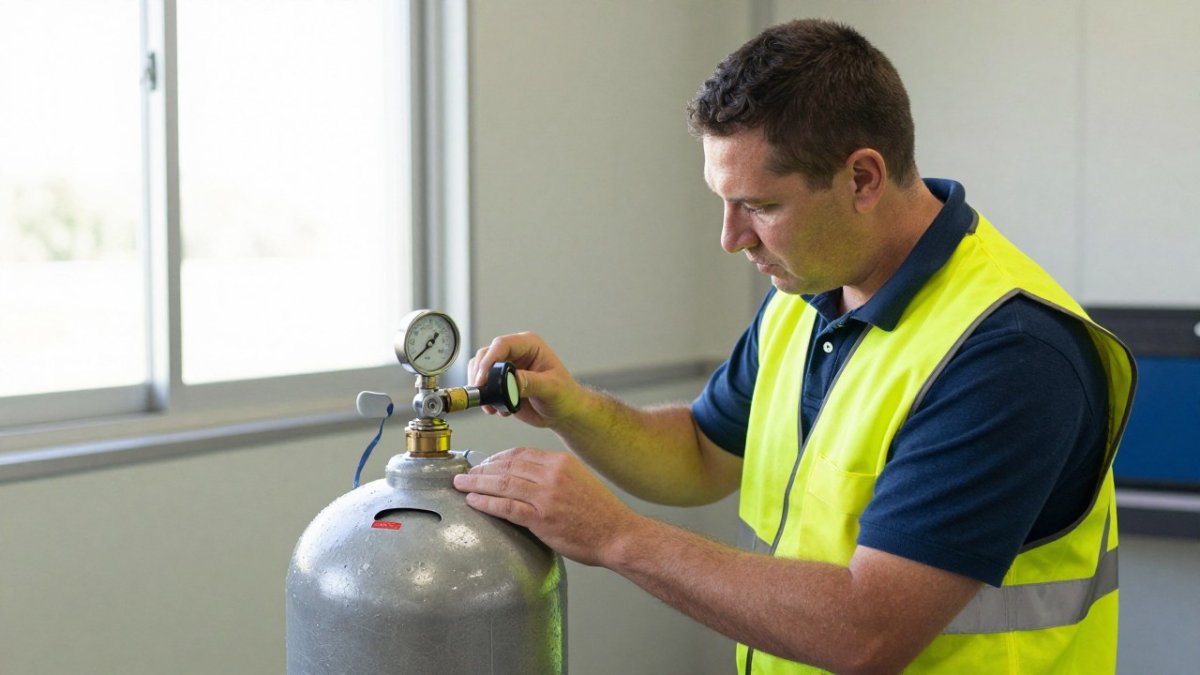
Recertification may be carried out on site or require the cylinder to be sent away. Where transport is involved, the cost of removing and returning the cylinder adds to the total. Ask whether a quote includes testing, the certificate and any re-stamping, as these are sometimes billed separately.
Watch out: if a cylinder is past its test date, do not assume a refill alone will restore compliance. Confirm the test status before ordering a refill.
Factors Influencing Cost for Your Site
No two sites produce the same quote. The factors below most often change the final figure, and they are worth reviewing before you request pricing:
- Protected room size and volume: larger rooms need more agent and often more cylinders.
- Agent type: nitrogen, argon and blended agents are priced differently.
- Cylinder capacity: supplier material notes that using fewer, larger cylinders can reduce system cost and space needs. Gielle Industries inert gas system overview
- Cylinder location: cylinders in hard-to-reach plant rooms add access and labour time.
- Pipework route: longer or more complex pipe runs affect both installation and recommissioning.
- Room integrity: rooms that leak gas need more agent to hold concentration.
- Detection and pressure relief: these requirements can change the scope of any work.
Consider this list when you brief a provider. A detailed site description usually produces a more accurate quote than a general request.
Ongoing Cylinder Servicing and Inspection Schedules
Replacement is only one part of managing an inert gas system. Regular inspection confirms that cylinders hold pressure, valves operate and the system is ready to discharge. Many owners schedule these checks alongside their wider fire safety maintenance so that testing dates do not lapse without notice.
Keep a register that records each cylinder’s serial number, fill date and next test date. This makes it easier to plan replacement or refill work before a cylinder falls out of compliance. It also helps when an auditor asks for evidence of maintenance.
Watch out: relying on memory or a spreadsheet kept by one person is a common cause of missed test dates. A shared, dated register avoids this.
Requesting an Accurate Quote from Fyrepower
Costs for inert gas cylinder replacement depend on the details of your site, so a useful quote starts with good information. When you contact Fyrepower, have the following ready: the protected room size, the number and capacity of cylinders, the agent type, the location of the cylinders and the date of the last test.
Pricing depends on the details of your system, so request a quote from Fyrepower for a figure that reflects your actual site. Request your inert gas cylinder replacement quote from Fyrepower and compare it against a written breakdown from another provider.
Frequently Asked Questions
How much does it cost to replace an inert gas fire suppression cylinder?
Pricing depends on the agent type, cylinder capacity, number of cylinders, site access, transport and whether the work is combined with testing or recommissioning. Replacement prices vary with the factors above and should not be estimated without a site-specific assessment. For an accurate AUD figure tailored to your system, request a written quote from Fyrepower that itemises cylinder, labour, transport and testing costs separately.
Can an inert gas fire suppression cylinder be refilled instead of replaced?
In some cases, yes. Inert gas agents are generally less expensive to refill than some chemical clean agents, according to supplier literature, but whether a cylinder is refilled, exchanged or replaced depends on its condition, test history and the manufacturer’s requirements. A qualified technician can assess the cylinder and advise which option applies. Fyrepower can inspect your system and confirm the correct path before any work is carried out.
How often do inert gas suppression cylinders need inspection or testing?
Cylinders need regular inspection and periodic hydrostatic testing as required by the system design and applicable Australian standards, including AS 2444 and AS 1851 for fire protection maintenance. Pressure checks and hose testing are recurring maintenance items that add cost beyond the agent itself. A documented maintenance schedule lets you plan these costs in advance and provides records that stand up to a compliance audit.
What affects the cost of replacing an inert gas cylinder?
Key factors include the agent type, cylinder capacity and count, room size and protected volume, cylinder location, pipework route, room integrity, pressure-relief requirements, detection equipment and local labour rates. Access constraints and whether the system must be recommissioned after work also affect the final figure. Requesting a site assessment before comparing quotes helps ensure each provider is pricing the same scope of work.